
Yantras: Sacred Geometry in Nature, Body and Machines
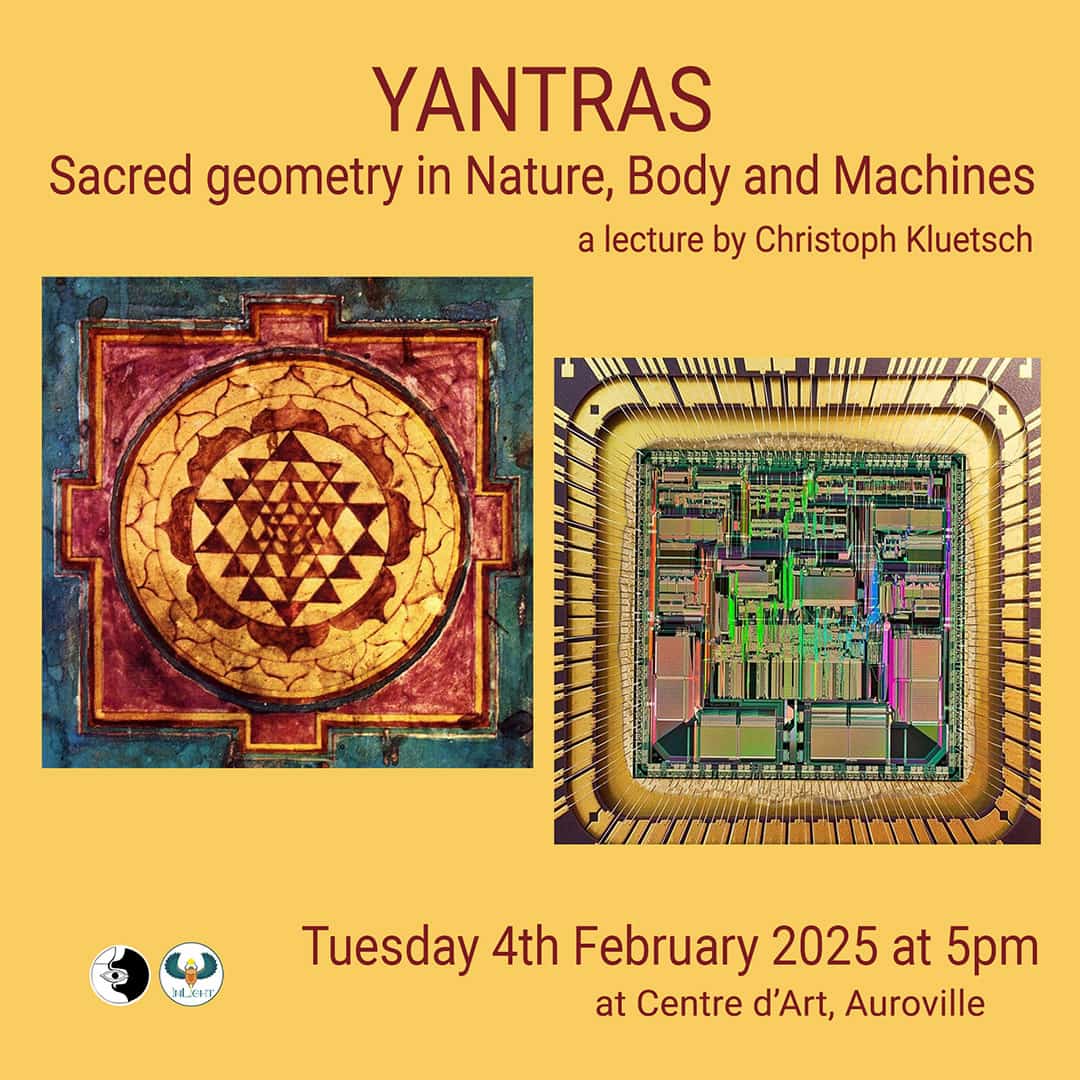
The spider brings forth its own web. This image from the Upanishad invites deep meditation on how nature brings out a thread that it forms into a complex symmetry. Looking at the spider, the thread, and the web—its function and the source of the complex pattern—we have an image that invites deep speculation about mantra, tantra, and yantra, about art and knowledge, about creation and information. The 5th lecture explores art and scientific visualizations of sacred symmetry in a field…
Read more: Yantras: Sacred Geometry in Nature, Body and Machines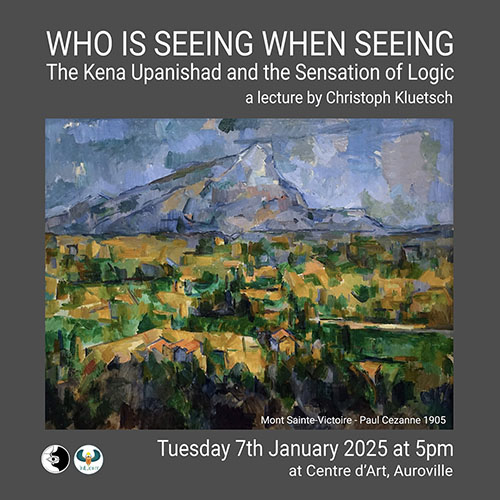
Who is seeing when seeing
Auro Art World organized a series of 6 lectures at the Centre d’Art multimedia room in Auroville. These lectures, conducted by Dr. Christoph Kluetsch, explore connections between art, philosophy, and spirituality, bridging Eastern and Western traditions to illuminate the enduring questions of existence, consciousness, and creativity. The series is offered on the first Tuesday of every month. Fourth lecture – Tuesday 7th January 2025 at 5pm Who in our consciousness experiences sensations? How are sensations synthesized? How do matter, vibration, consciousness, and self connect? And how can we share sensations…
Read more: Who is seeing when seeing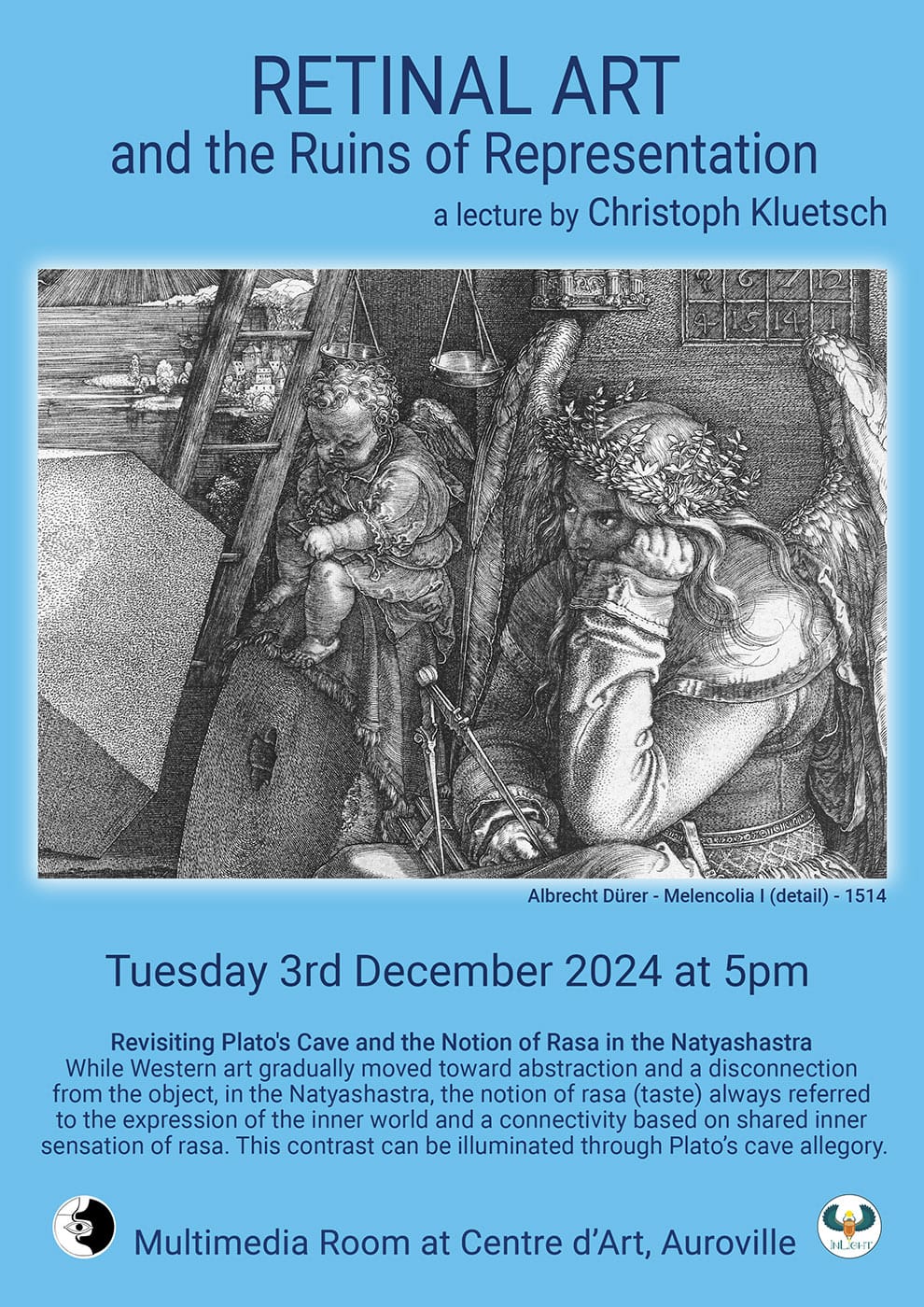
Retinal Art and the Ruins of Representation
Retinal Art and the Ruins of Representation: Revisiting Plato’s Cave and the Notion of Rasa in the Natyashastra Christoph Kluetsch “Something in the world forces us to think. This something is not an object of recognition, but a fundamental encounter.” Gilles Deleuze – Difference and repetition p. 139 “Minds exist only in relation to other minds.” (Mihai Nadin) “even those elements designated as “basic” or “proto-elements” are not primitive but are, on the contrary, of a complex nature.” (Kandinsky, point……
Read more: Retinal Art and the Ruins of Representation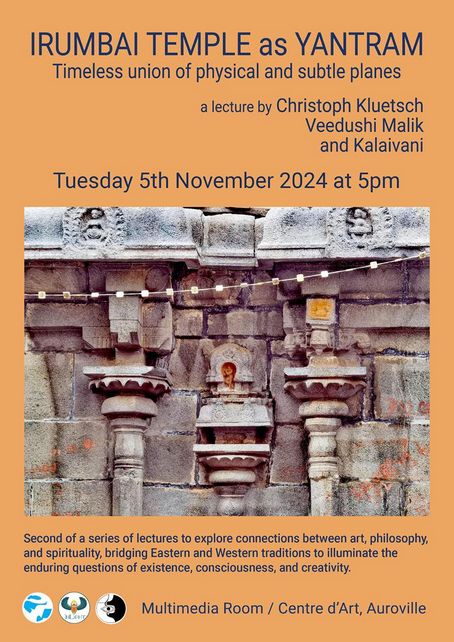
2nd lecture: Irumbai Temple as Yantram (Apparata)
During the Chola Empire, the layout of Shiva temples was formalized to a great degree. Based on the Agamas and Shastras, the temple was fully developed into a place in space, time, and consciousness where the microcosm and macrocosm mirror each other. When a temple is built, a site will be chosen, and it has to be indicated as auspicious. Often an unusually friendly encounter with the animal realm is such a good sign. The site then has to be…
Read more: 2nd lecture: Irumbai Temple as Yantram (Apparata)
1st lecture: Apples and Mangoes
The snake in paradise seduced Eve to eat a fruit from the forbidden tree of knowledge that holds the distinction between good and evil. Why was the tree of knowledge a forbidden tree? Why did the snake seduce Eve? What did the fruit taste like? When I asked myself why I want to talk about this, I felt like Eve standing in front of the tree, talking to a snake who attempts to seduce me to eat the fruit. Do…
Read more: 1st lecture: Apples and Mangoes
Play and Blunder
Play — Misstep In the West, I used to think that play had to do with games, and that games had to do with rules. To play a game means to enter a space restricted by rules, and within those parameters the player can develop strategies in order to act according to the rules, with the aim of winning. There is the larger field of game theory, which has been applied to sociology and other disciplines; there are computer simulations…
Read more: Play and Blunder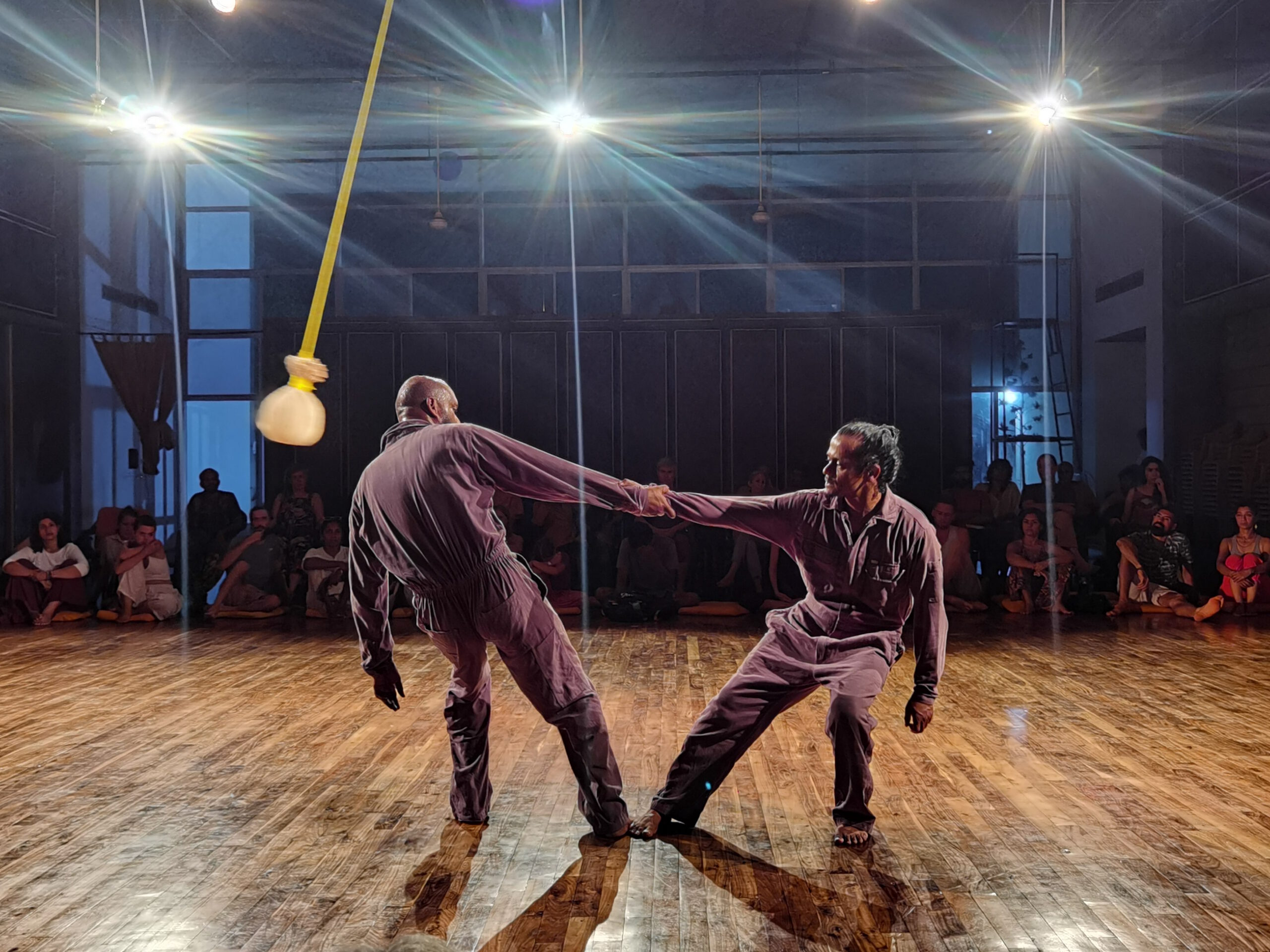
Understanding
What does it mean to understand another person? It is easy to understand someone facing us when we are of the same opinion, because then we are simply agreeing with ourselves. We may even enjoy seeing our own thinking mirrored in the other, enriched by a slightly different perspective, more colorful, more alive, more energetic, because both are pleased to have found someone on the same wavelength. This mirroring, the mirror neurons, gives us a feeling of appreciation, of being…
Read more: Understanding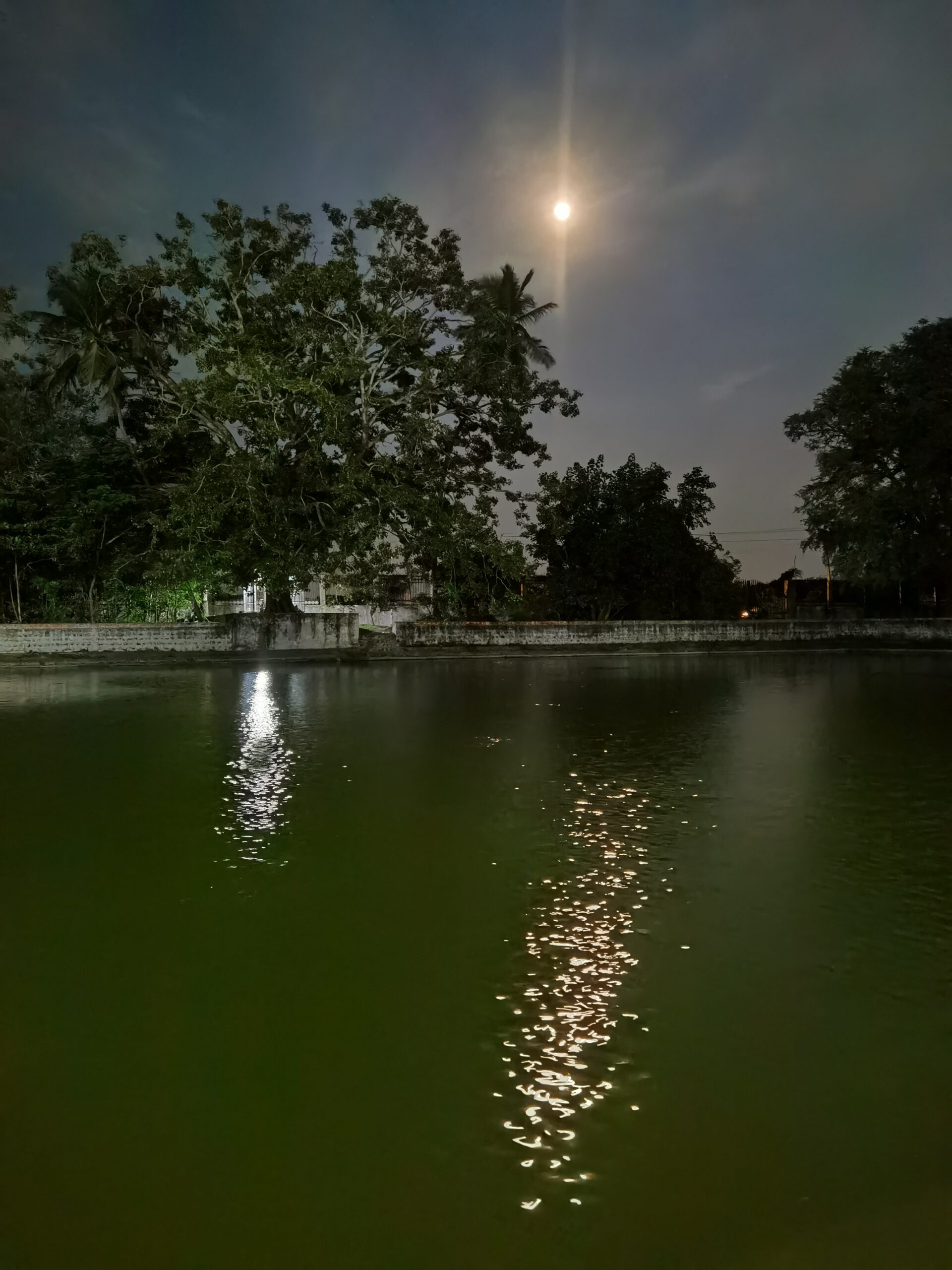
Full Moon
It is full moon in India. Time for self-reflection, meditation, and a turning inward. I have never really thought about death. For me, it was always a boundary, that which defines our existence negatively. Finitude throws us back upon ourselves, or so I thought. Here I agreed a little with Heidegger. To think of something beyond death always seemed arbitrary, naive, romantic, escapist, and credulous to me … Only in existential reflection did death seem meaningful to me. The dead…
Read more: Full Moon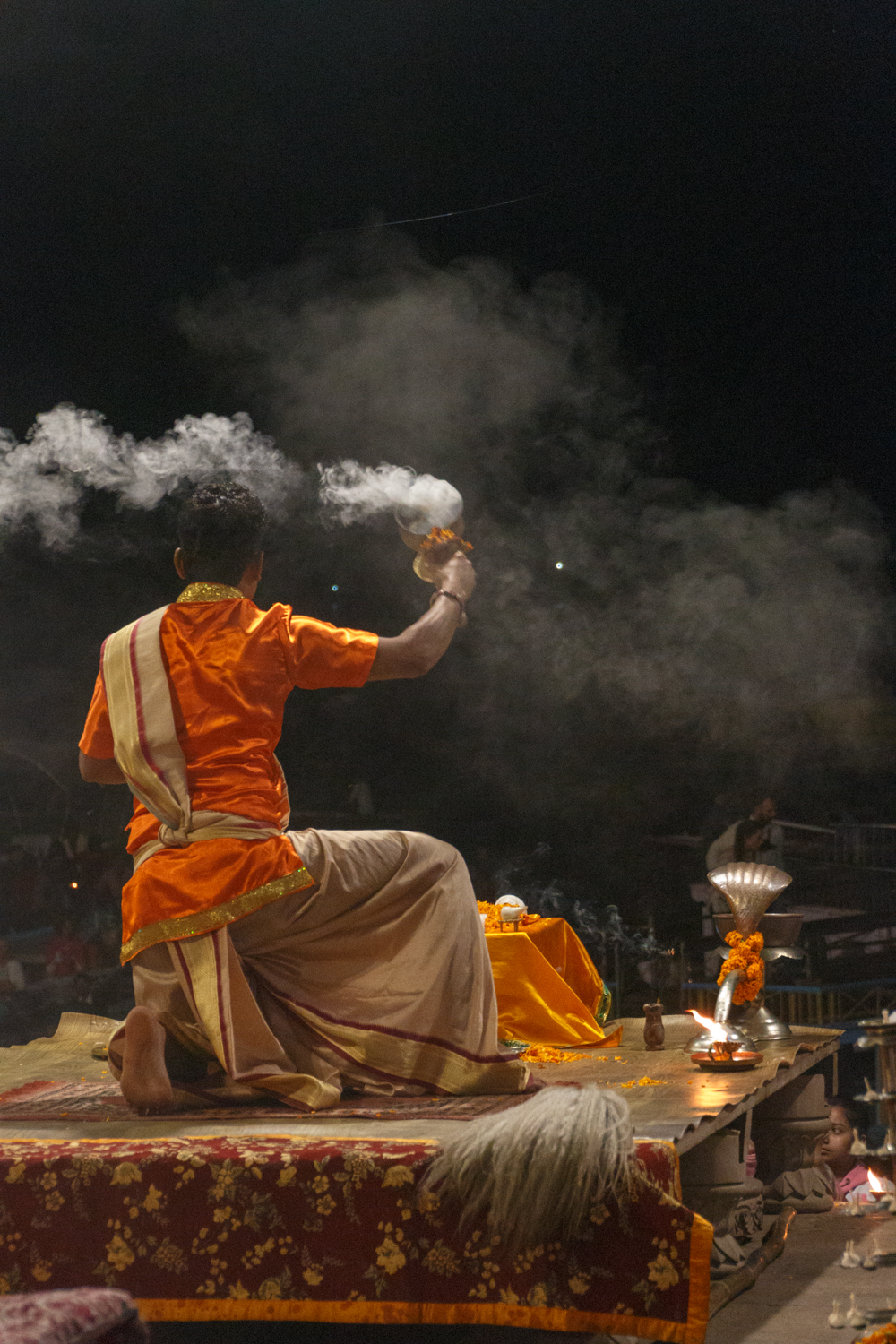
Structure and Process
The traditional music of India, the raga, is melodic in relation to a fundamental tone. Western music is harmonic, that is, simultaneous and complex. In the West, much thinking takes place in terms of structures; for a time, there was much talk of structuralist and poststructuralist thought. Complex systems are found everywhere: in philosophy, in canonical texts and systems of images, in technology and models that explain the world. One essential underlying idea is atomistic thinking. The idea is that…
Read more: Structure and Process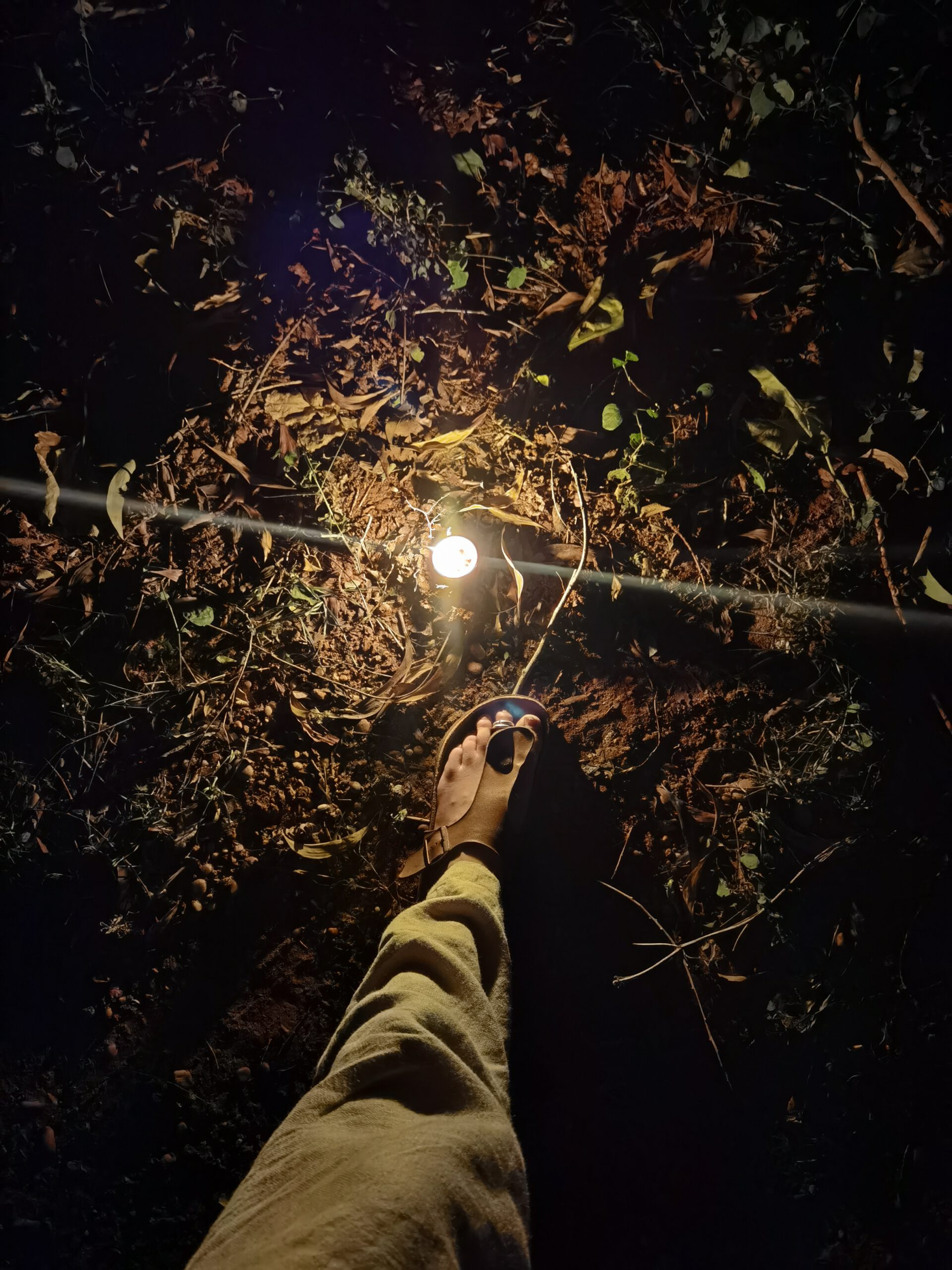
Enlightenment
The Enlightenment — Spiritual Enlightenment: the Paradox of Enlightenment Enlightenment is a tricky thing. Recently someone asked me whether I was seeking enlightenment. I faltered a little. But because I valued this person especially highly, I tried to be honest — yes, no, um, I don’t quite know, really I am, if I am completely honest … Why this hedging? Why not simply say directly: yes, I am, as she did when she replied that she thought most people were…
Read more: Enlightenment
Psychic Being
I ended my nighttime meditation a little early to move into writing meditation. Suddenly a few things seemed clear to me. The need to align one’s own body in meditation, to find the right position, which for me means following the movements, the tensions and relaxations of the muscles, the skeleton, the spine. Then to observe the breath, breathing in and out, the turning point of the breath, the pause in which to observe oneself, how thoughts begin to loosen,…
Read more: Psychic Being
Harmony
My morning meditation is becoming something of a routine, though after a handful of sessions one can probably hardly say that yet. It is more a stretch of road, a path, or an exploration. Like hiking in the mountains: with the summit in view, hiking along paths, on ridges, through valleys and rivers, past rock faces, through scree and stone, meadows and forests, and beyond the vegetation line onto glaciers in the snow, the mountains become a metaphor for the…
Read more: Harmony