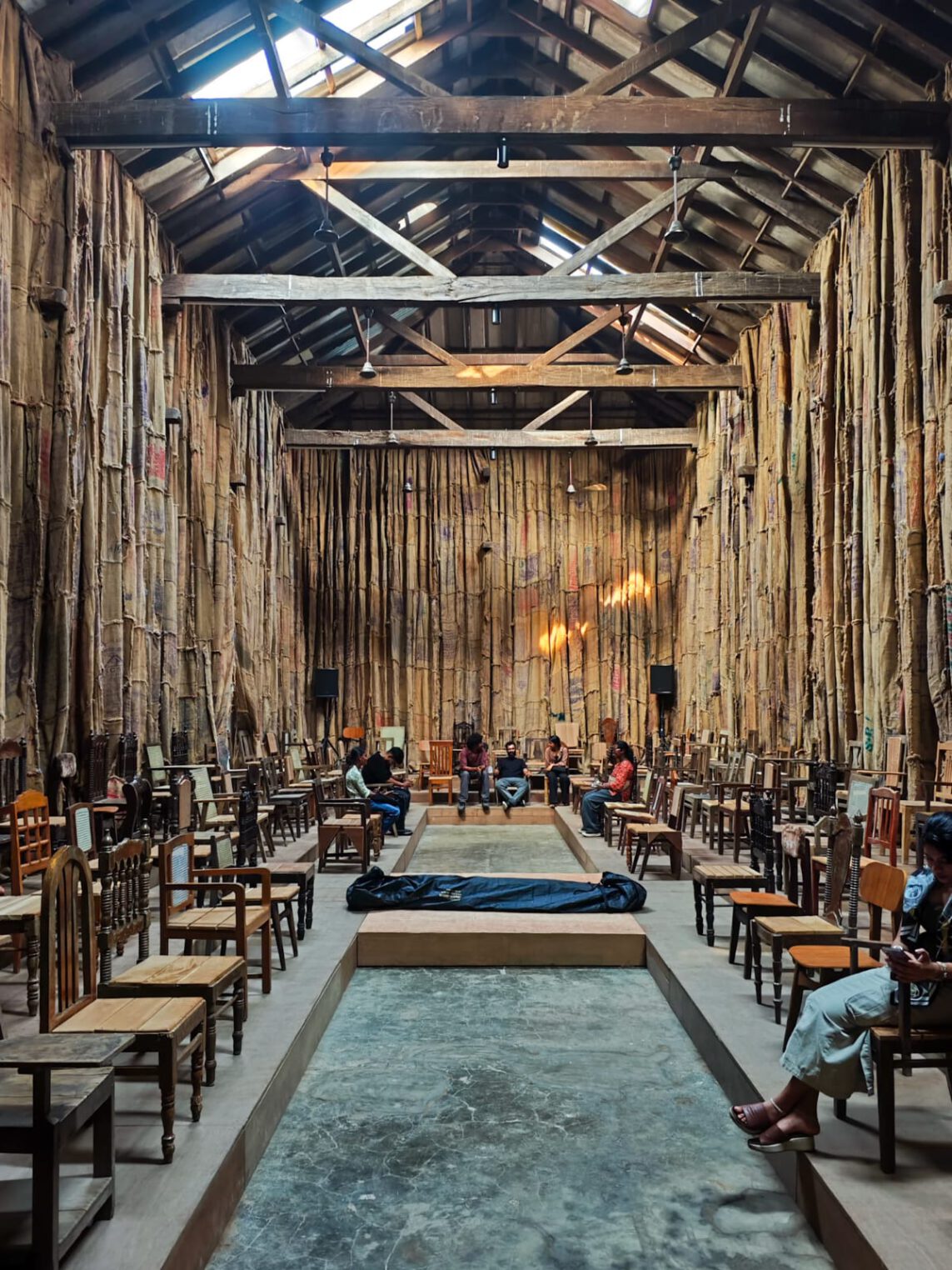
I'm back in Europe for a short time, and I see a busyness, an energy of constant doing. Working, discussing, cleaning up, running errands, fulfilling obligations, organizing, optimizing, presenting, questioning, exchanging. Something is constantly being done. Having something to do seems important; having nothing to do seems unproductive and requires justification. However, not being productive has many important qualities. For instance, non-action can sometimes be a form of resistance, or quiet contemplation can be understood as inner work, work that doesn't show up in the gross national product but is by no means less powerful and moving because of it.
And then there is the connoisseur, as described in the Upanishads. Two birds on a tree: one eats the fruit, the other watches and enjoys. Surely the fruit-eater also enjoys the fruit, but perhaps more as a sensory pleasure, a satisfaction of desire, than out of necessity. The connoisseur, who watches, however, does nothing; he sits and watches, and yet this watching, that enjoyment is deep, sublime - a disinterested pleasure, as Kant says. It is an art without being "art for art's sake." The enjoyment of observation, contemplation, reflection, and absorption, the absence of ego and desire, presence in the now and stillness in immobility, in short: Meditation, is that part of our existence that is fundamental to our being in the world. It has nothing to do with the function we occupy, our performance, and productivity.
Meditation, however, is viewed negatively in many so-called modern, meaning performance-oriented, societies: laziness, refusal to work or consume, esotericism, meaning inability to connect with dominant discourses, or creepiness, meaning alien and distant from home, are common reactions to that state of meditation and contemplation which expands beyond the moment of sitting. In India, people who embark on this path are called yogis. It is by no means necessary for yogis to withdraw from the world. They perceive the world as a form of reality in which we move. This reality has demands for survival, for a practice of living, and for responsibility towards oneself and others. However, material reality is embedded in a further reality of our being: our consciousness, our self, a connection with a deeper, spiritual reality. We have the spark of life within us; it is connected to and identical with the divine principle. We wander in the worlds of waking, dream, sleep, and knowing.
„Two birds, deeply connected, companions, sit on the same tree.
One eats the sweet fruit; the other watches without eating.“
The 3.1.1 verse of the Mundaka Upanishad states:
"Om, all this is indeed Brahman. This luminous, immortal essence is all around us, within us, and without us."
 German
  English
  French