I am back in Europe for a short time and I see a busyness, an energy of constant doing. Working, discussing, cleaning up, running errands, attending to obligations, organizing, optimizing, presenting, questioning, exchanging. Something is constantly being done. Having something to do seems important, doing nothing seems unproductive and requires justification. However, not being productive has many important qualities, so inaction is sometimes a form of resistance, or quiet contemplation can be understood as inner work, a work,...
Ramana, one of India's great enlightened beings, lived in Tiruvannamalai. At the core of his teachings is the concept of the Self: its emptiness and simultaneously immeasurable vastness. His teachings are simple; he does not follow a long tradition of interpretations. He was a simple man who meditated on the mountain and held satsangs. As a contemporary of Aurobindo, people listened to both and compared their radically different approaches. I am currently in Tiruvannamalai. I have attended some satsangs. I had a question in mind: How…
First Encounters with Ragas As a teenager, I listened to ragas for hours. I knew nothing about them. I looked things up a bit: microtonality, meditation, melodic progression. I didn't understand anything else. But they were the deepest musical experiences – a meditation through music. To this day, ragas lead me inward or into deep states of realization, which are not rational, however. It's more of a way of being in the world. Music as a Shared Space and Pure Energy Listening to music draws…
Contemporary art is obsessed with the „next step.“ The avant-garde, the unprecedented, the new and unique. Yet, in the pursuit of the new, we lose sight of something essential: artistic practice itself. Artistic practice isn't just about pushing boundaries. It belongs to those who use art for self-exploration, spiritual practice, healing, therapy, or craft. But in today's culture, especially in the West, we act as if...
An apple, a strawberry, a melon or a passion fruit, a banana or plum, a tomato or cucumber, a bean or grain, a coconut, and a pomegranate. Fruits want to be eaten, they want to bring pleasure, nourish, and sometimes even intoxicate. They shimmer and ferment, decay and exude scents, they catch the eye, enchant the senses, create desire and enjoyment. They are not entirely accidental. Fruits reflect a desire of those who eat them: humans, horses, monkeys, ants, beetles, birds...
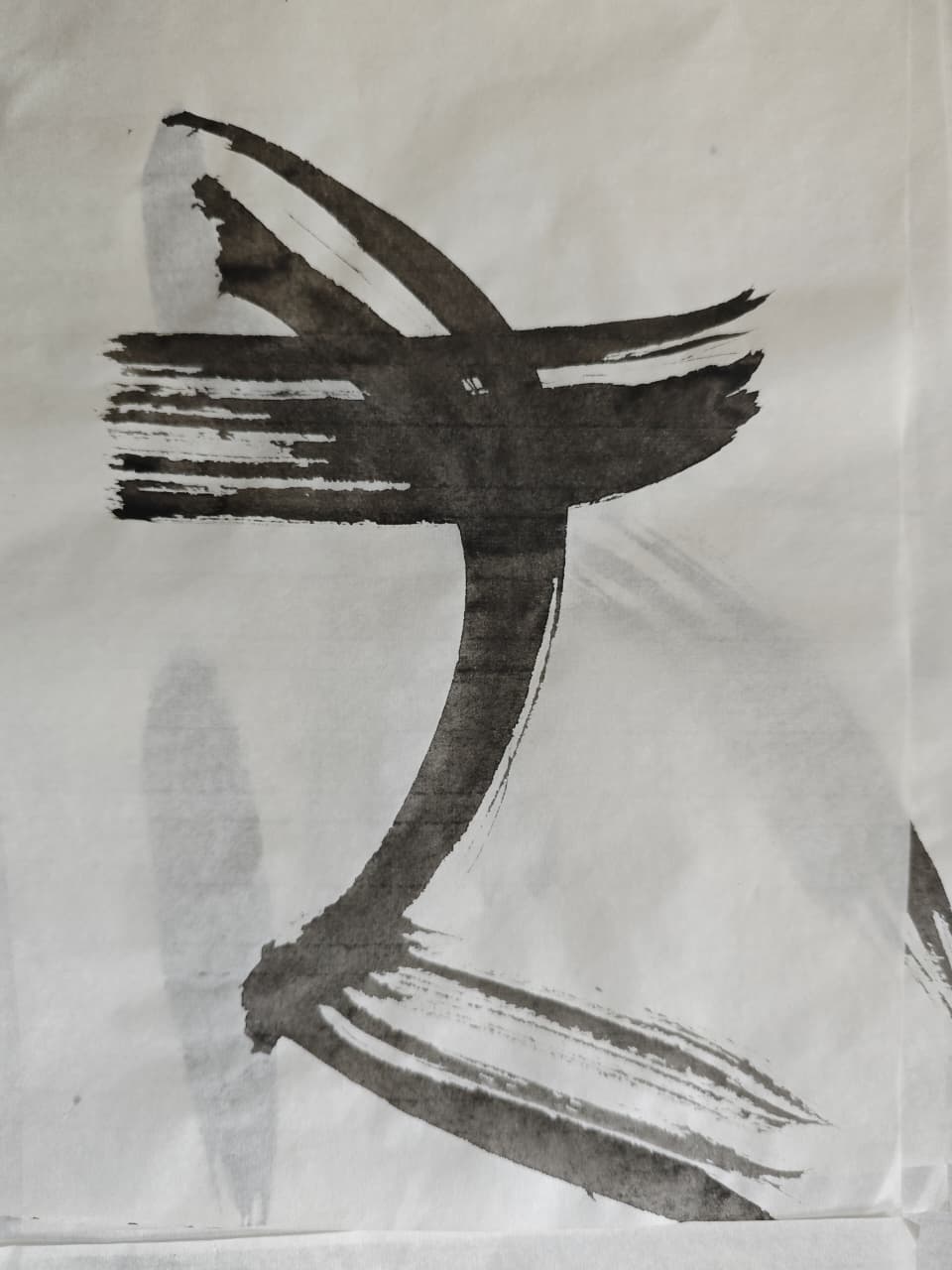
Bodhi Zendo I had ordered a book to take with me to Bodhi Zendo: „Zen in the Art of Ink Painting“ by Katharina Shepherd-Kobel. It's a beautiful book, it speaks to me and nurtures my desire to learn ink painting and deepen my meditation. When I started Zen meditation 3.5 years ago, the urge to go to Auroville awoke. The meditation in Bremen was strict, we followed the rules, eyes half-open focused on a point, recited sutras, had walking meditations, tea ceremonies...
This is Tantra. This is divine. The crucial question is whether such a sacred encounter is only possible in romantic love, as tradition and romance suggest – or if it can arise when we fully open our being, beyond mind and reason, beyond ego, desire, or obligation. I believe it can. But it has nothing to do with climax as the goal. It's about intimacy. It can be as simple as a...
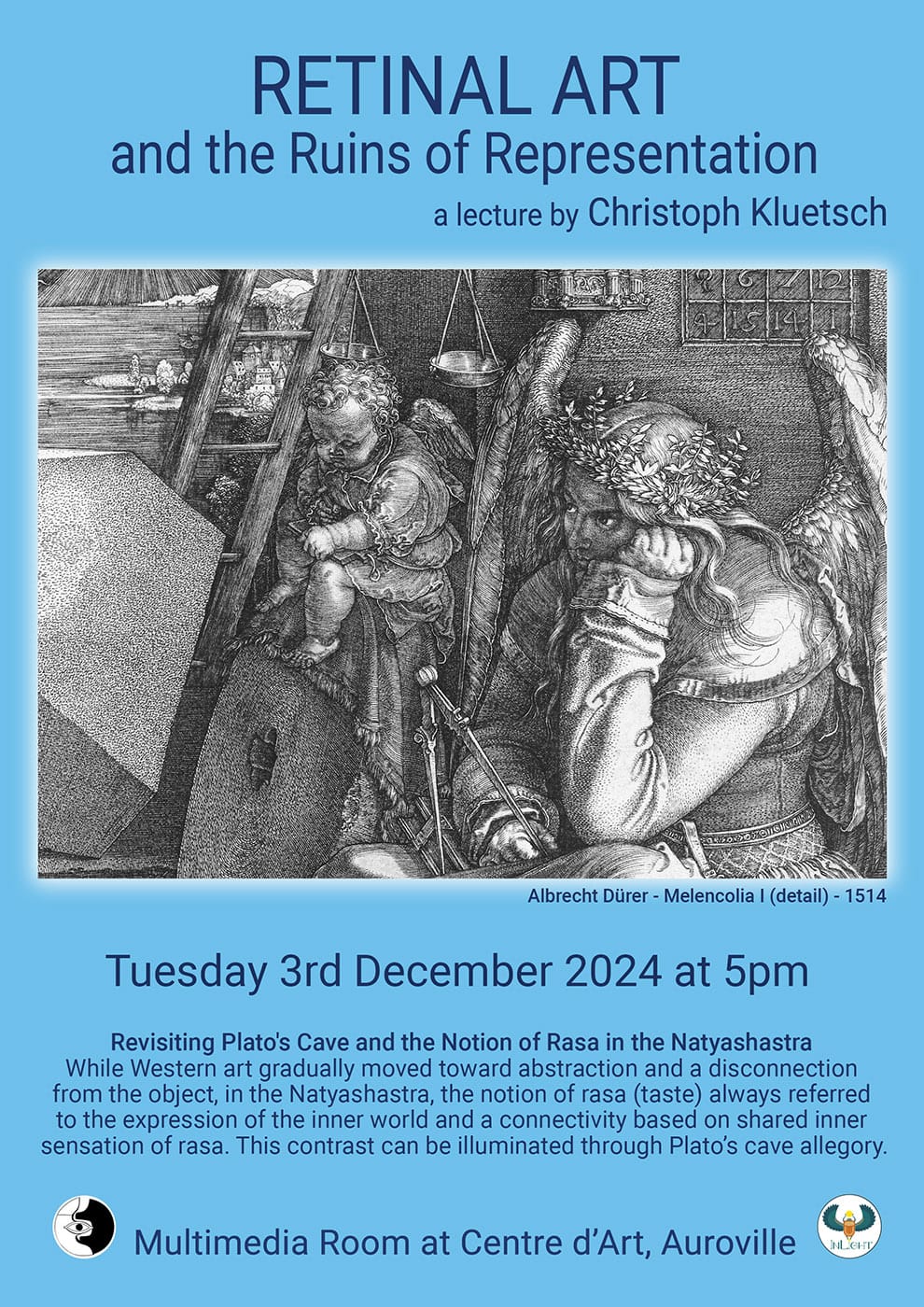
Retinal Art and the Ruins of Representation: Revisiting Plato’s Cave and the Notion of Rasa in the Natyashastra Christoph Kluetsch “Something in the world forces us to think. This something is not an object of recognition, but a fundamental encounter.” Gilles Deleuze – Difference and repetition p. 139 “Minds exist only in relation to other minds.” (Mihai Nadin) “even those elements designated as „basic“ or „proto-elements“ are not primitive but are, on the contrary, of a complex nature.” (Kandinsky, Concerning the Spiritual in Art)

 German
  English
  French