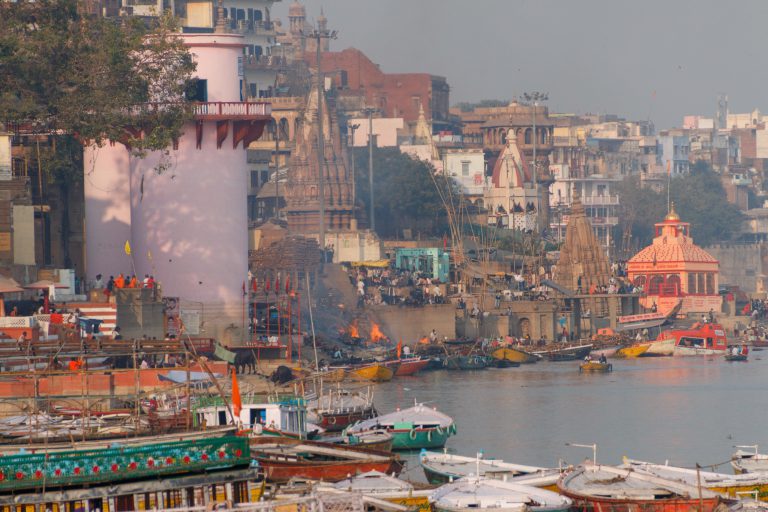
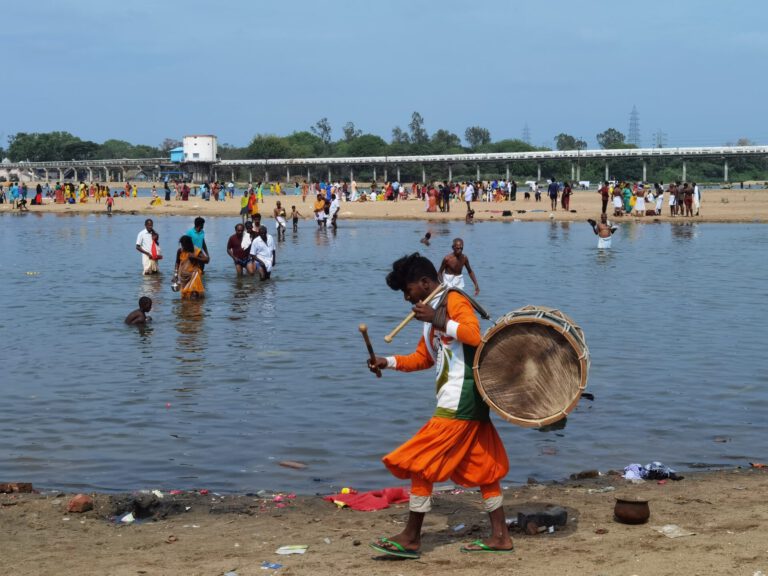
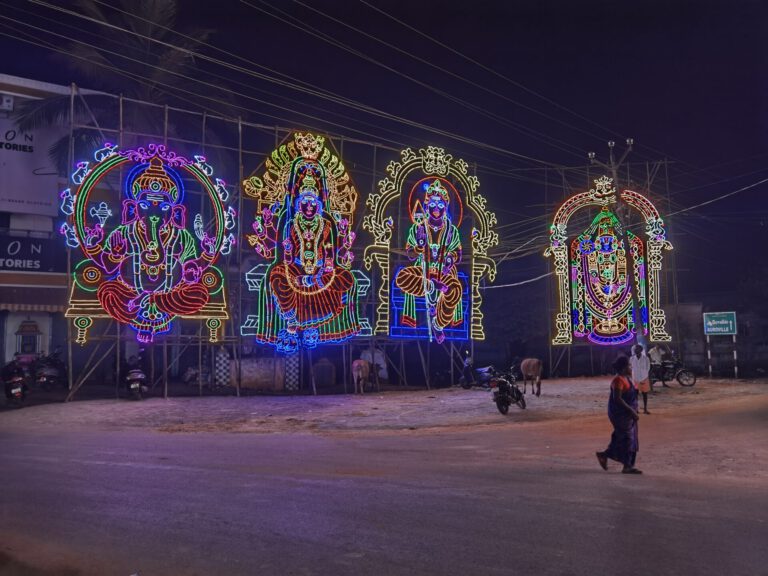
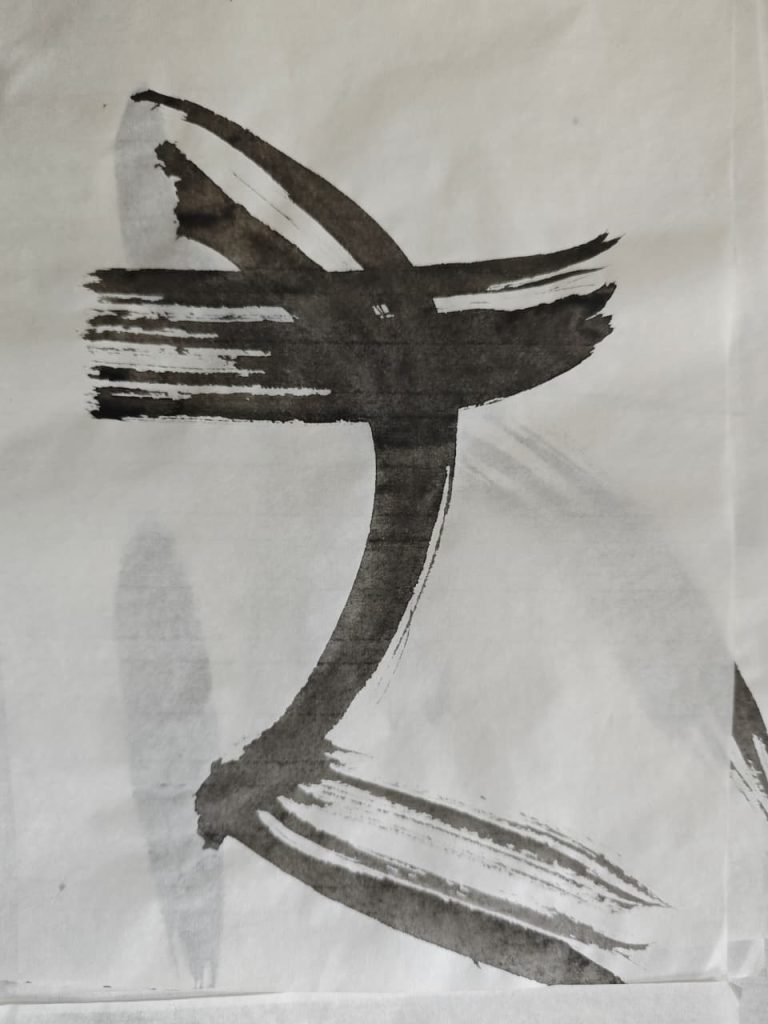
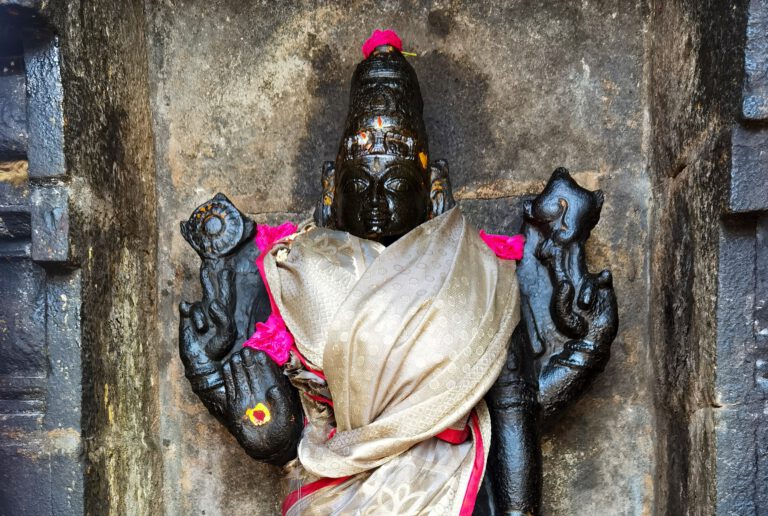
Ramana, one of India’s great enlightened ones, lived in Tiruvannamalai. At the center of his teaching stands the concept of the Self: its emptiness and, at the same time, its immeasurable vastness. His teaching is simple; he does not follow a long tradition of interpretation. He was a simple man who meditated on the mountain and held satsangs. He was a contemporary of Aurobindo; people listened to both of them and compared their radically different approaches.
I am in Tiruvannamalai now. I have attended several satsangs. I had a question in my mind: How does the true Self relate to another true Self, especially when romantic love is involved? I am sitting in an apartment with a view of the mountain. Yesterday, after a small disagreement, I was sitting on the terrace in the morning when a monkey came, touched me very gently, and looked into my eyes as if he wanted to tell me that everything would be all right. Then he sat down beside me and looked at the mountain. He folded his hands on his knees in a deep, contemplative posture, and it felt as though an old friend had come to offer me comfort.
What we call the Self is not what we usually understand by it. It is not our ego, our personality, our identity, or even our soul. The Self is the center of our attention; it is a point in the infinite consciousness of the universe that makes self-realization possible. It is no more than that, and precisely for that reason it is everything. The Self is the point within vastness that offers a perspective; in deep meditation, it can dissolve into universal consciousness, return to its origin, and cease to exist in full self-awareness.
Being in Love
This first became clear to me as a teenager on the hill in Rome. I was in love and carried an unfulfilled longing. A friendship that was deep, tender, and intimate, but never physical; we were not a couple. And while I sat on the hill and thought about the world, I saw it from out of the Self. I reached the deepest level of our existence, and even now, forty years later, I can return instantly to that consciousness whenever I remember it. I was blissful and shocked at the same time. Do I really carry the whole world within me? Do I really not exist? How can it be that everyone speaks about themselves without realizing that the Self, as they see it, does not exist? I have carried this insight with me ever since. I have deepened the understanding, placed it in context, thought about it. But ultimately not much has changed. It was simply there, pure and simple.
I believe that unfulfilled longing is a good teacher. I become conscious of my desire and of the impossibility of its fulfillment. Desire creates suffering. Why am I not seen as I wish to be seen? Why is the love I feel not returned? Why do I not share what I truly feel? This last question may be the most important one. Other desires are about attachment, about wanting or being, but in unfulfilled love it is a matter of being seen.
How can one Self see another Self? And must they see one another in order to love? Is there a deeper unity within cosmic consciousness in which two can unite in order to become something else? What is this transformation?
The Self, as a point of consciousness within universal consciousness, becomes aware of its soul when it awakens. The soul, however, is even harder to understand. It is that which is born and reborn. The soul comes with biological birth; it enters my body and remains there. It leaves my body when the body breaks. It was there before my birth and will still be there after my death. It is a manifestation of the universal soul, Purusha. The soul is what we truly are, not the physical body, not the Self. The soul is the core of our existence. To find our soul is the most difficult path we can walk. Only when we find our soul can we truly love; we can find our kindred soul.
Soul
Every soul is different. That is the beautiful thing about it. The soul is not my ego, not my personality and identity. The soul holds life in my body; it flows through every nerve, every fiber, every bloodstream, every nerve cell, every hair, and every taste bud. The soul holds my experiences together, plays with my memory, takes delight in my existence. As a by-product, it creates the ego, my personality and identity. But all of that can change; I can change. The soul does not change. It flows through time as part of universal consciousness; it may be connected with the concept of time itself. Self-consciousness is not bound to time and space. In a deep state of being, I can live a thousand years; I can connect with my soul and recognize that it is immortal. And when Self and soul take one another by the hand and fly, we can experience something that science cannot describe. It is Shiva and Shakti, the universal interplay between Self and manifestation. The only problem is our ego and our intellect. We need them, of course, to find food and to live with others, but they stand in the way of true self-realization.
Because we have a soul, we can love. The yogis, sadhus, and siddhars may concentrate on self-realization. But in order to love, we pass through the Self into the soul and find another soul. These two souls are not the same; they struggle and unite, they enjoy and suffer, they dance.
While the Self has little to do with my biography, the soul reveals itself through my biography. It is always there, whether I am conscious of it or not. To see this core of my own biography is the path after realization. For me, this path was the search. I am a wandering soul. My path has always been the spiritual search; my strength, a deep healing.