
The true self
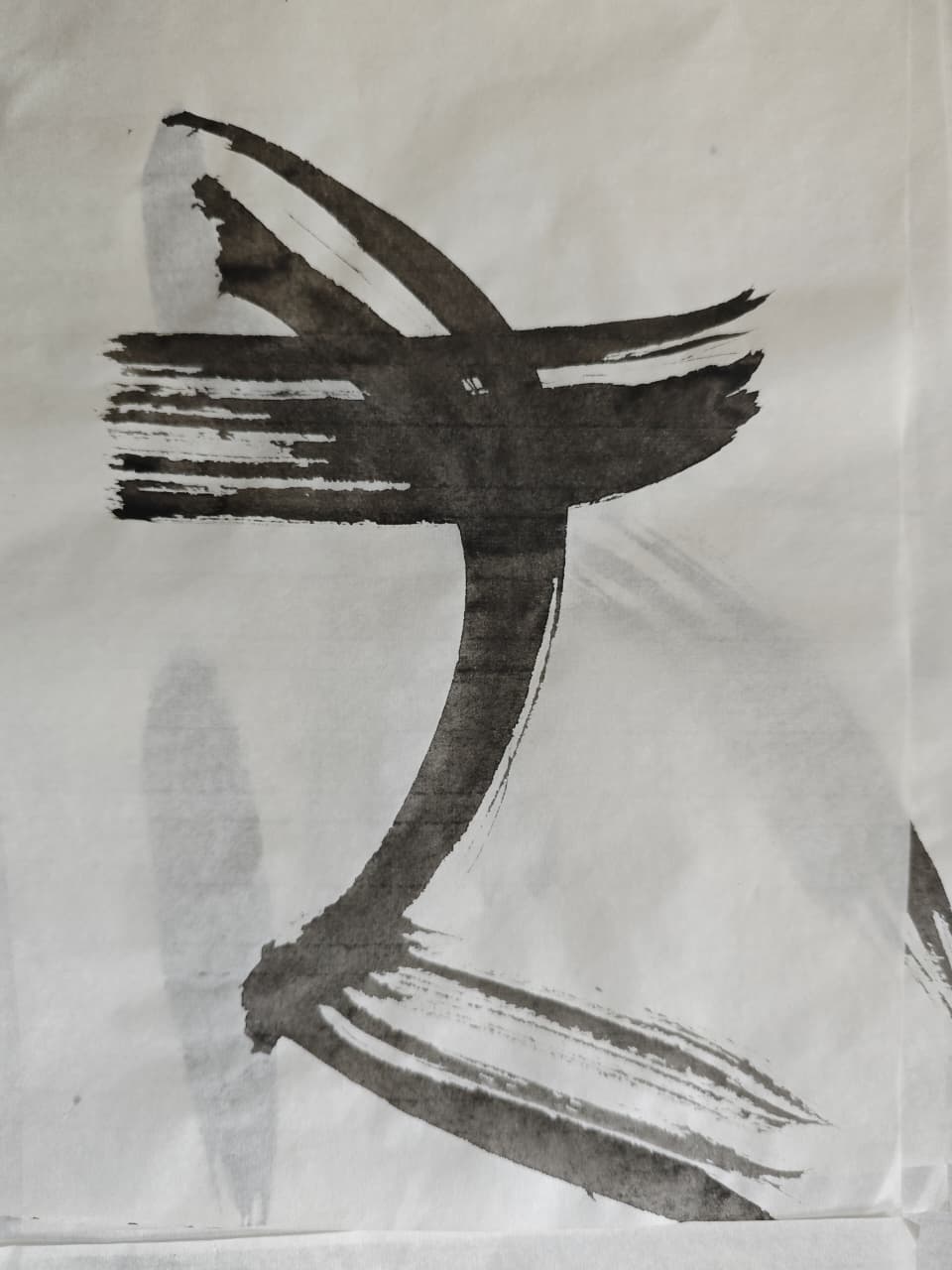
Zen is about finding your true self. But it doesn't exist, and that's the mystery of our existence. In a world of representations, cognitive dissonance, and alternative facts, it's good to immerse yourself in the essence of existence, in a non-dual being. Thinking helps very little here, because thinking is actually always thinking about something, reflecting on something. Thinking is an activity that refers to something, that deals with representations of the world. That which...
Weiterlesen
Koan - Becoming
I'm thinking about Deleuze, the movement of becoming. To erase the sound of the stream, I must become the sound; to enter the stream, I become part of it. When I linger in the forest, I participate in the silence and the chirping, the rustling of leaves. I become one with nature. That notion from Romanticism – oneness with nature, with a loved one, with the cosmos, with God – generates bliss, ecstasy, bliss, ananda.
Weiterlesen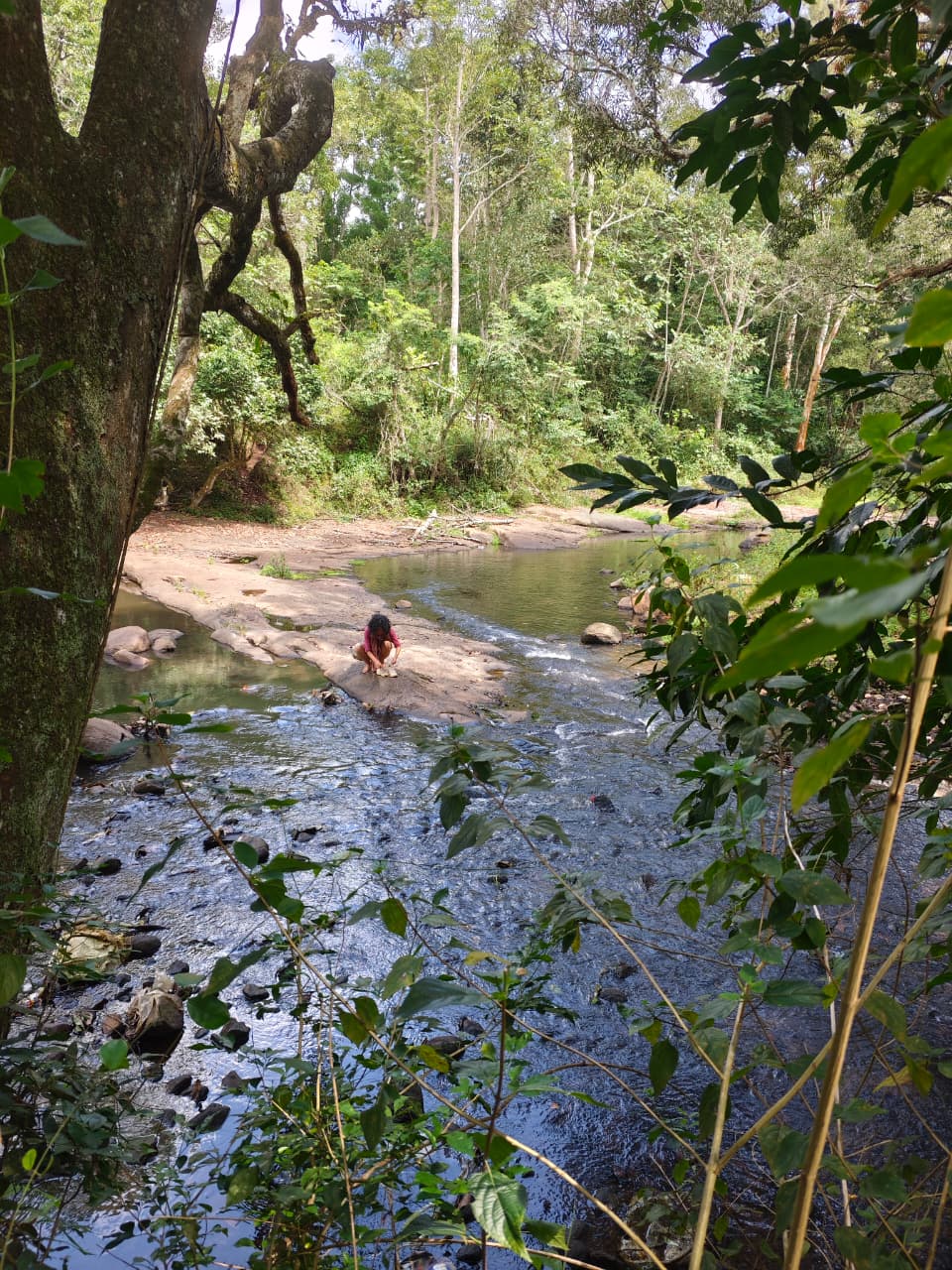
Koan
So, a koan. I'd heard of them before, those mysterious Zen riddles meant to lead the mind out of the purely rational and open up new forms of insight. I decided not to read much about them or ask others about them. I wanted to get one from a Zen master. While Doksan was asking me a few things about myself. We closed our eyes, he smiled, and told me to imagine a forest with a small stream flowing through it. When...
Weiterlesen
General intelligence and the cosmic archive
I am in a sesshin, a 2.5-day short form of intensive Zen meditation. Thoughts and images about the artificial general intelligence (AGI) that we are currently creating keep coming to me. More and more people from the fields of humanities, psychology, or team organization are showing themselves to be impressed, surprised, or anxious regarding AGI's capabilities. It seems the Turing test was passed some time ago, and we are now watching an intelligence develop that seems superior to us. This intelligence...
Weiterlesen
Form and emptiness
Form is emptiness. It has shape, but no substance; it is neither matter nor energy. Form is consciousness – to see something as something gives rise to form. Form is also functional: substance, matter, and energy interact according to laws. As part of consciousness, they interact in form. Form is emptiness. Form is consciousness. Consciousness interacts with consciousness. Matter arises from form – not the other way around. Matter does not give rise to form. The flow of energy and matter – from individual…
Weiterlesen
Bodhi ZendoBodhi Zendo — Zen Meditation, Silence and Practice in South IndiaBodhi Zendo
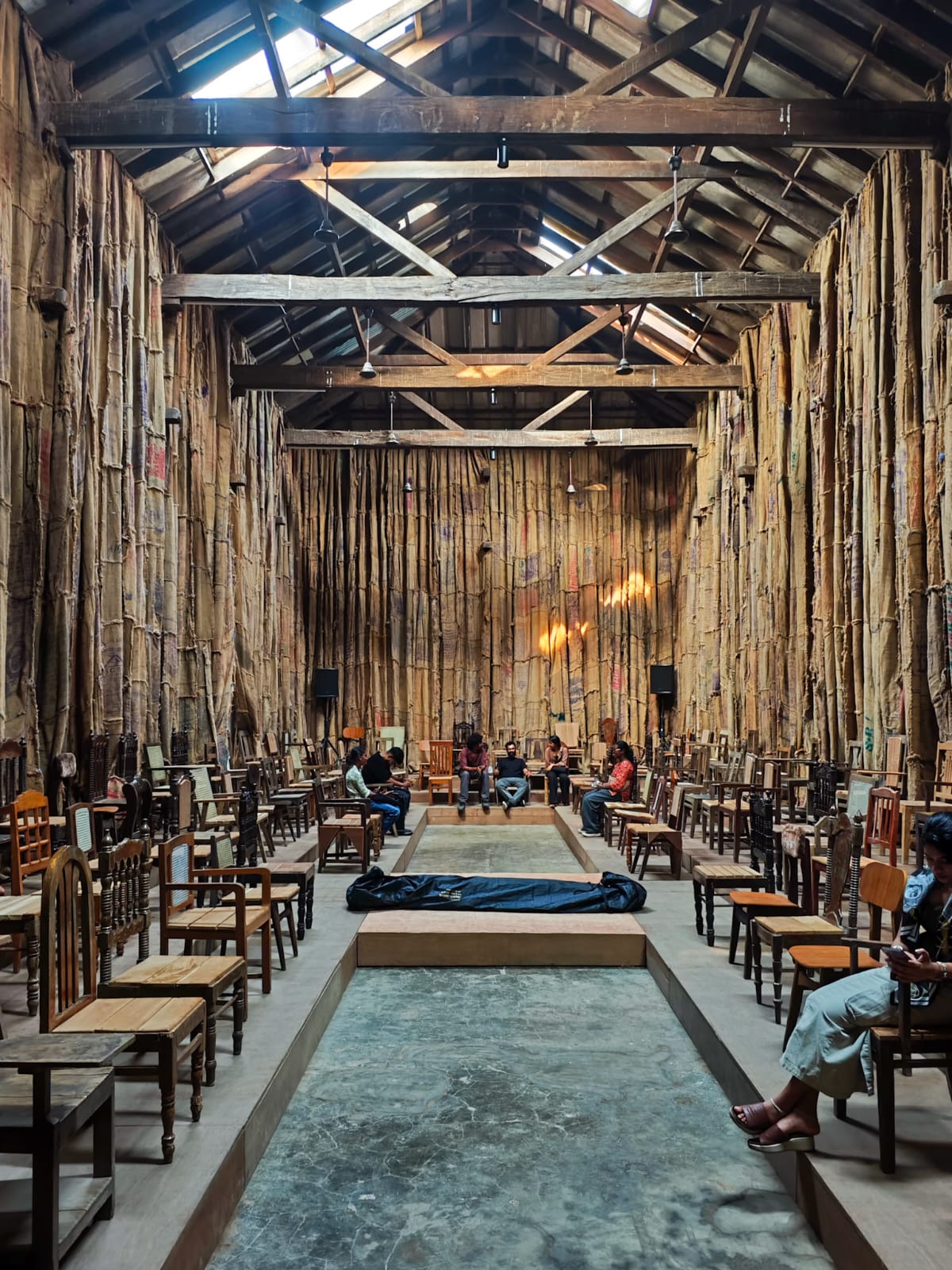
Bodhi Zendo I had ordered a book to take with me to Bodhi Zendo: „Zen in the Art of Ink Painting“ by Katharina Shepherd-Kobel. It's a beautiful book, it speaks to me and nurtures my desire to learn ink painting and deepen my meditation. When I started Zen meditation 3.5 years ago, the urge to go to Auroville awoke. The meditation in Bremen was strict, we followed the rules, eyes half-open focused on a point, recited sutras, had walking meditations, tea ceremonies...
Weiterlesen
Sacred Energy
This is Tantra. This is divine. The crucial question is whether such a sacred encounter is only possible in romantic love, as tradition and romance suggest – or if it can arise when we fully open our being, beyond mind and reason, beyond ego, desire, or obligation. I believe it can. But it has nothing to do with climax as the goal. It's about intimacy. It can be as simple as a...
Weiterlesen
Shadow
Ever since I first heard about shadow work decades ago, I've wondered exactly what it is. I always thought of deep abysses in the soul, traumas, taboos, secrets that you haven't shared with anyone because it's too shameful to talk about. I thought shadows are what we hide from ourselves and from others. And there's probably something to that idea. Now I've realized that shadows first appear somewhere else...
Weiterlesen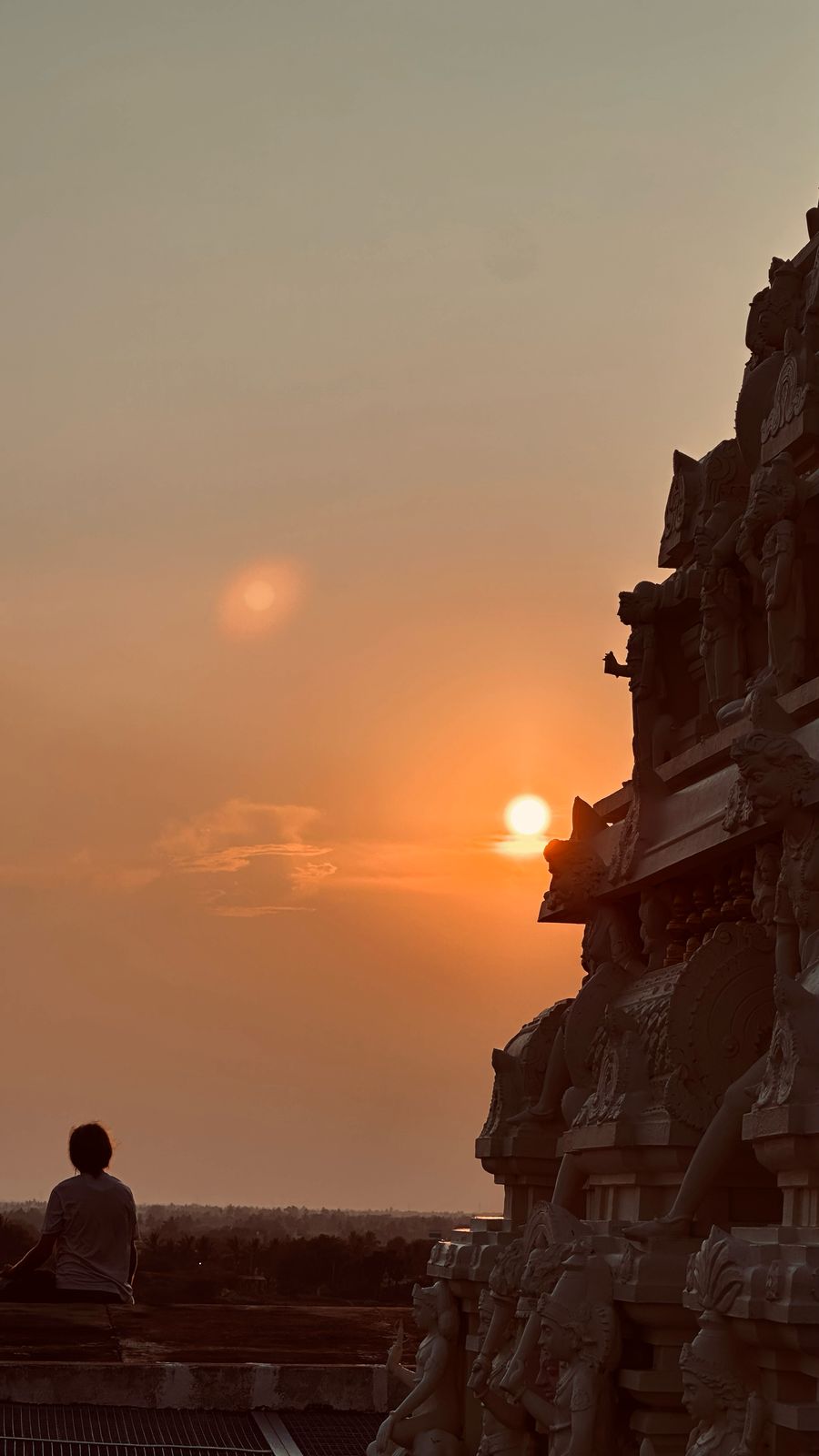
Spiritual growth
When I began reading the Upanishads, I realized that the inner path I had embarked upon was leading me into an extraordinarily beautiful inner landscape. Discovering that this inner landscape is connected to cosmic consciousness made me aware of the important work I must undertake—what people often call “inner work.” As I committed myself to this inner work, I focused on how I was feeling, who I am, and what I must face. What are my shadows? My insecurities? My…
Weiterlesen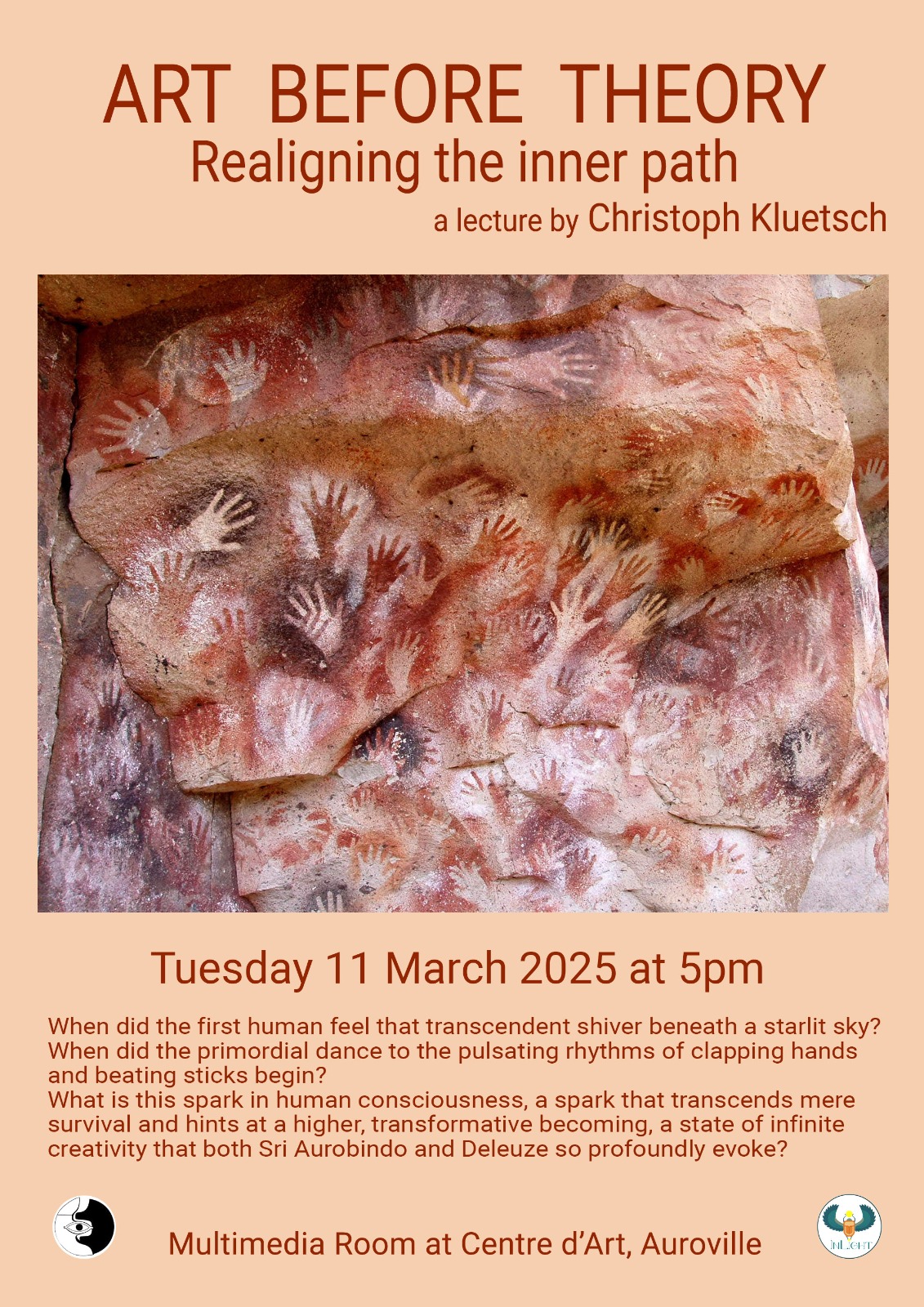
Art Before Theory
Art Before Theory (short summary) Christoph Kluetsch This lecture is the final one in my winter series. I have given six lectures so far, and I have been challenging myself throughout. Today, I am taking on my biggest challenge yet. I have been exploring topics that interest me—topics that represent a collision between Western art history, Indian spirituality, and postmodern thinking. I find this intersection to be a fascinating space to operate in. In my previous lectures, I have examined…
Weiterlesen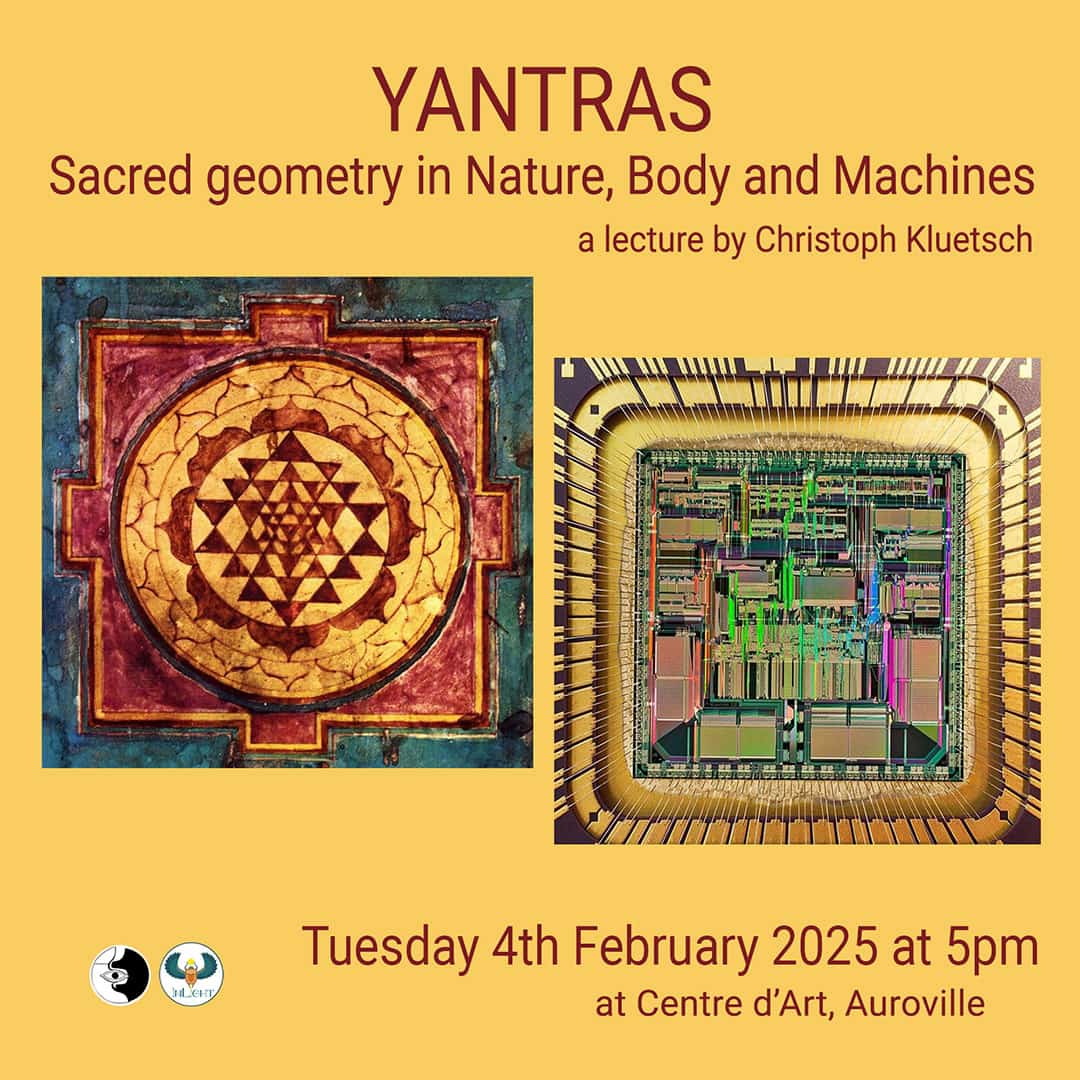
Yantras: Sacred Geometry in Nature, Body and Machines
The spider brings forth its own web. This image from the Upanishads invites deep meditation on how nature brings forth a thread that it weaves into a complex symmetry. Looking at the spider, the thread, and the web—its function and the source of the complex pattern—we have an image that invites deep speculation about mantra, tantra, and yantra, about art and knowledge, about creation and information. The 5th lecture explores art and scientific visualizations of sacred symmetry in a field…
Weiterlesen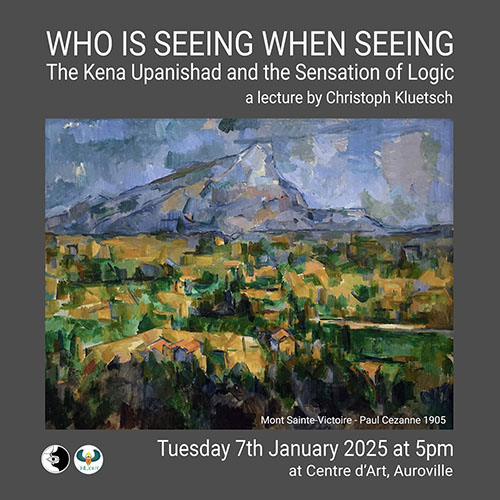
Who is seeing when seeing
Auro Art World organized a series of 6 lectures at the Centre d’Art multimedia room in Auroville. These lectures, conducted by Dr. Christoph Kluetsch, explore connections between art, philosophy, and spirituality, bridging Eastern and Western traditions to illuminate the enduring questions of existence, consciousness, and creativity. The series is offered on the first Tuesday of every month. Fourth lecture – Tuesday, January 7, 2025, at 5 PM. Who in our consciousness experiences sensations? How are sensations synthesized? How do matter, vibration, consciousness, and self connect? And how can we share sensations…
Weiterlesen German
  English
  French