
Language
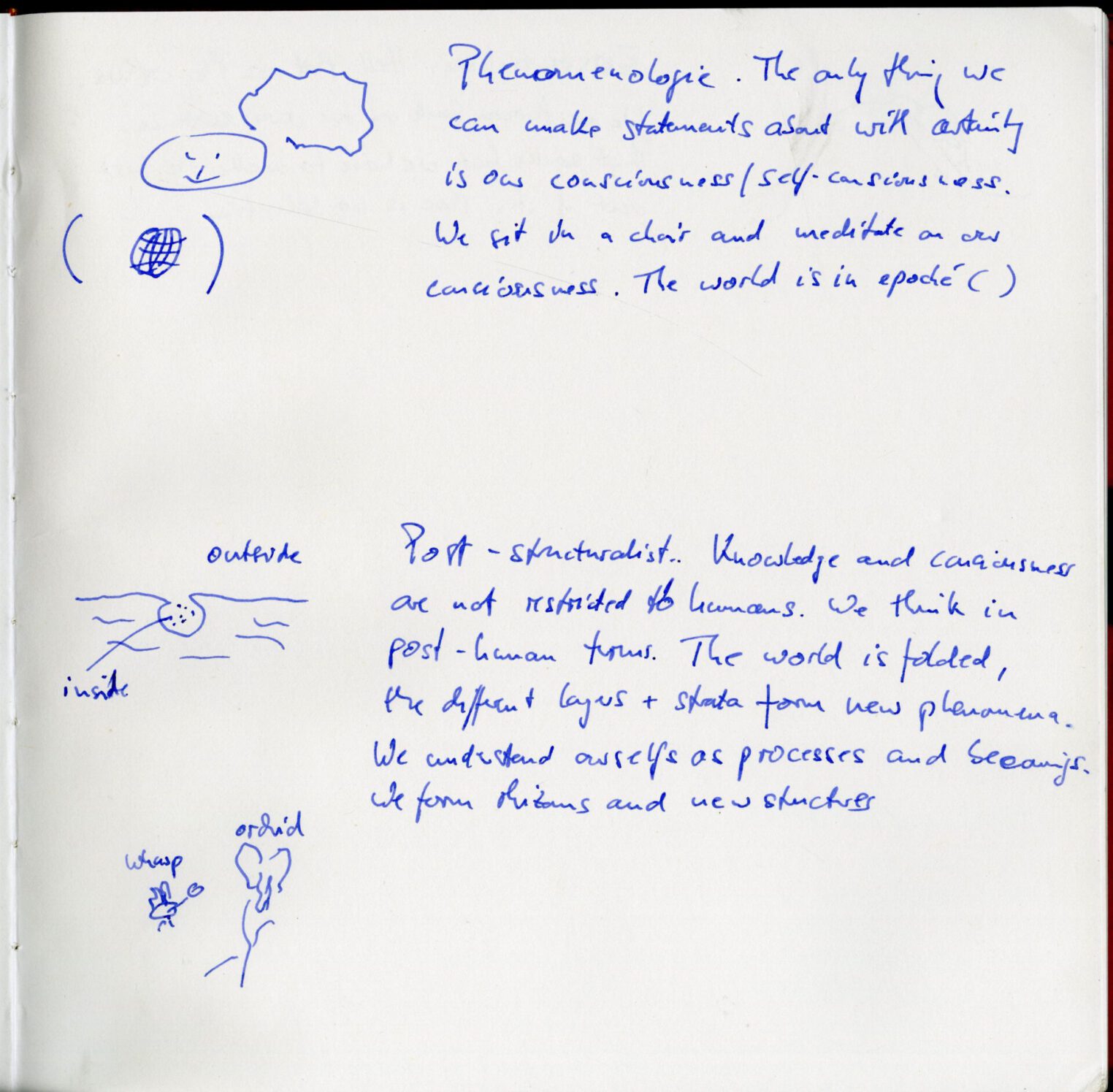
I never really thought about concepts. That sounds strange, because I analyzed language (Frege, Saussure, Derrida, etc.), I concerned myself with the content of language (Husserl, H.N. Castaneda, Quine, N. Goodman, etc.), I analyzed the aesthetics of signs (Pierce, Danto, Welsh, Bense, etc.). In my reading, language is always part of consciousness; only as conscious speaking, reading, hearing does language make “sense.” Ultimately, then, it is about theories of consciousness. In short, I thought about the function of language, its reference, its capacity for communication, its social, political, sociological implications, without really thinking about the nature of concepts. What do I mean by that? In its ideal type, language is structured in grammatically “correct” sentences. These sentences have a structure (in the simplest form, subject – predicate – object). A sense corresponds to them; this is the content of the sentence that we try to communicate, or that we think we understand. The dominant “Western” philosophy of linguistic analysis is now primarily concerned with the question of which sentences are true and which false. To do this, of course, it must first be determined under what circumstances sentences can be true or false in general. So it is a question of the relationship of sentences to the world, and the relationship of sentences to their sense, and what the relationship between sense and world is. This is no easy task, and to avoid losing the thread, philosophy orients itself toward logic. In the introductory grounding, then, lies the shared root of logic and language. On this foundation, all the other sciences can then be examined in their claims to validity. What is wrong with that?Diagrams and concepts in teaching
During the time I taught in the USA, I thought a great deal about diagrams and used them in my seminars. I was skeptical of them during my studies. It seemed lazy to me to express a lack of conceptual precision through diagrams. Diagrams—I thought – are always shown when something complicated cannot be expressed clearly. I had been trained to believe that this conceptual clarity could be reached as a distant goal – a core thought of the Enlightenment. The concept ‘concept‘ is conceived very technically here. (See Frege’s Function and Concept of 1891). For Frege, concepts are predicates that can be true or false, or something like that… there is unspeakable trench warfare over this.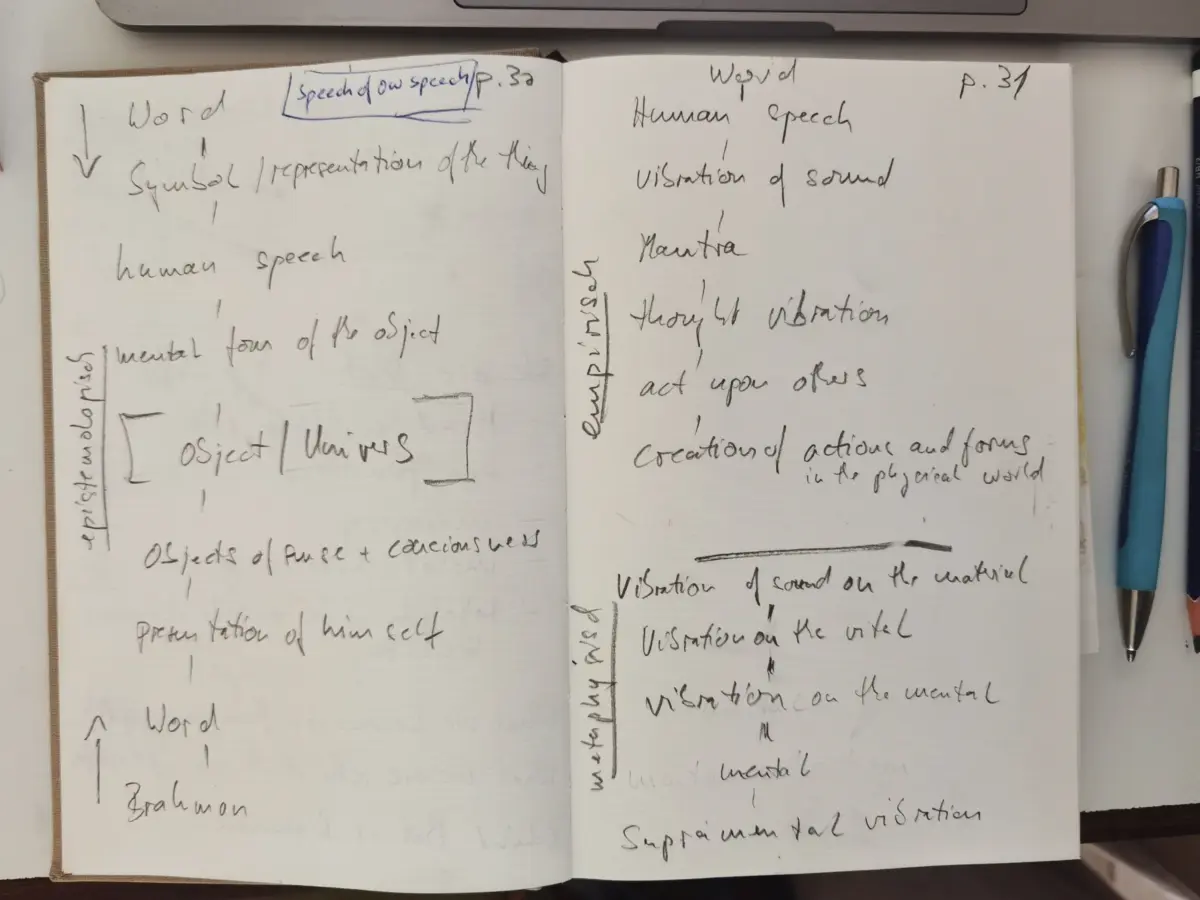
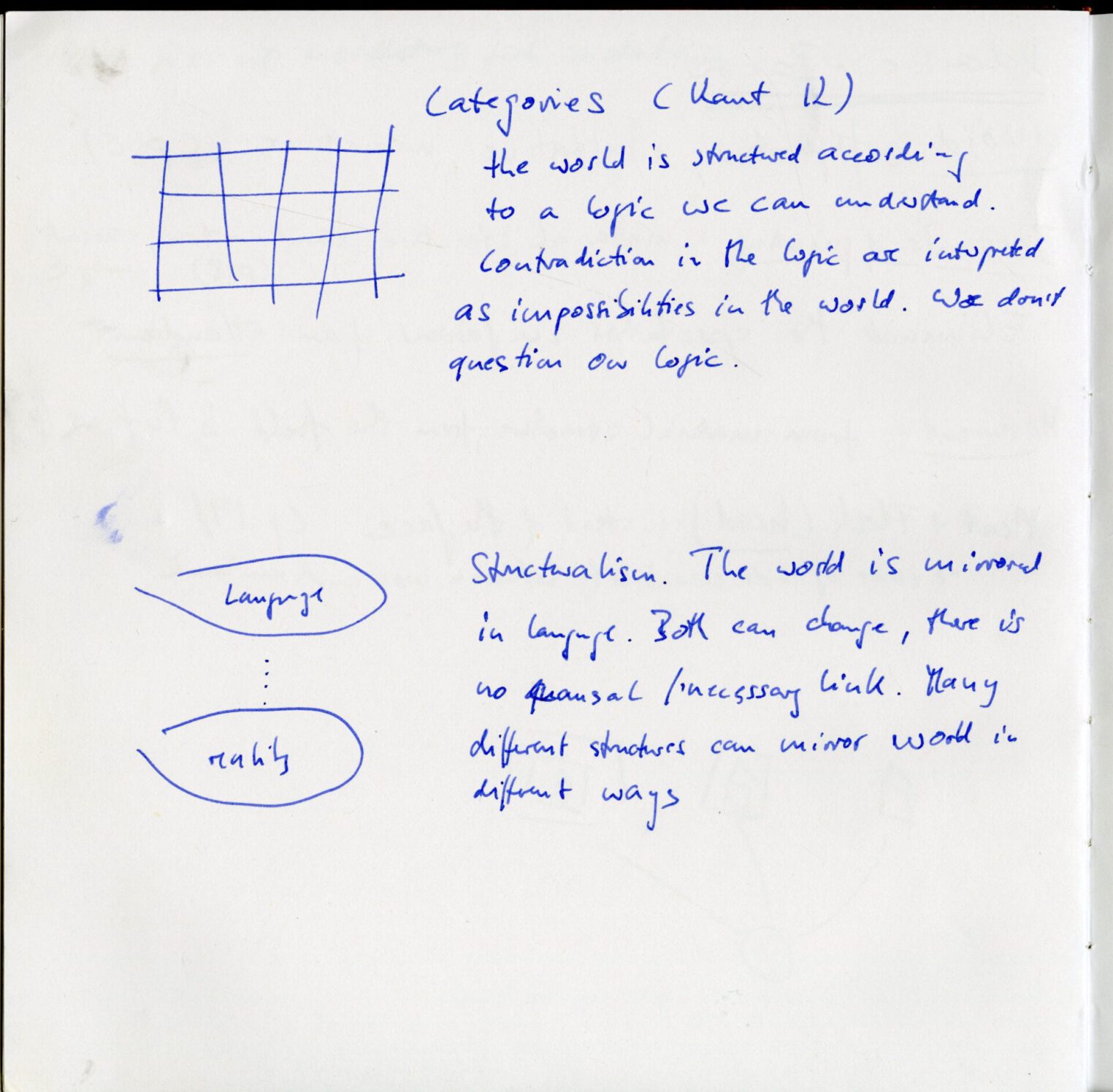
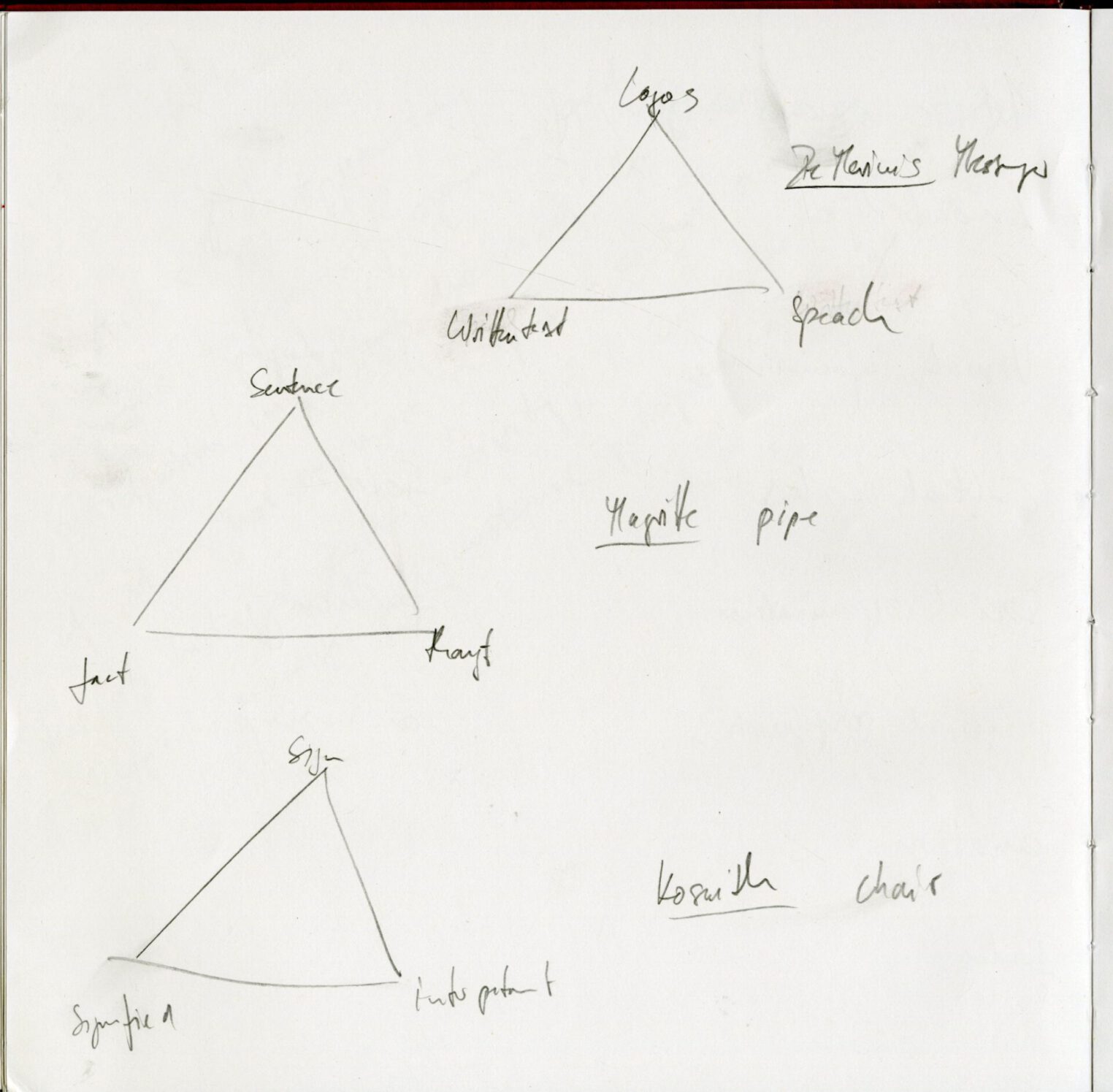
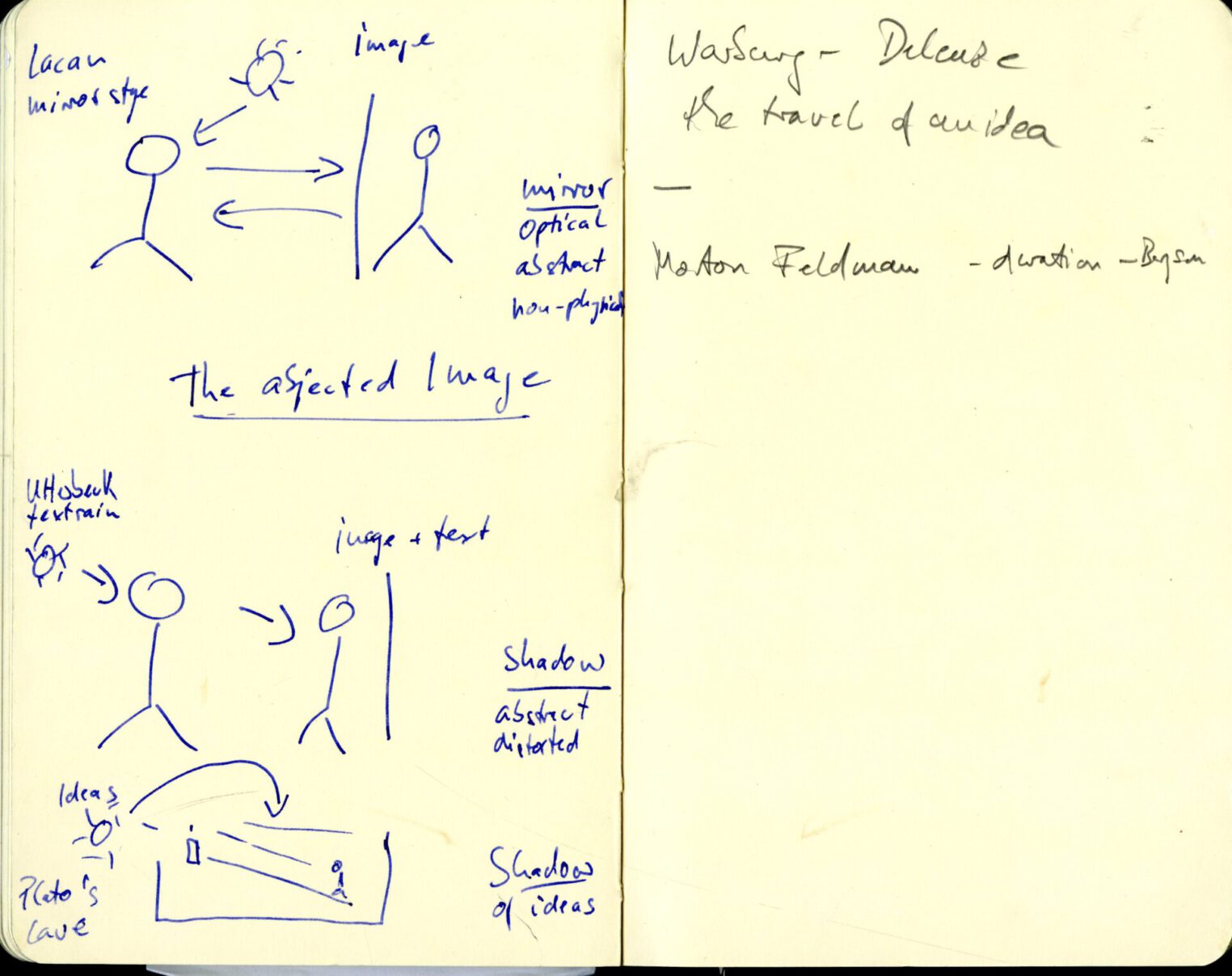
© Christoph Klütsch
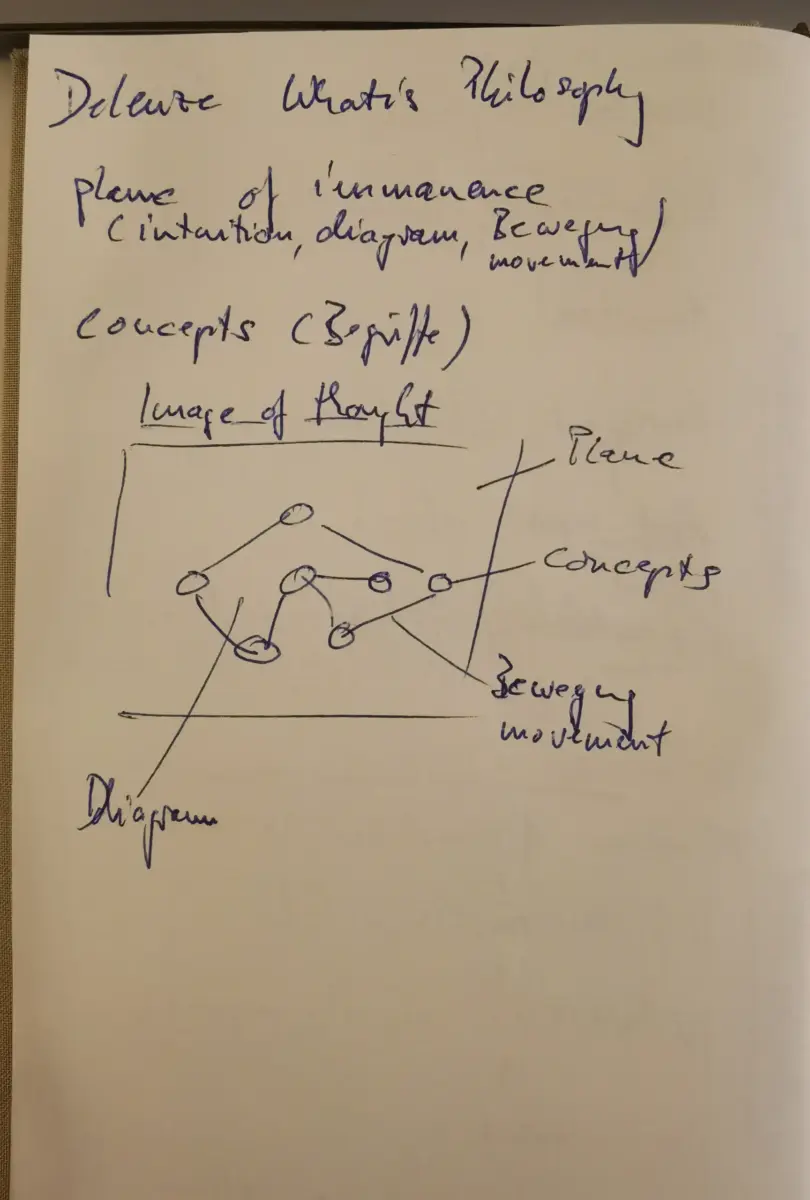
Deleuze, by contrast, says very clearly that concepts are not unambiguous, that they overlap and have anything but clear boundaries. They exist on one or many different planes:“Philosophical concept are fragmentary wholes that are not aligned with one another so that they fit tgether, because their edges do not match up. (…) They resonate nonetheless, and the philosophy that creates them always introduces a powerful Whole that, while remaining open, is not fragmented: an unlimited One-All, an ‘Omnitudo’ that includes all the concepts on one and the same plane.” (p.35)
“Concepts are like multiple waves, raising and falling, but the plane of immanence is the single wave that rolls them up and unrolls them” (p.36)
“Concepts are the archipelago or skeletal frame, a spinal column rather than a skull, whereas the plane is the breath that suffuses the separate parts.” (p.36)
Every great philosopher, every era has its own plane. There are many planes. The Renaissance is different from Romanticism, Kant different from Nietzsche. It would be absurd to think that the same concepts mean the same thing in other contexts. In his late work, Deleuze is concerned with the different planes. The 1000 Plateaus were perhaps the experimental kit for this.Planes (planes)
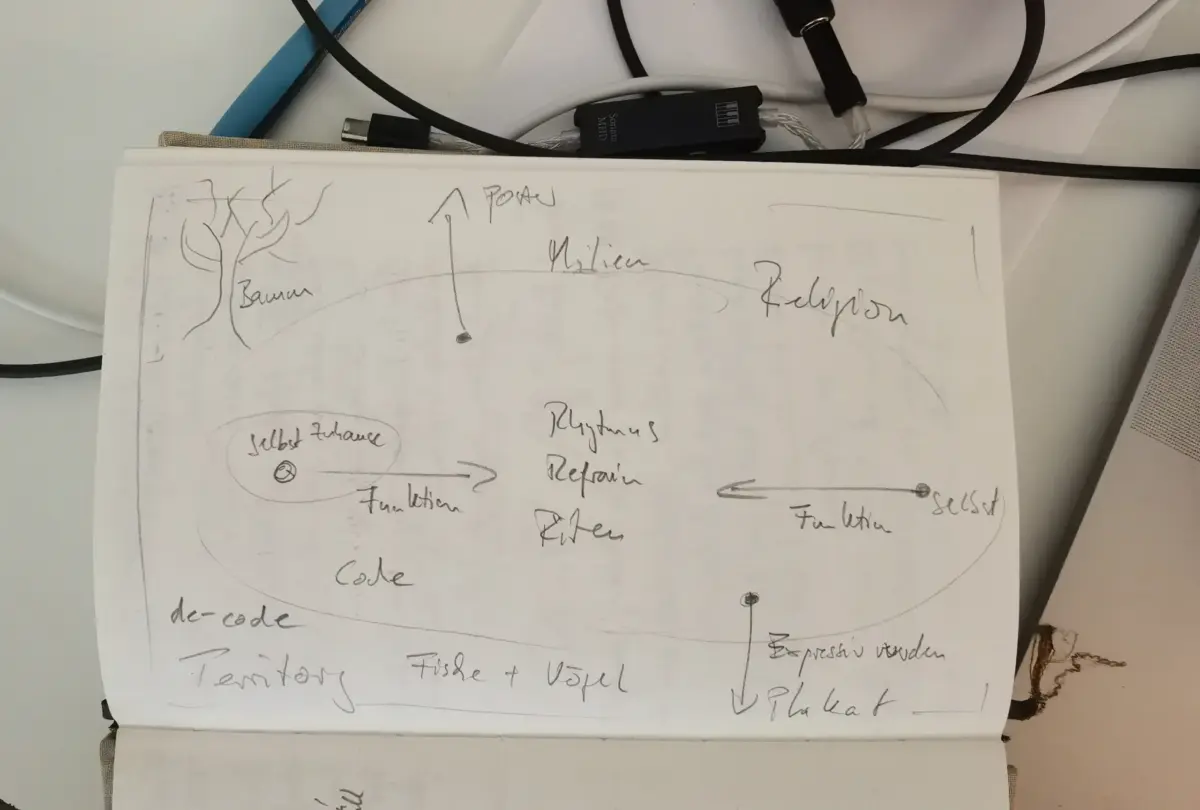
What is a plane and what a concept? I think the core of Deleuze’s thinking lies here. For him, concepts are agile; planes are the “dimensions” in which they act. The plane of immanence is absolute. Thinking in Deleuze is alive, it changes, not only for him, but in itself. Film is thinking—also a plane on celluloid. How does a concept arise, how are connections between concepts created, how do thoughts constitute a view of the world. For me, Deleuze is a philosopher of immanence. How do habitats (territory) form from geological layers (strata)? How does a living being define its habitat, and how, when, why does it leave it, and how does it then transform itself? What does it become (Becoming)? Can it come back again (territorialization and deterritorialization)? How does communication take place within this (rhythm), how are milieus formed?My sus-picion?
My suspicion is that Deleuze’s thinking is not so far removed from the Vedic worlds of thought. The project is exciting. The Vedic scriptures were transmitted only orally for centuries before they were written down, and they remain little understood to this day. I am sympathetic to Sri Aurobindo’s reading, which opposes the primordial force of spiritual thinking in India to the Western reading of soulless scholars. I cannot judge whether this is always philologically correct. Aurobindo activates the Vedic scriptures in any case. He brings out their philosophical rigor, embeds them in human experience and spiritual thinking, and shows that the beginning of philosophy lies here. This beginning appears not in the form of a delicate emergence, but powerfully as a vision of essence, as an enlightened seeing of a spiritual truth that tries to answer the central questions of our existence. In this sense, the Vedic scriptures are more than philosophy for Aurobindo. They contain philosophy, but go beyond it, not irrational, mythical, ritualistic and barbaric, but clear in their address to our existence. Where do we come from, and what is our task? To answer this truthfully is the attempt of the Vedic scriptures. I see resonances in the planes of the Vedic scriptures and Deleuze’s planes. The gods of the Vedas and the unleashed concepts in Deleuze are not so dissimilar. The philosophy of immanence feeds both. Everything is one. It is about understanding life. OM TARE TUTTAREGilles Deleuze, Felix Guattari. What Is Philosophy? Columbia University Press, 1996.

Leave a Reply