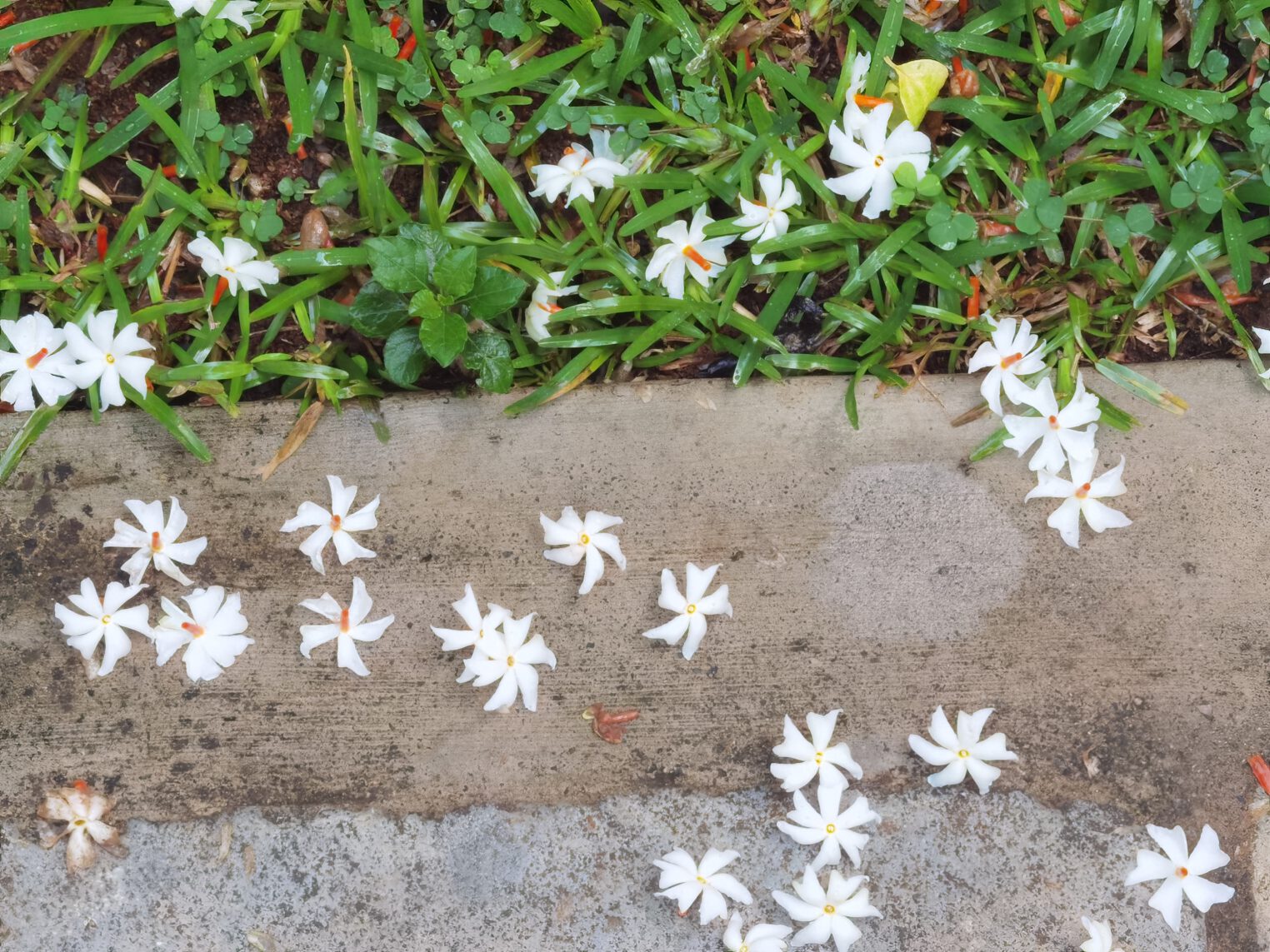
“the eye thinks even more than it listens” (Deleuze)
I now remember that, before I began reading Deleuze, I had struggled with an aesthetics of process. I put together a 100-page manuscript with notes, quotations, sketches of structures. I wanted to move away from the idea that art consists of objects perceived in a particular way, because this produces two main strands of thought: 1.) What constitutes an object that we call art, and 2.) why is the perception of art different from everyday perception? There are countless theories about both strands; some connect them, some opt for one, others for the other.
But somehow this was always suspect to me: the relation art object <-> perceiving subject. There is that dualism again, which some have tried to dissolve radically by choosing one of the two sides of this relation at the expense of the other. A dispute between idealism, materialism and empiricism. Philosophy, it seemed to me, had got itself quite thoroughly bogged down here. The field of philosophical aesthetics is not unjustly considered impossible to survey, sometimes soft and inconsistent, something for philosophers who find more pleasure in the adventure of thinking than in the search for truth. And that is what it is about, after all: pleasure.
Art
I looked for a way out without having to leave aesthetic thinking. It seemed to me that the only way to oppose this dualism was another ontology. An ontology of process. I read H. Bergson and N. Whitehead and searched the art world for works of art that addressed this. Works of art whose medium was time offered themselves: film and interactive installations. It seemed to me that an essential aspect of this art was the transition from one state to another, from one image to the next (“Film is truth – 24 times a second,” Godard).
Or between letters. Here I found Paul de Marinis‘ Messenger (1998) fascinating and contrasted it with Nancy Holt & Richard Serra’s Boomerang” (1974). Both are works that stretch language so far that the spaces between letters and words become perceptible. Deeper reflection then showed me that these spaces are actually just as meaningless as the letters and words themselves. Meaning, sense, statement, beauty, reflection of – what exactly? They point to the process of thinking and communication itself. For me, this was the way into art that is not based on representation of whatever kind. For here too, in this fatal concept of representation, lies the fall into dualism.
“This is the dark thought I have had about representation for so long: we are immersed in it and it has become inseparable from our condition. It has created a world, a cosmos even, of false problems such that we have lost our true freedom: that of invention.” (Dorothea Olkowski, p.91)
It was this sentence that suddenly opened a door for me to another thinking. I wanted to return to the origin, the origin of language and expression, not as something strictly defined, but as an act of creation.
Aesthetics of process
This creative act is a process that always remains a process; it produces no object or subject, but a process without end. Creating art, receiving art, documenting and preserving art are all merely phases of a process within which what we call art manifests in different ways. There is no art, only an aesthetic process; I called reflection on this an aesthetics of process. As already mentioned above: I had got myself quite thoroughly tangled up here.
At its core, however, I hold on to the direction of thought, and found a kind of echo in Gilles Deleuze’s thoughts:
“Something in the world forces us to think. This something is not an object of recognition, but a fundamental encounter.” Gilles Deleuze – Difference and repetition p. 139
This encounter, what is it? On an everyday level we know it when a work of art somehow speaks to us, whatever that might mean now.
I think that reflecting on an aesthetics of process and the adventure of Deleuze have now led me to the Upanishads. Here, in a cyclical and reciprocal thinking, the Self encounters itself. Perhaps it is also precisely that tautology at the center of idealist theories of self-consciousness, as in Hegel.
The whole is a process that at no time has an essential meaning; it stands for nothing, represents nothing, exists merely to experience itself.
Om Namah Shivaya
Olkowski, Dorothea. Gilles Deleuze and the Ruin of Representation. Berkeley: University of California Press, 1999.
Leave a Reply