Body without organs
I think of Deleuze’s Logic of Sensation, how the eye merges with the canvas, the ear sees better, the forces of the distorted bodies on the canvas become visible. And how, at the end of the artistic process, the artist Francis Bacon’s final dab of paint exposes the work to intuitive, cosmic, chance processes, either to complete the work or to destroy it. Deleuze speaks of vibration, of devotion, of fluid boundaries of the physical body, but also of a body without organs (body without organ). His thinking here is not so far removed from the Kena Upanishads. Elsewhere Deleuze writes about ‘body without organs’ (bwo):“Inscribed on the plane of consistency are haecceities, events, incorporeal transformations that are apprehended in themselves; nomadic essences, vague yet rigorous; continuums of intensities or continuous variations, which go beyond constants and variables; becomings, which have neither culmination nor subject, but draw one another into zones of proximity or undecidability; smooth spaces, composed from within striated space. We will say that a body without organs, or bodies without organs (plateaus) comes into play in individuation by and haecceity, in the production of intensities beginning at a degree zero, in the matter of variation, in the medium of becoming or transformation, and in the smoothing of space. A powerful nonorganic life that escapes the strata, cuts across assemblages, and draws an abstract line without contour, a line of nomad art and itinerant metallurgy. Does the plane of consistency constitute the body without organs, or does the body without organs compose the plane? Are the Body without Organs and the Plane the same thing? In any event, composer and composed have the same power: the line does not have a dimension superior to that of the point, nor the surface to that of the line, nor the volume to that of the surface, but always an anexact, fractional number of dimensions that constantly increase or decrease with the number of its parts. The plane sections multiplicities of variable dimensions. The question is, therefore, the mode of connection between the different parts of the plane: To what extent do the bodies without organs interconnect? How are the continuums of intensity extended? What is the order of the transformational series?” (Deleuze A 1000 Plateaus p. 507)
I think the very broad concept ‘body without organ’ is helpful here. At their core, the Upanishads concern the relationship between Brahman and the world. In order to experience itself, Brahman creates out of itself a Self (Atman), a consciousness (Puruscha), which realizes itself through nature (Prakriti). The physical world is a habitat for the forces that emerge from Brahman—as gods in Hinduism. The configuration of this reality is Brahman experiencing itself. Brahman is Atman; unity and multiplicity are not opposites, they contain one another. There is a parallel in the orientation toward a philosophy of immanence, a nondualistic philosophy. How can the complexity of consciousness be recognized as immanence? Aurobindo’s first answer would be that rationality is not capable of this. It has to be transcended, crossed beyond. Only through relinquishing the small self, the ego, do truly meaningful experiences become possible. The states of Satcitananda let us participate in the unfolding of consciousness. It is this unfolding that Deleuze describes materially. What Aurobindo describes through the differentiation of consciousness, Deleuze describes through the movements and connections of thought and the senses.Storytelling
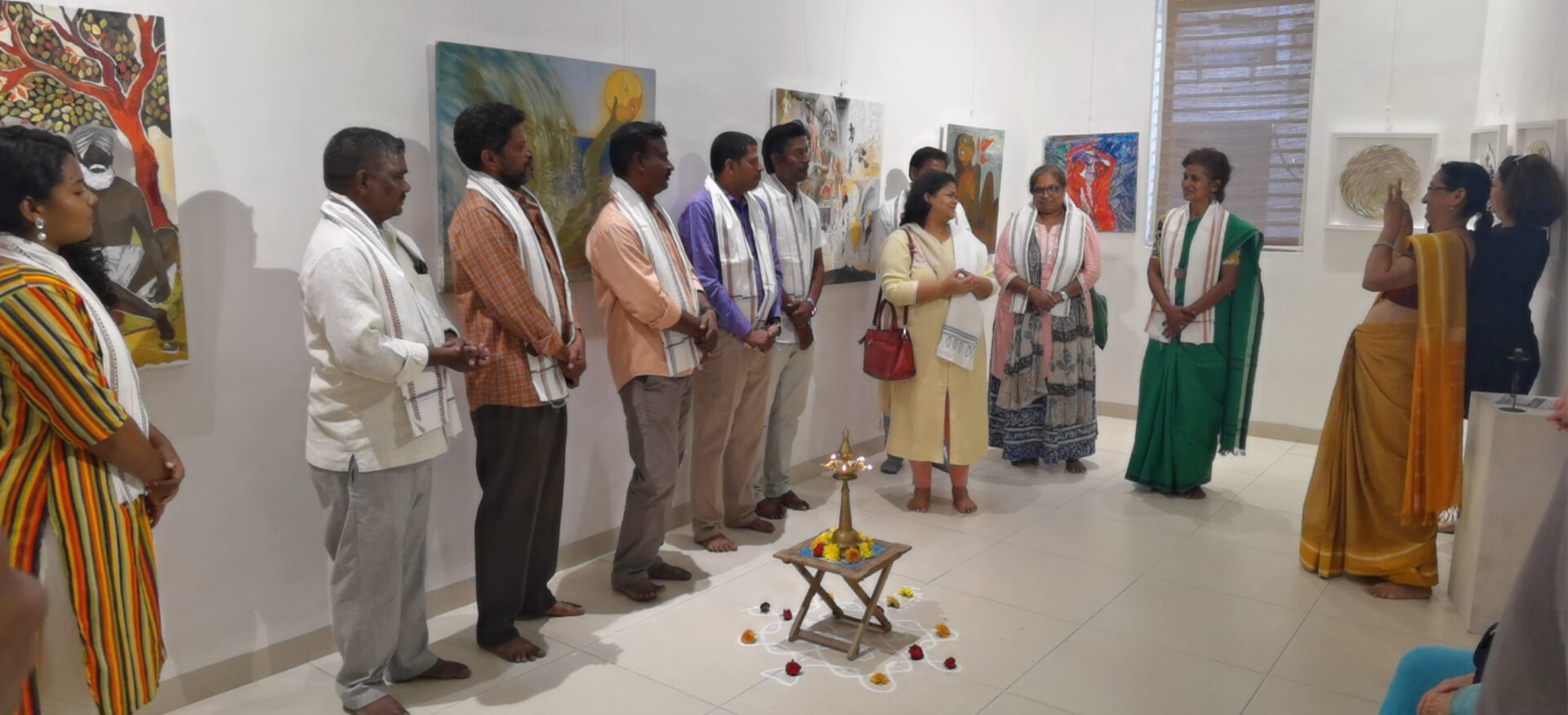
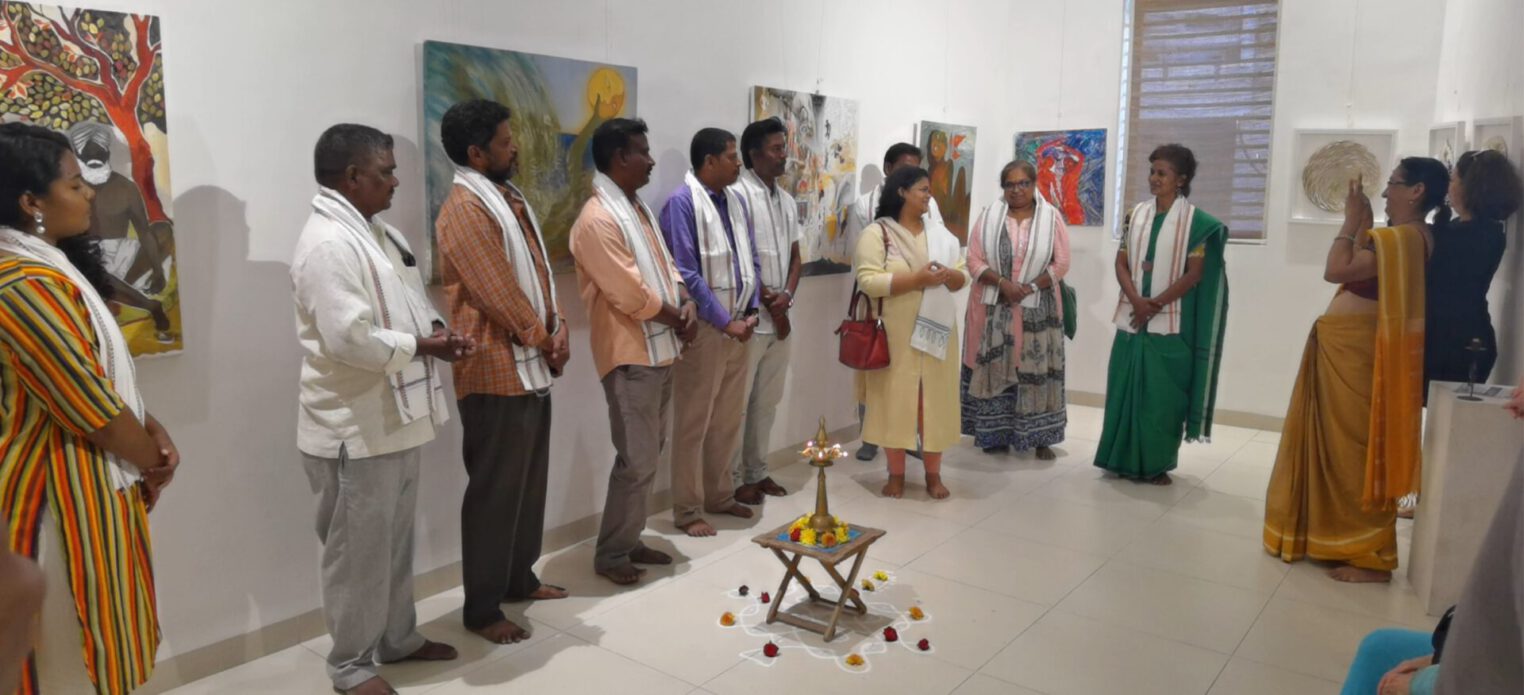
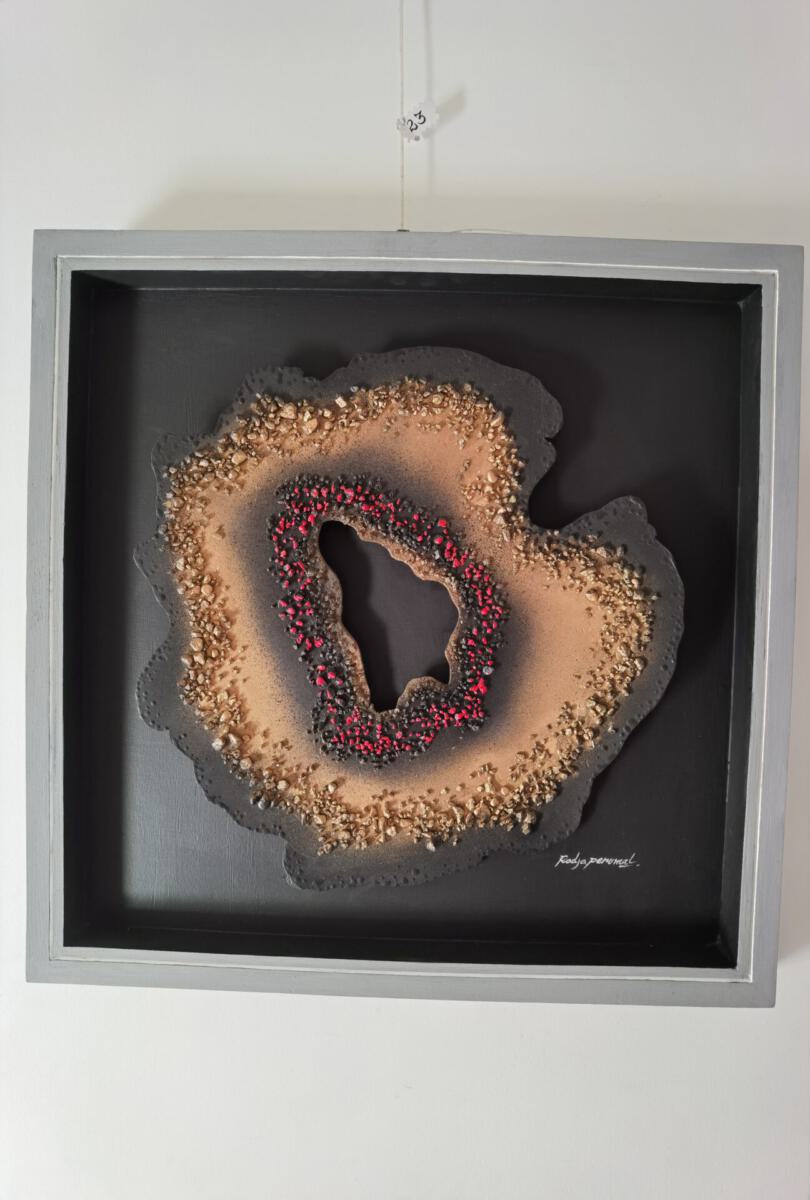
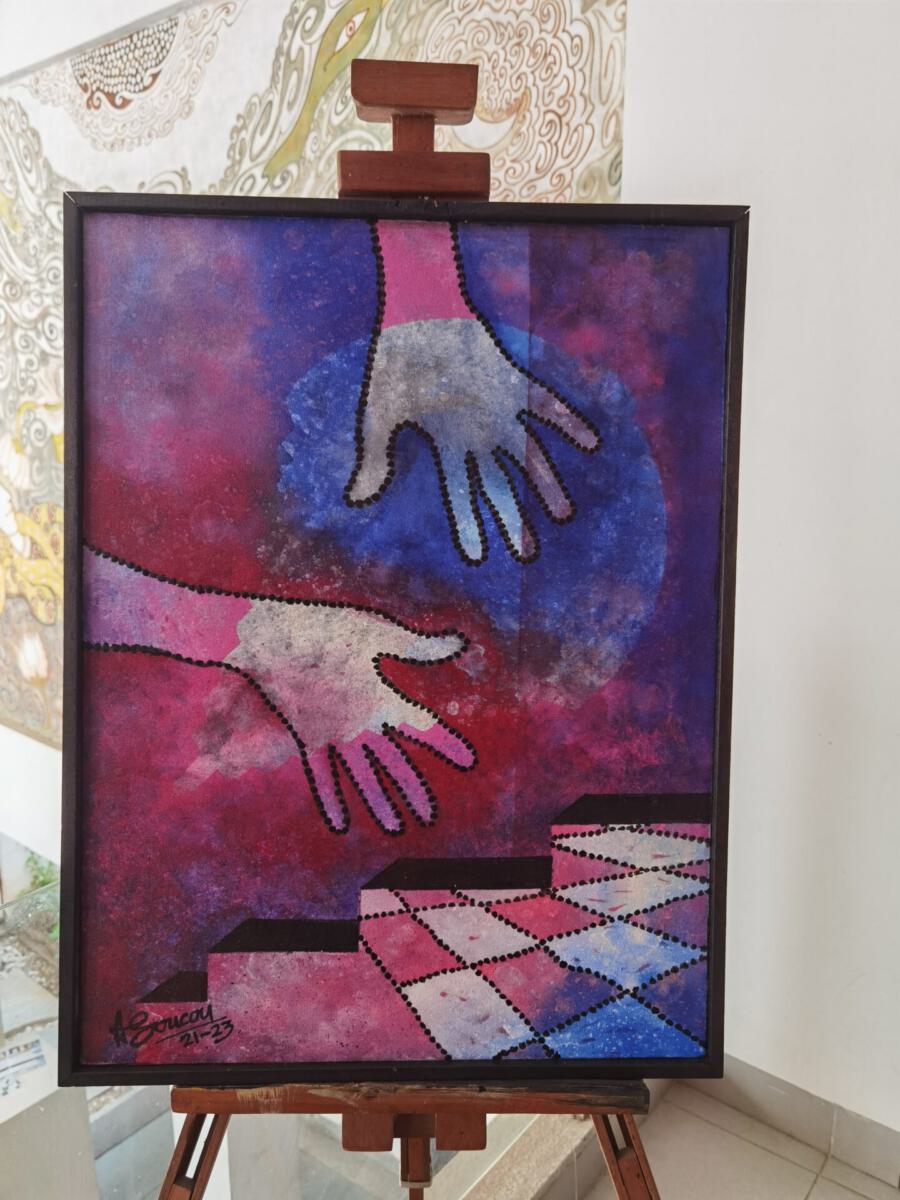
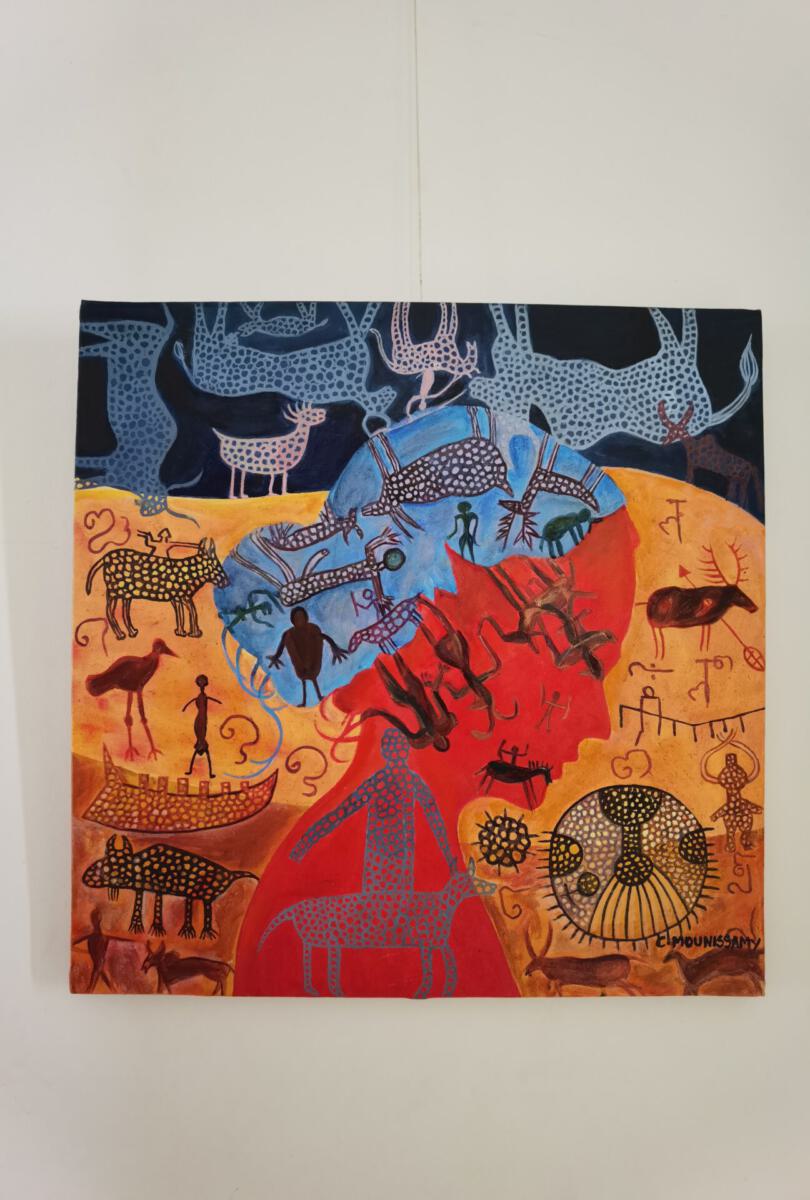
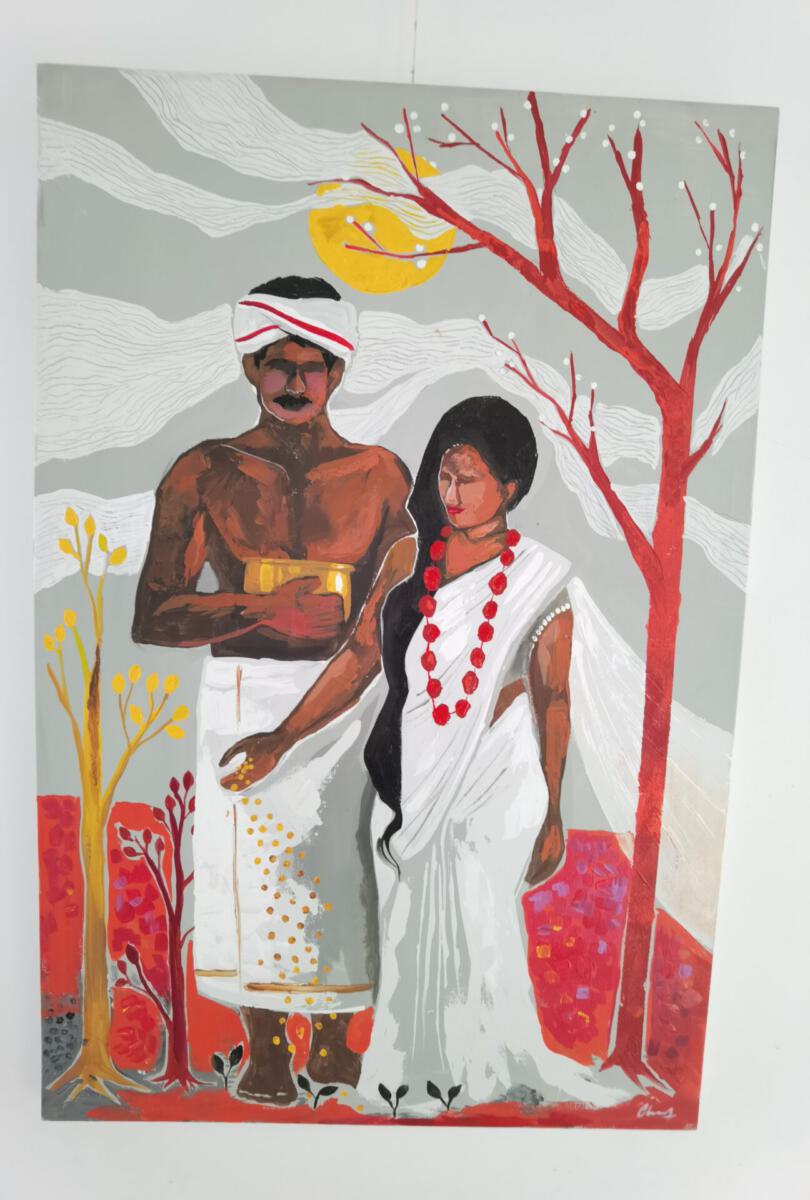
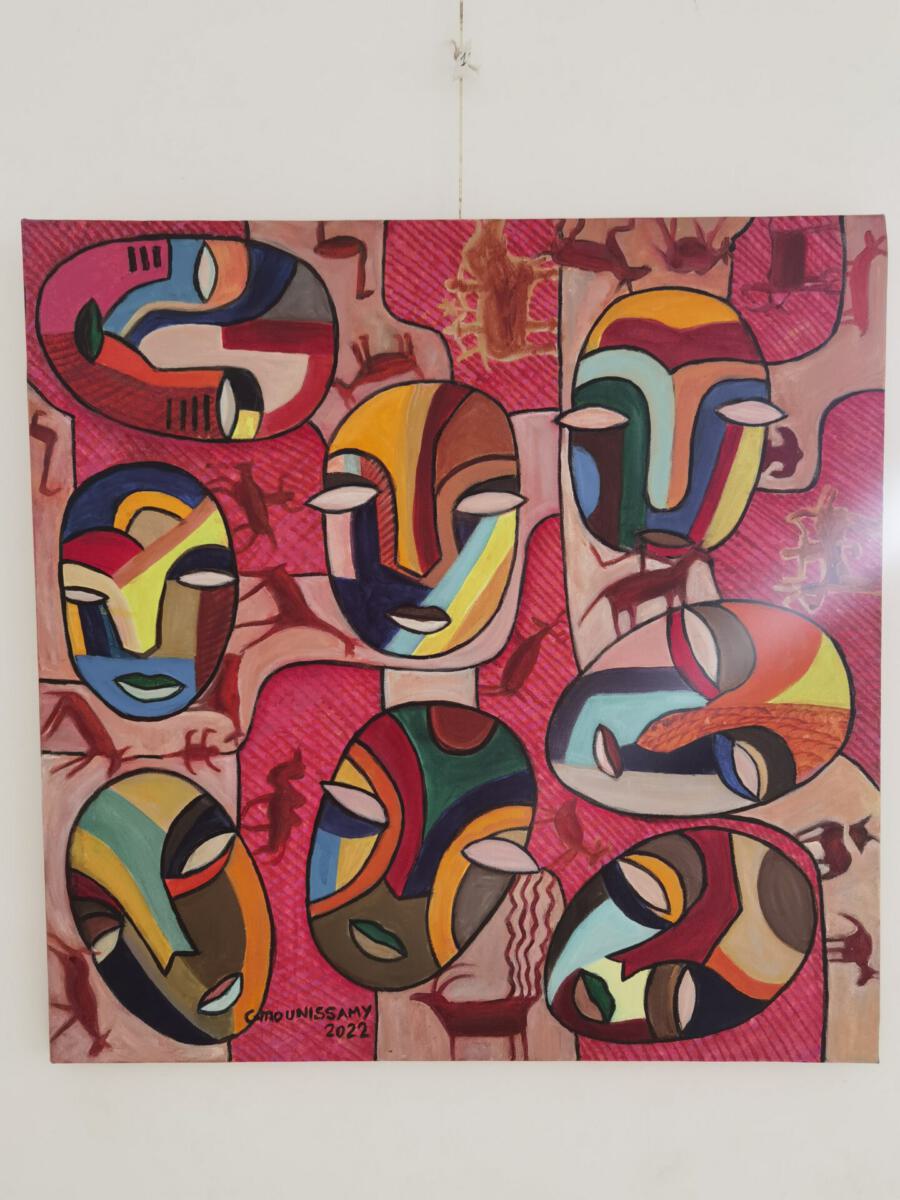
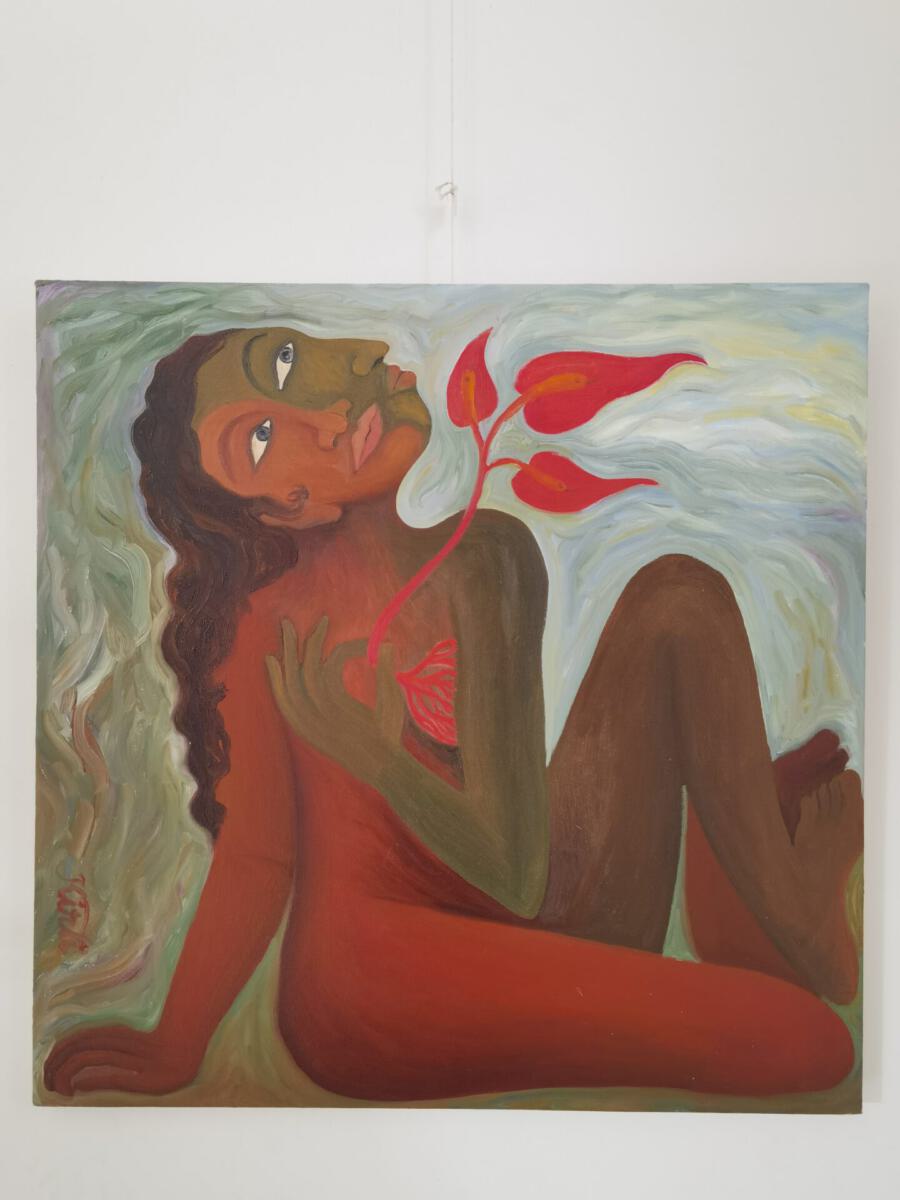
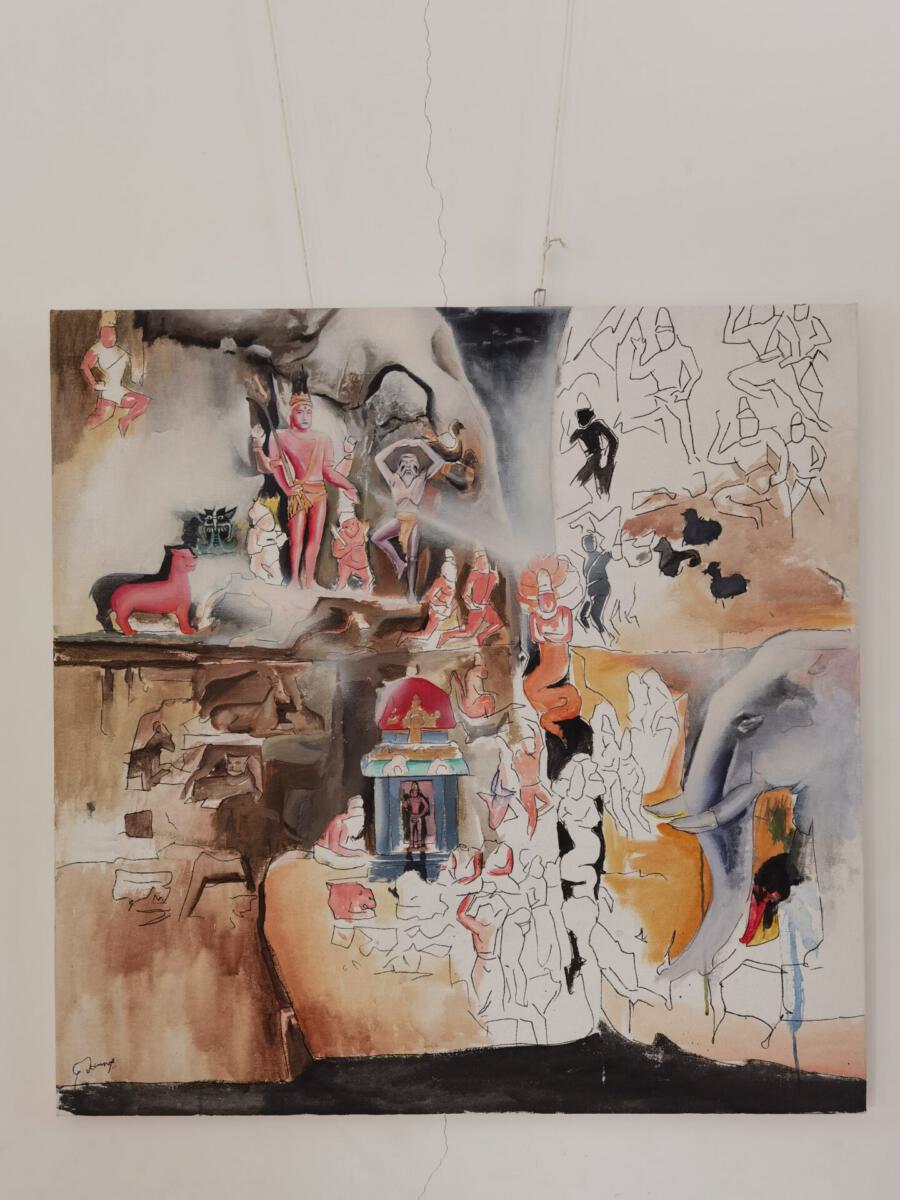
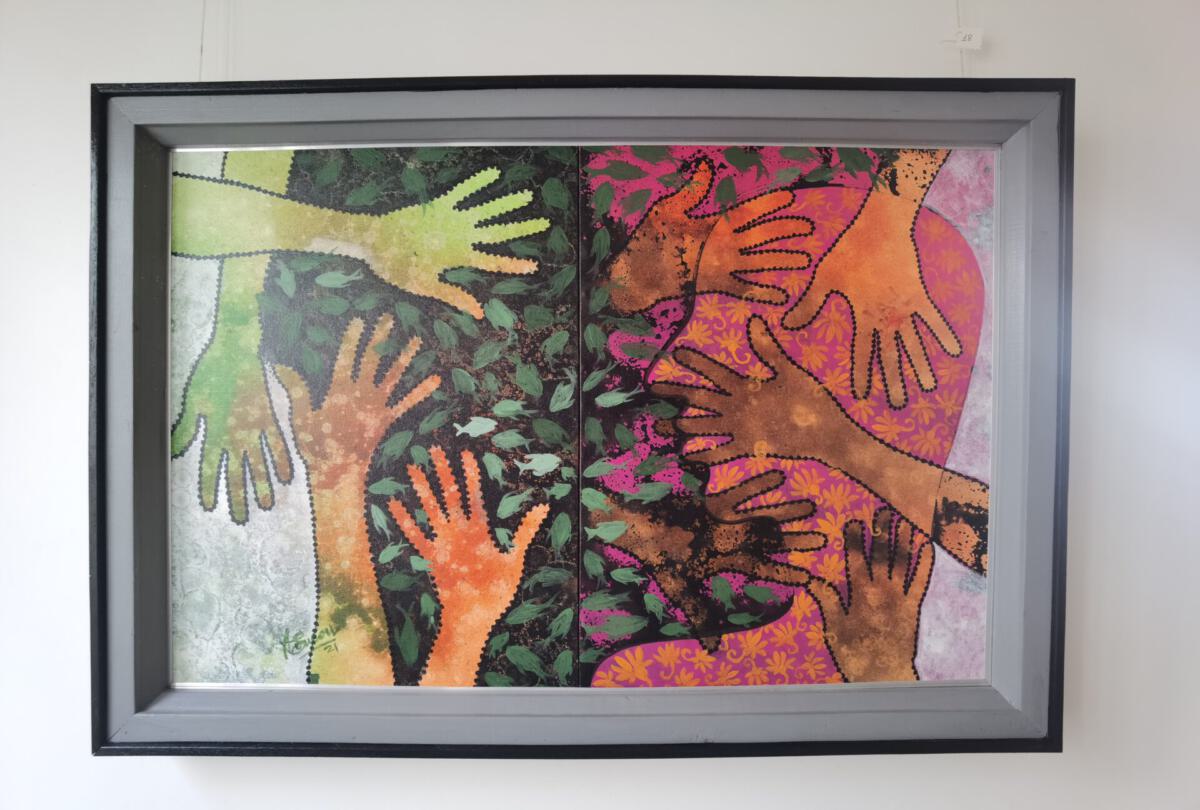
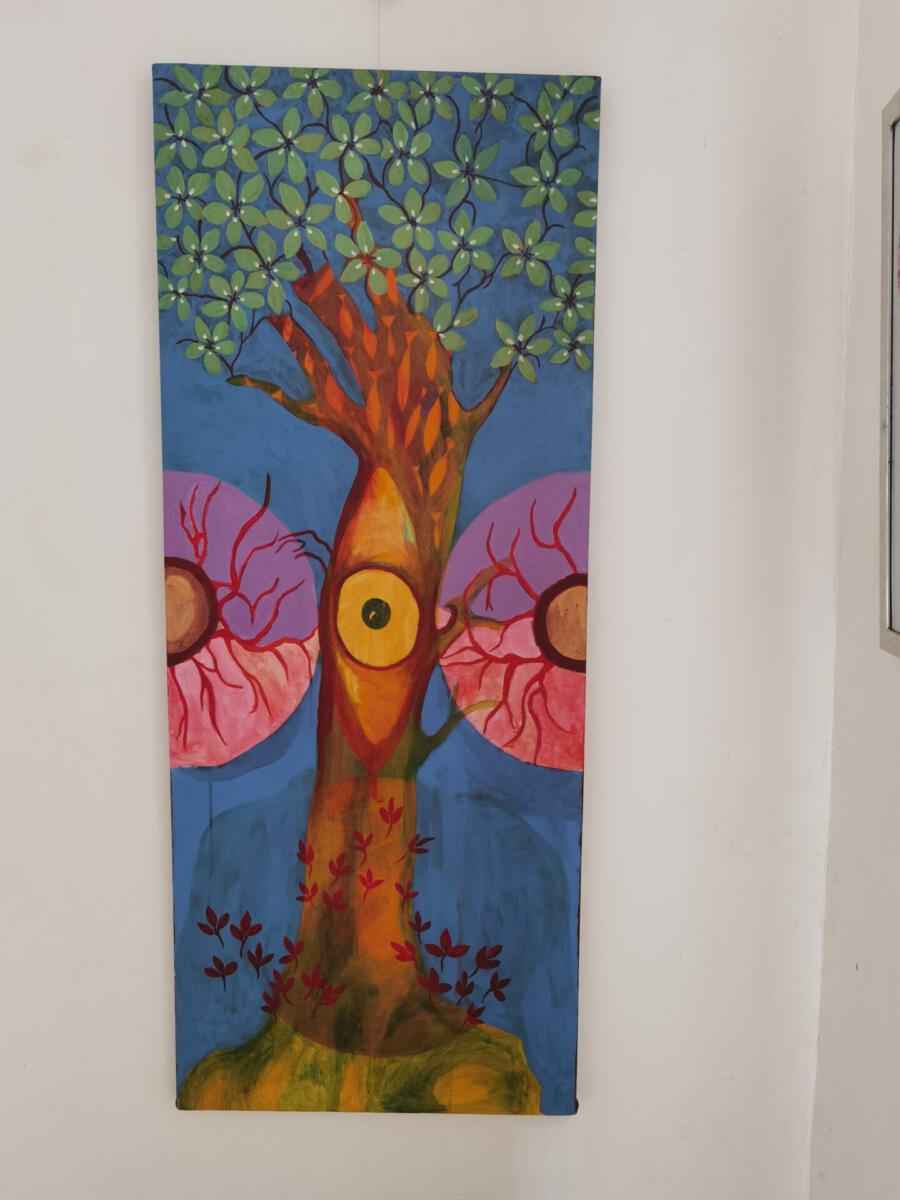
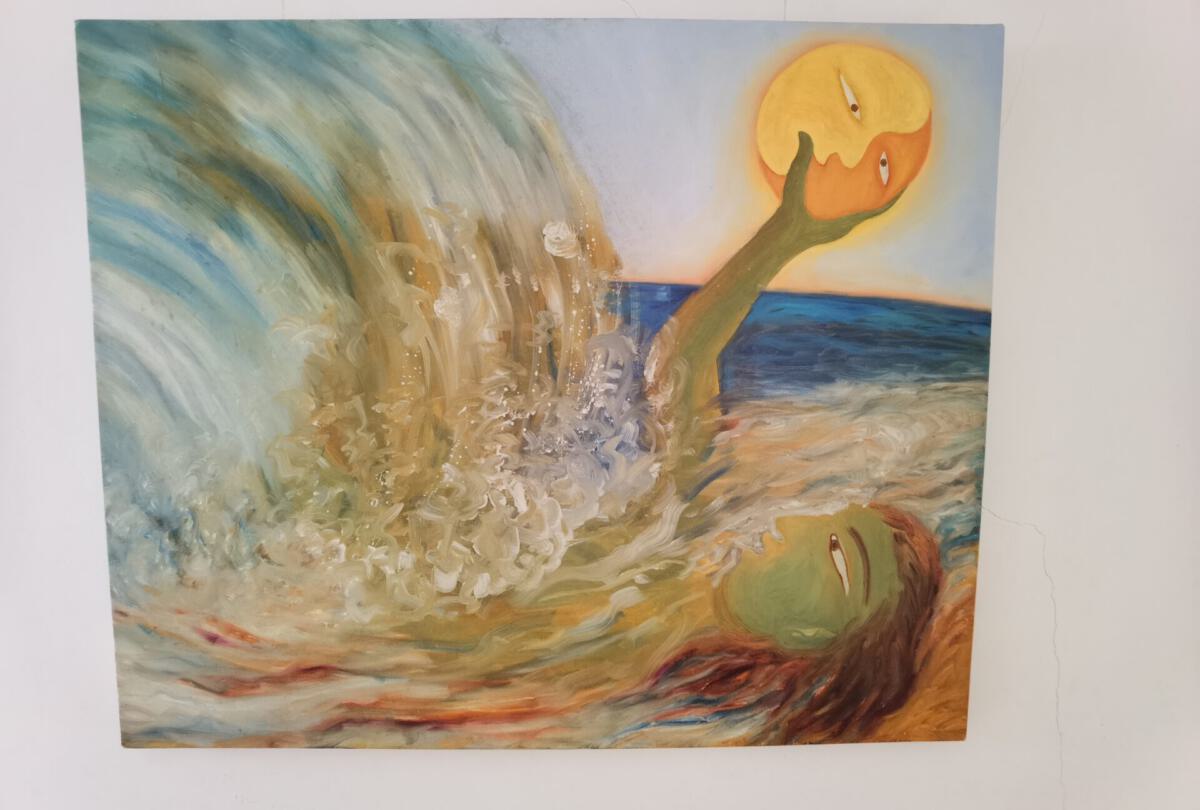
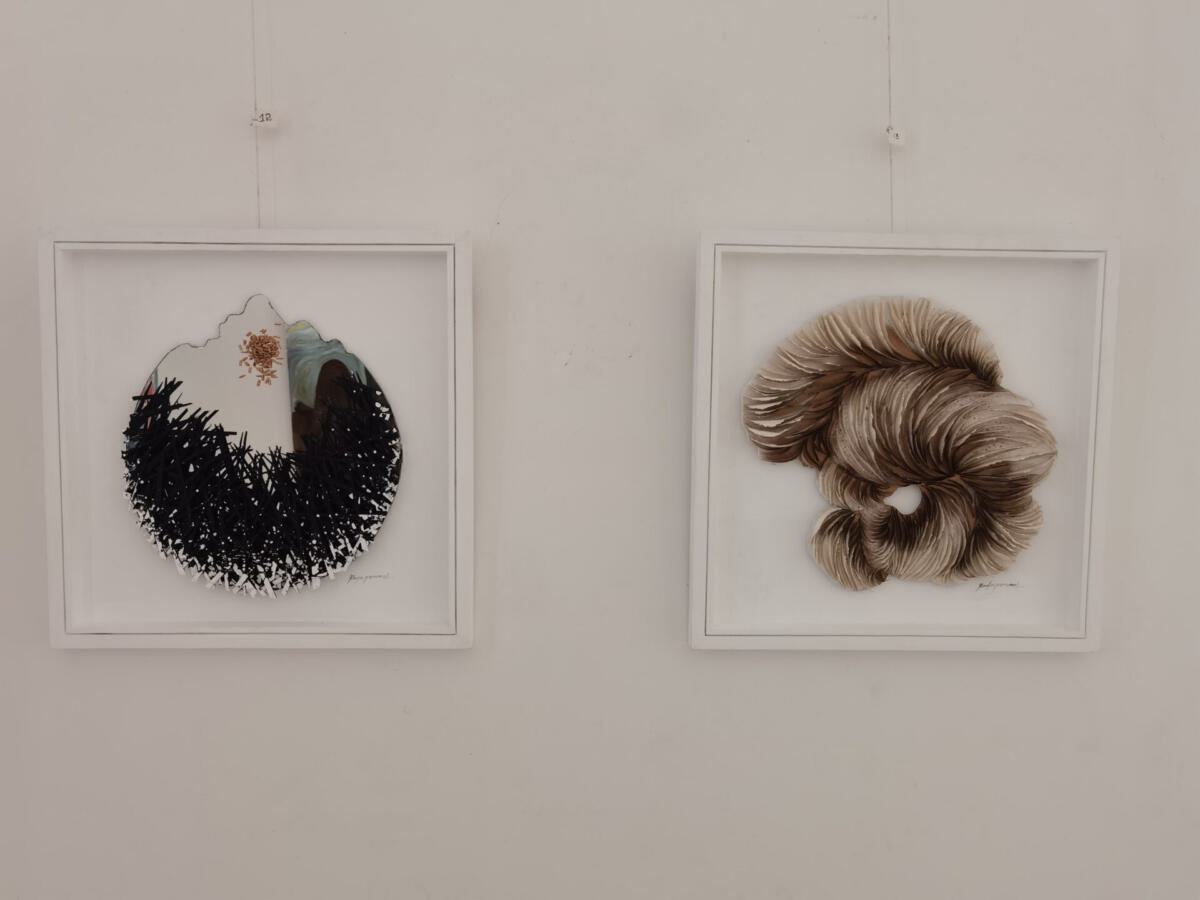
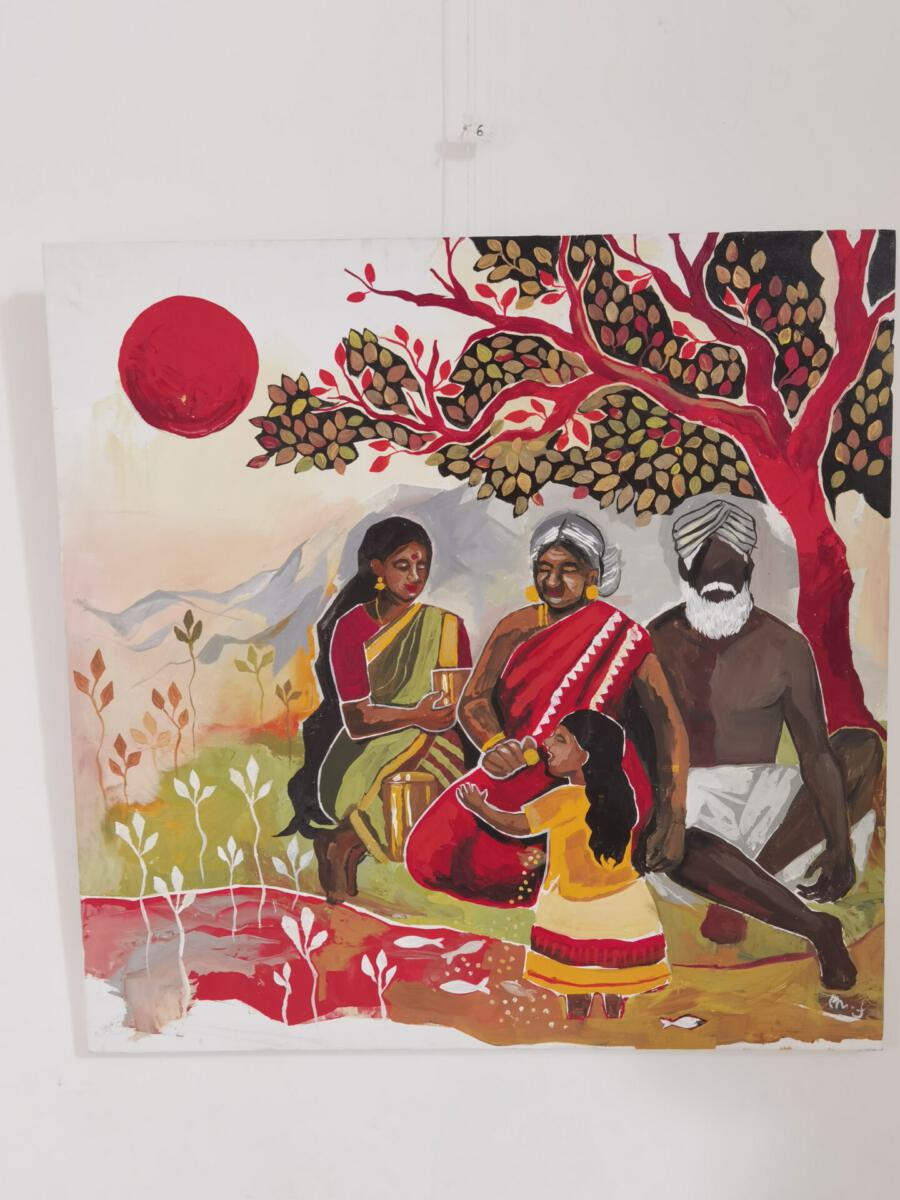
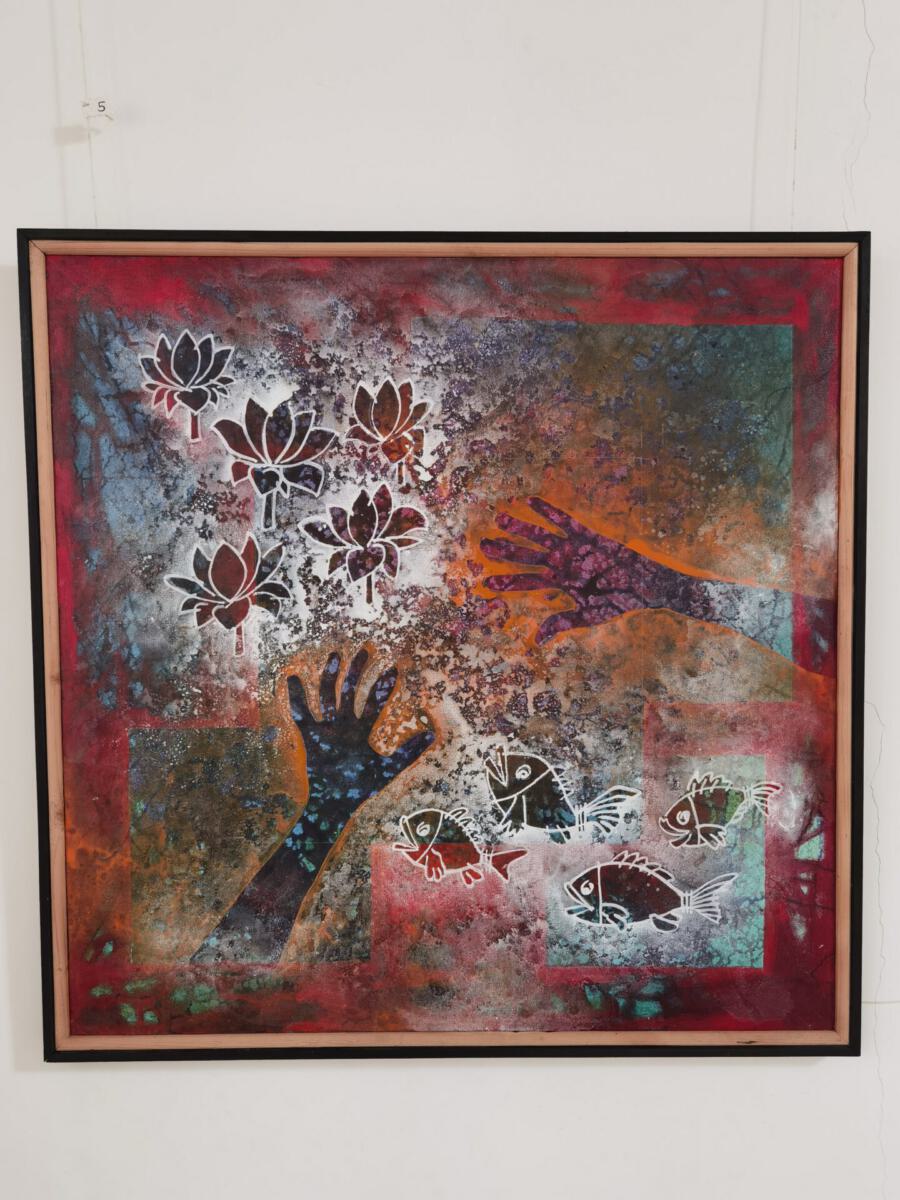
So I ask myself, what kinds of narratives are these? What stories are being told? My impression is that many works by contemporary artists in India are not about telling autobiographical stories, although of course the artists’ own experience and biography often resonate quite clearly. But that is simply not the subject. It is not about asking what the artist wanted to tell us. That is why in the Tasmai Gallery there is no explanatory text, not even names, titles, etc… The works are simply on the wall, stand on their own. The images do not depict a story. Certainly India, like every cultural tradition, has narratives of a mythological, religious or imperial character that weave a `cultural fabric’. In India, the many figures from the epics and the temples are everywhere. But it is difficult for anyone to decipher them all the time. There are so many local traditions, the subcontinent is so vast, that the ability to decode the visual language is not so much a matter of being Indian or non-Indian. These are the artists’ personal engagements with their own experience. These narratives are shaped to allow points of connection—a rhizome, a plateau, a plane. When I see a work that at first glance perhaps seems a little naive, I catch my Western mind thinking and categorizing retinally. Missed the mark … Second attempt. What experience becomes perceptible here? How does my eye wander? How does my body move, where do I linger, where does a connection arise between my experience and what I see? What images of thought arise in my mind, what spiritual experience is awakened? These are the questions that, for me, lead in the right direction. What happens here on an empirical level? The art historian in me wonders, how can I speak about this? Experiences of Satchitananda are difficult to communicate. Then I turn back to Deleuze. The ear sees better. The logic of sensory experience is a logic that is not one. It is not propositional logic; it is not about true or false. And yet it is not random, indiscriminate, arbitrary. The senses are held together by vibration; here the Kena Upanishad takes us further. Who thinks in thinking, who sees in seeing?“By whom missioned falls the mind shot to its mark? By whom yoked moves the first life-breath forward on its paths? By whom impelled is this word that men speak? What god set eye and ear to their workings?” (Kena Upanishad, Aurobindo’s translation)
It is the body without organs (bwo), Brahman experiencing itself, a consciousness that transcends the ego. There is a resonance in vibration. It is rhythm that structures and connects. When birds chirp, rhythm makes communication possible; they form a community, a habitat. In this way milieus and territories form, within which a Self first constitutes itself. An inside and an outside arise, a house is built. This is how art arises. Theory always lags behind here. Mother India tells many Storys.“That is full; this is full. The full comes out of the full. Taking the full from the full the full itself remains. Aum, peace, peace, Peace.” (Invocation of Isha Upanishad)
© Christoph Klütsch
© Christoph Klütsch