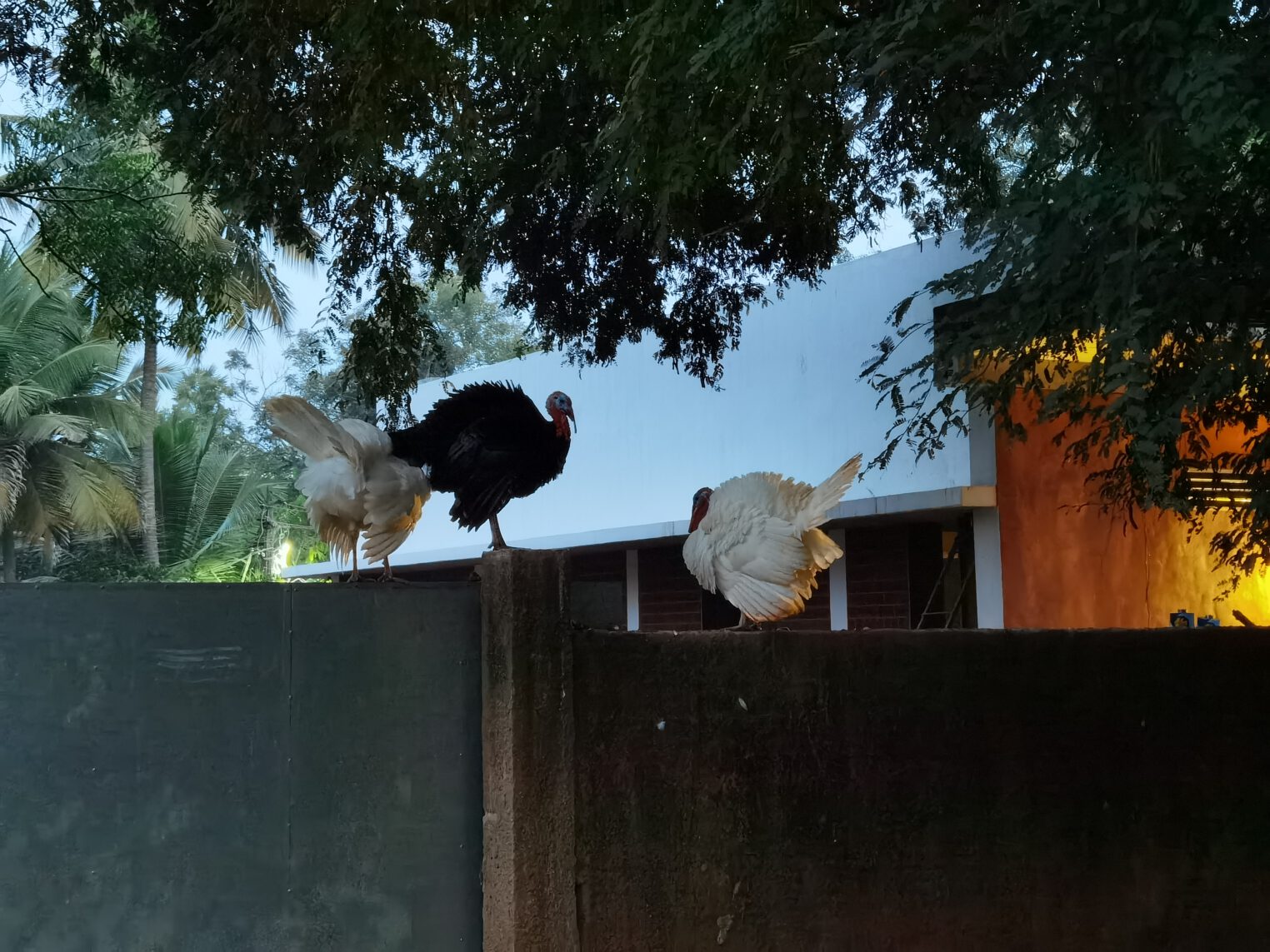
Yesterday I fell asleep expecting to get up early and meditate. I set the alarm for 6 o’clock. In the evening, a French yoga teacher and mountain guide tells me about the early morning hours in India, that they are the best for meditation—I already knew that they were good for Ryas. She also spoke about the morning chants in the towns; I remembered the mantra chants in the temples.
I woke at 5:30; temple chants could be heard in the distance, no, it was not a dream. I followed them, walked across the landscape in the dark, and to a place where, at 6 on a Sunday morning, the paths were already being cleaned. The women were washing clothes, cleaning, looking after the animals, although the goats and cows still seemed to be sleeping – in the forecourts of the small huts. The men were in the temple. A loudspeaker sounded there, audible for kilometers. I greeted the gods and went back.
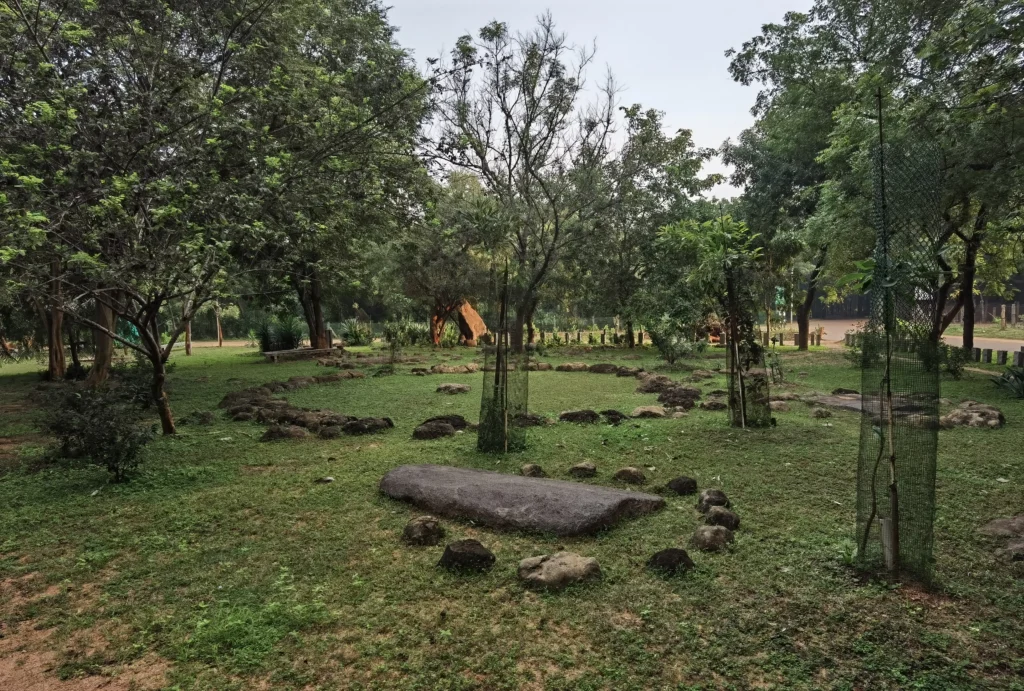
On the way back I passed an Iron Age burial site. The megaliths are 2500 years old. The burial site on which Auroville was built covers 60 hectares.
I had breakfast and went to bed. A wonderful sleep received me, and I dreamed of Auroville. Now I had arrived here in my dreams too. It is these transitions between waking and sleeping states, in which consciousness merely changes its state but actually remains in a continuum, that are the greatest happiness for me.
There are so many kinds of sleep:
- The sleep of exhaustion, when the body demands its right to recuperation.
- The sleep of recovery, for example at midday, to increase concentration and process what has been done
- Shared sleep, after a beautiful encounter of bodies.
- Wakeful sleep, in which the Self simply remains conscious in another state.
- The daily sleep of habit that follows tiredness.
- Sleep while traveling, on the train, in the car, on the plane, at the station or on a park bench. A moment of quiet and lingering while the body moves.
- The sleep of intoxication, when the senses are confused and the Self loses itself, associates drunkenly and suffers.
- Sleep in a seminar or at school, in which I still continue listening to the teacher. Take something in, but now through a very strong filter, because the absorption of factual knowledge has reached its capacity limit.
- The sleep of the sleepless, when sleep seems impossible and only small moments of exhaustion demand a brief, restless sleep. The sleep of the nervous… This can also be very unhealthy, and perhaps help would be called for here.
- Sleep in the forest or beneath the starry sky, where consciousness expands and withdraws almost entirely from everyday life.
The list could certainly continue, but the point seems clear. Sleep is a very special state of consciousness. It can be experienced not only through remembering dreams, but is an intermediate state of consciousness in which the Self visits other spheres of consciousness to regenerate, arrange itself, learn, process, see…
We generally call some of these experiences dreams, but they are much more complex. I like sleeping, and sleep a great deal, and do not feel guilty. Sleeping is a central part of my existence. I do not understand at all when people try to sleep less. They deprive themselves of many wonderful forms of insight.
This is discussed in the Prashna Upanishad (p.32). “When a person sleeps, who sleeps there?”
But above all in the Mandukya Upanishad. In: Aurobindo Vol 18 p.193ff. (unpublished by Aurobindo)
The comparison of 10 different translations into English is beautiful too:
“Mandukya Upanishad.” Accessed November 28, 2022. https://realization.org/p/namedoc/upanishads/mandukya/mandukya.html.
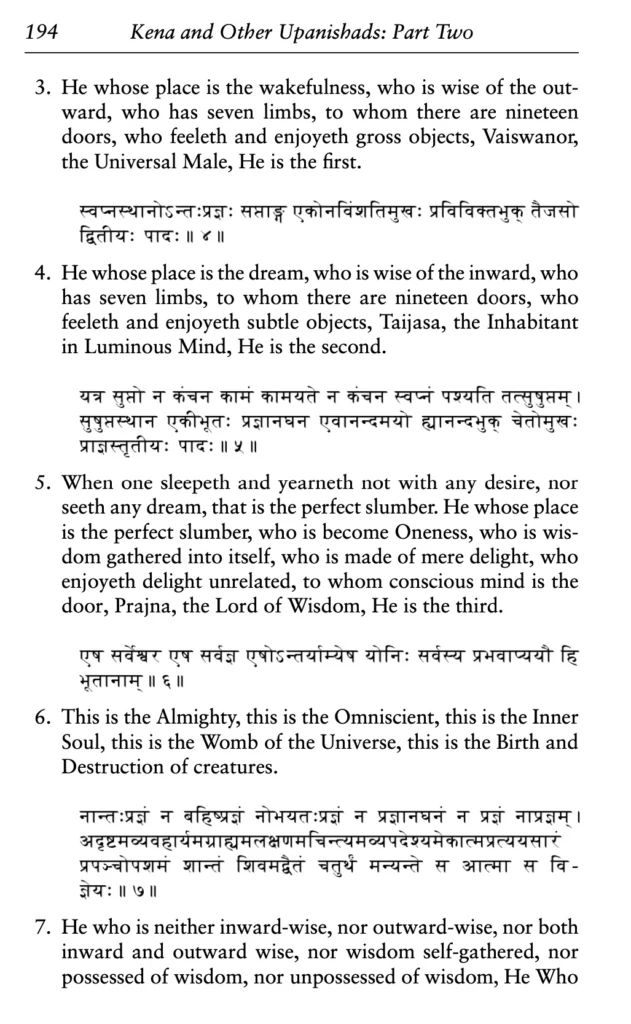
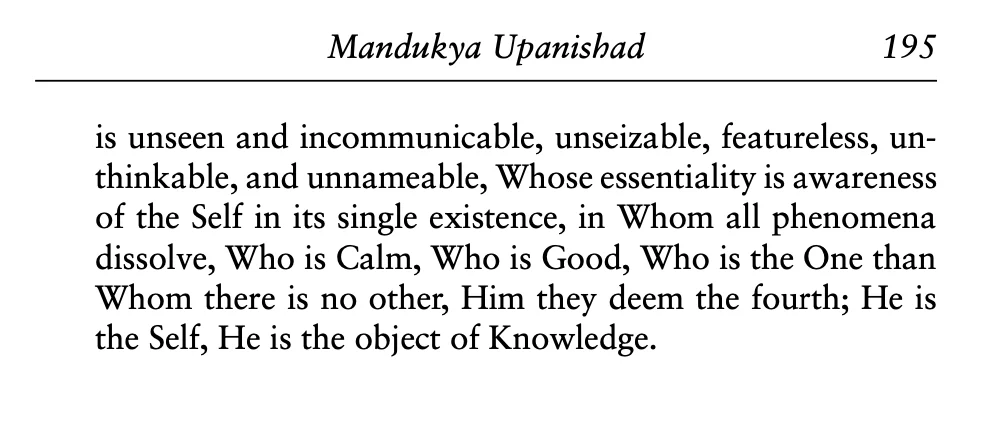
Here is an extract from Aurobindo’s translation:
Leave a Reply