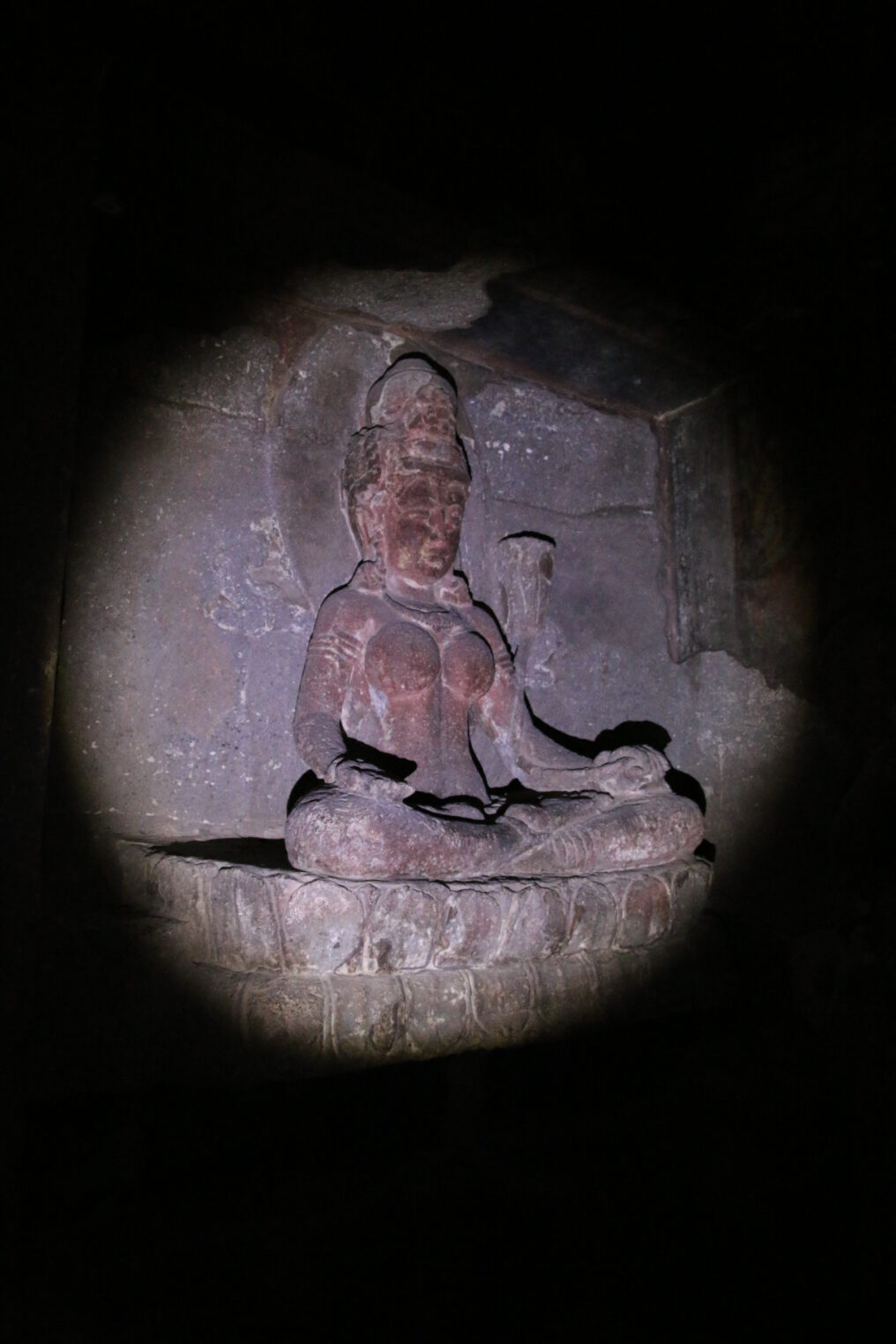
In the Kena Upanischade it is described how the Self as such does not exist. Who sees in seeing, who hears in hearing? This cannot be answered. In the Christian tradition, a Self was constructed for this. I see, I hear, cogito ergo sum, imago ergo sum… What is that supposed to be, this cogito (I think), this imago (I imagine)? That I which establishes identity, bears responsibility, acts and interacts.
It seems clear that thinking, when it is conscious of itself, needs a point of reference. I write this, you read this… This point of reference, however, is a consciousness that first constitutes the Self, as an illusion. Recognizing consciousness and overcoming the Self is the central core of Eastern meditation. Focusing on the here and now, perceiving sensory impressions and grasping them as such, all this is a central part of spiritual practice. But where does the power of imagination come from? Why can I summon memories, be overtaken by them? What force is it that directs thinking, creatively brings forth something new?
Bringing this restless Self to rest is the first step toward blessedness, a step into Nirvana. And yet it is this Self that lets us be together with others, that gives us a consciousness that there is consciousness outside our Self at all.
Stages of Consciousness
Consciousness is general, that is, it exists as such in the world. We participate in it. We can participate in it unconsciously, selflessly and contemplatively, acting and interacting. A Self can be constituted that is not, however, conscious of itself but is its point of reference. It can grow, beyond itself. Consciousness can transcend, dissolve and immerse itself, merge and empathize. Consciousness travels in the world of sensory impressions, memories and imaginings. It connects and falls apart. When we sleep, where is it then? Who or what dreams? In a dissociation, a schizophrenia or a delusion, is consciousness torn apart?
In contemplation, consciousness is the Other; in transcendence, it is a resting point of clarity. In willing, it is an agent, and in interaction, Self.
Leave a Reply