I recently met a young Indian man here. He comes from Delhi, and for him South India is also a foreign world, though not as foreign as it is for me. He does not speak Tamil and is also somewhat more composed, or enlightened, in his spirituality, as one might perhaps say. I met him again on the street, and we went to the afternoon school Thamarai on the edge of Auroville, which offers an afternoon program in a village with many social tensions within it. That was exciting; I will try to support it.
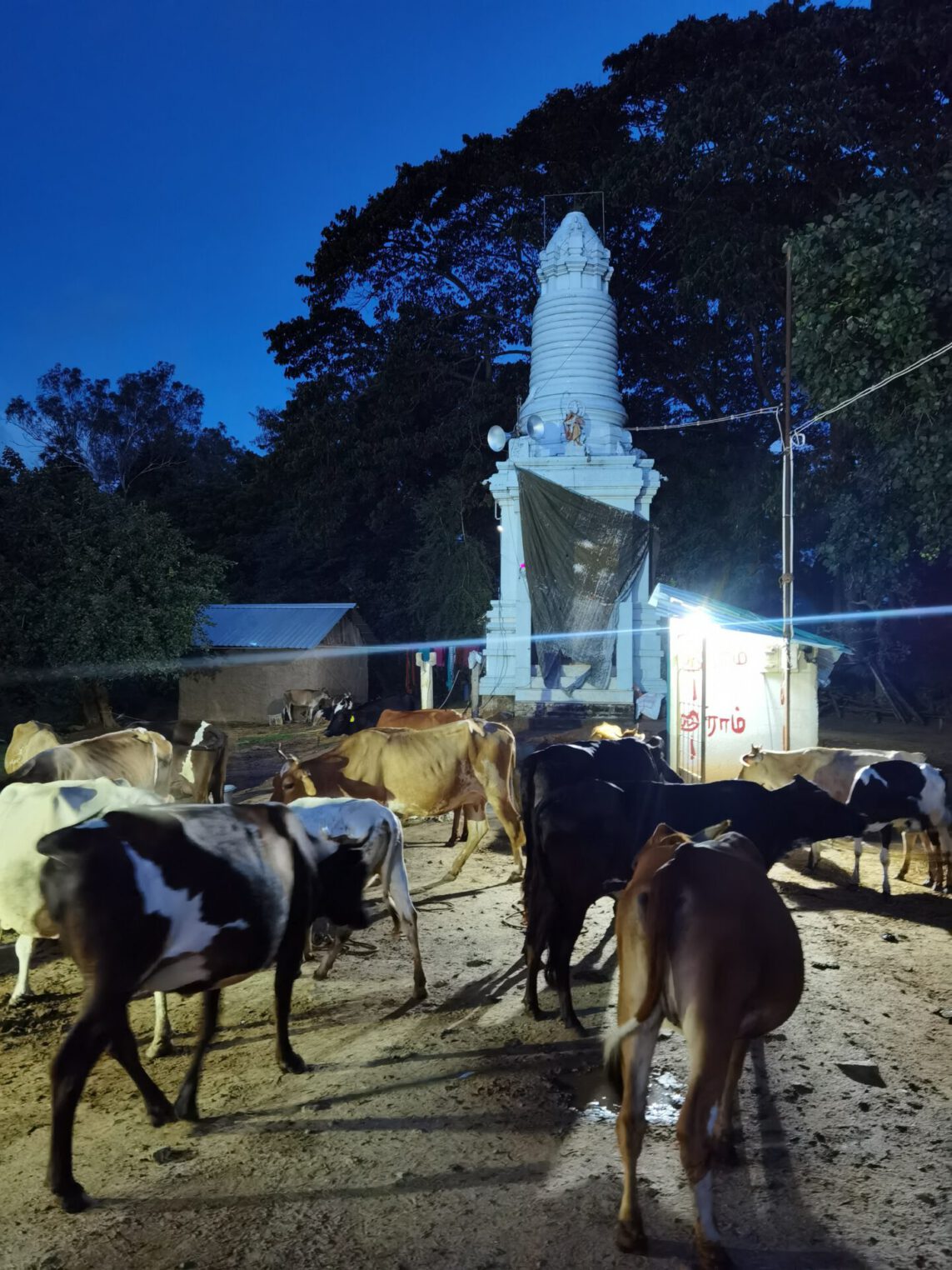
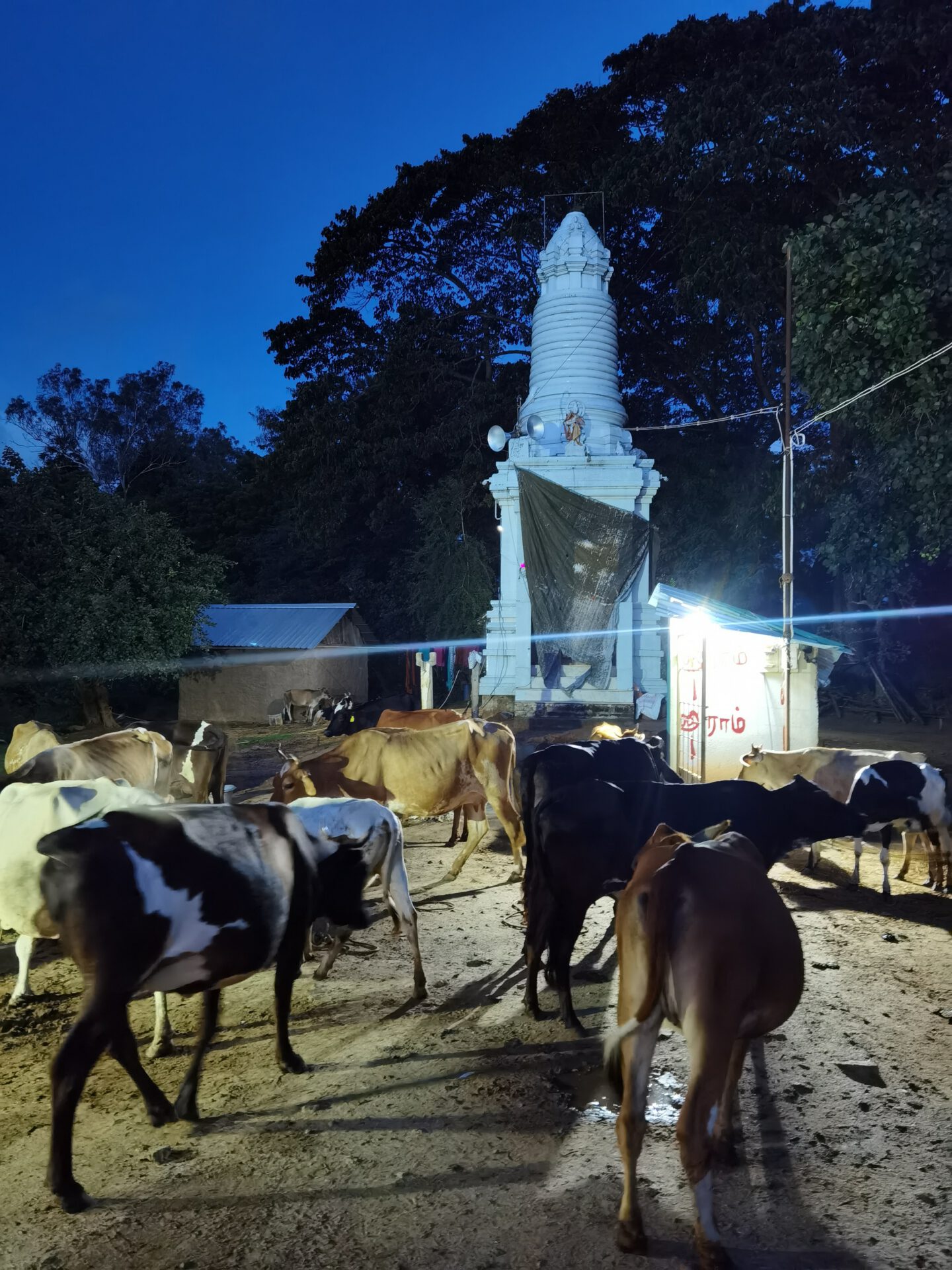
Afterward he asked me whether I wanted to see the temple he had told me about. He was helping to build it, and the priest was a soothsayer. It was around the corner, on the piece of land the family had bought and for which, on that very day—after fourteen years—they had officially received the documents from the local court. For fourteen years the family has been building a temple. They do not want official support or donated funds; they themselves have almost nothing. Their living conditions are bitterly poor: a shelter serves as living space, shared with the animals; there are no doors or windows; a gas stove and refrigerator bear witness to modernity.
The Land
On this piece of land in Alankuppam live about fifteen cows, which they have raised themselves, starting with two cows that visited their land and, with the family’s help, have multiplied splendidly; also nine dogs, forty parrots in a large walk-in enclosure, there only to give visitors the opportunity to interact with the birds—also geese, turkeys, chickens. To celebrate the day, we were offered fresh boiled cow’s milk from a cow that had given birth to a calf just five days earlier. This milk, they said, was something very special.
The center of the temple is finished, but the monkey god has not yet moved in; he still lives in a tiny enclosure beside it. We received the blessing there. The drop of water I was supposed to drink seemed very suspect to me, but I tolerated it well. On the grounds lie eight pillars made from a very pure white stone, shot through with an even distribution of small black dots the size of seeds. Since there are no wave patterns or anything similar, this stone is regarded as particularly pure and powerful. They drove seven hundred kilometers to fetch the stone. Now a sculptor still has to come from Mahabalipuram and carve the figures. The seven chakras will be at the foot of seven pillars, with figures from mythology above them.
The temple is intended to stand for two thousand years, unlike the many temples quickly built from concrete and plaster.
Leave a Reply