The contrast could hardly be greater: Auroville is flat, hot, on the coast; it wants to be a city, based on the teachings of Mirra Alfassa and Sri Aurobindo. At the core of their visions is the idea of bringing a divine consciousness down to earth, a “download” of the Supramental. Some seem to claim access to it. And sometimes I feel I understand what they are speaking of. The experience of a deep spirituality in meditation, in work, in being; an awakening of all seven levels of our existence: the material, the life-energy, the mind, the vision that understands the cosmos, bliss or the rapture from Self into soul, pure consciousness and pure existence. There are many forces there: gods and demons, stories and worlds through which the mind can travel, in which it can unfold, realize itself, and mirror itself.
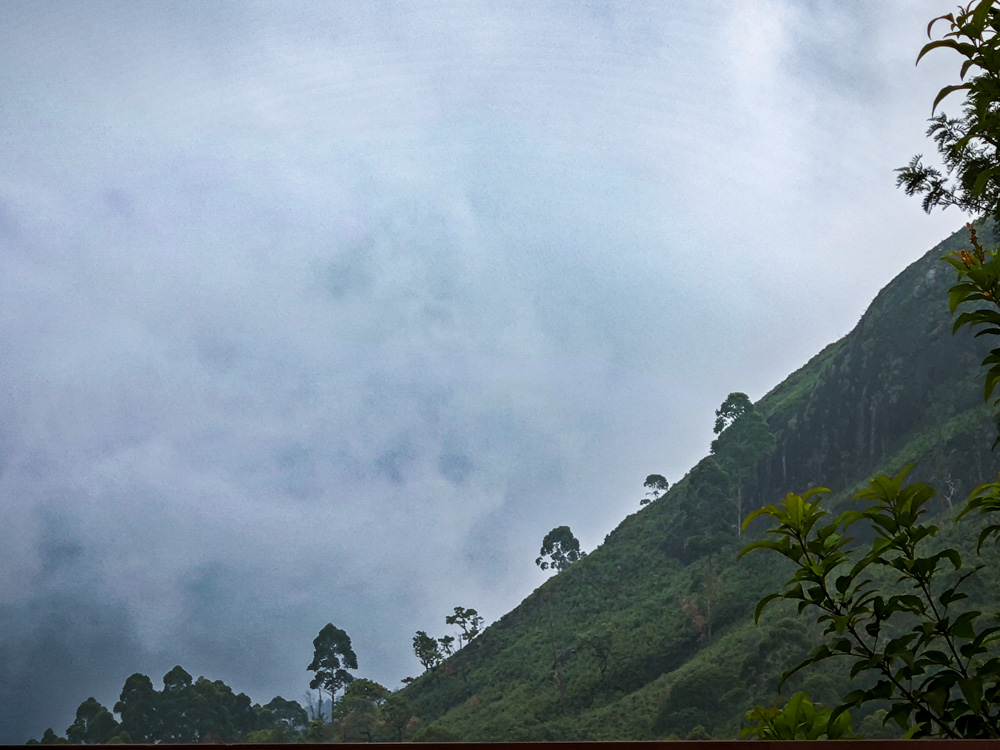
And then there is Bodhi Zendo. Many Aurovilians spend the summer there. It is a meditation center in the mountains at an altitude of 1,700 meters, cool and green; the birds are joyful, the clouds temperamental, the stars clear. Zen is practiced there: concentration on emptiness, that is, on the ground of all existence, which we cannot know, of which we cannot speak, from which all concepts rebound. A plane of being, then, that we can sense a little, that we can allow to enter our empty mind, but that shows itself to us by being empty in relation to language, by not being able to be grasped. We can say that there is something there that precedes us, that contains everything, that is incomprehensible and shows itself only as what is and cannot be described. Emptiness: a word that tries to describe something that exists by containing no being. A paradox, a contradiction, a word that drives the force of language to its limits.
Sri Aurobindo tries to grasp the Divine in language. His Savitri wanders through the worlds and, in doing so, makes them accessible to experience and brings them into our existence. Buddha sits on a lotus flower whose stem is anchored in the roots of the mud at the bottom of clear water. We can see clearly through the waters of consciousness, but the silt and the driving force of life remain beyond our recognition.
I oscillate between Auroville and Bodhi Zendo, between the measuring of the Divine and the silence before emptiness — that emptiness which is different from nothingness. Emptiness can hold being and nothingness both; it can enclose them, carry them. Emptiness is between being; it is that in which nothingness is held. Emptiness is in being when being becomes conscious of itself.
“Non-existent, verily does one become, if he knows Brahman
as non-being. If one knows that Brahman is, such a one people
know as existent. This is, indeed, the embodied soul of the
former.” (Taittiriya Upanishad II.6.1)