When I read a book, watch a film, immerse myself in a painting, or take part in a performance, what exactly is happening? It is, after all, the case that I experience something; images, feelings, and experiences are awakened within me. Imagine a film, a book, a play, or a painting about human relationships, action, history, or fairy tales. So you are sitting somewhere and looking at something that tells a kind of story. Now, what is the difference between watching a story and contemplation, say, when you look to the bottom of a clear, living lake in which fish and plants, stones and reflections of sunlight invite a contemplation of the universe? Is it not the case that one, art created by another human being, tells a story, and nature, created quite differently, tells another story? One difference seems to be time. In art, the artist can shape space and time, the narrative can jump, the space change through a cut, one feeling turn into another without a transition. The colorful activity of the cosmos telling its story takes place, for us at least, in a space-time continuum. We can move within it faster or more slowly, we can fly or stroll slowly, but we cannot change the time.
What we can do, however, is focus on different elements of our surroundings through memory, understanding, and perception, and connect them in our consciousness. This world of experience constitutes our waking consciousness and sometimes our dream consciousness as well. We bring a consciousness with us into the world.
Now we already have quite a number of different roles here: a human being experiencing the world as a beholder, an artist expressing their experience and making it accessible to others, and the world itself, which in its extension in space and time offers the ground for those experiences. We can enter into direct contact with the world, reflect on it, and inquire into its deeper meaning. We can try to establish a connection with what holds the world together within, that is, to experience a principle, a force, an origin that goes beyond what I am part of. This going beyond must now be approached with some caution, since it immediately raises the question of duality. Is there something beyond all that I am part of, or is the whole I am part of, in the form of immanence, the whole that as such is thought as transcendent, but is not?
The question of duality is important here, for from here we can ask what the role of art really is. Is art something that creates a kind of world in which the beholder can immerse themselves, as something different, something facing me, an illusion, a representation, a simulation? Or is art part of the world in the sense that the consciousness which created it has expressed something that, at least structurally, each of us can experience? And what distinguishes art here is the possibility of expressing it in a medium independent of the artist’s consciousness.
This is quite astonishing. Now there are different ways of thinking about it. I can understand art as a system of signs, that is, I can consider it semiotically, like a language. I identify elements of the artwork and bring them before my inner eye in the form of linguistic or semiotic structures of consciousness — whether visual, auditory, gustatory, bodily, or olfactory — according to the dominant medium here. So I can say: “I see or hear or taste x.” This x, if previously perceived in a similar way by an artist, would be the content of the work. Most theories of art stop here and now concentrate on the formal elements of x. Is x interesting, new, surprising, provocative, emotional, and so on?
What underlies this, however, is consciousness itself. Consciousness experiences, creates, and shares. The world itself unfolds in the artwork in a quite particular way. The artwork gives us the possibility of thinking about the experience of the world itself and, in the experience itself, understanding it as sublime, as bliss, as transcendent. If the art engages critically with reality and shows us what is not going well, where there is suffering and injustice, this is indeed harder to accept, yet qualitatively it remains that same experience.
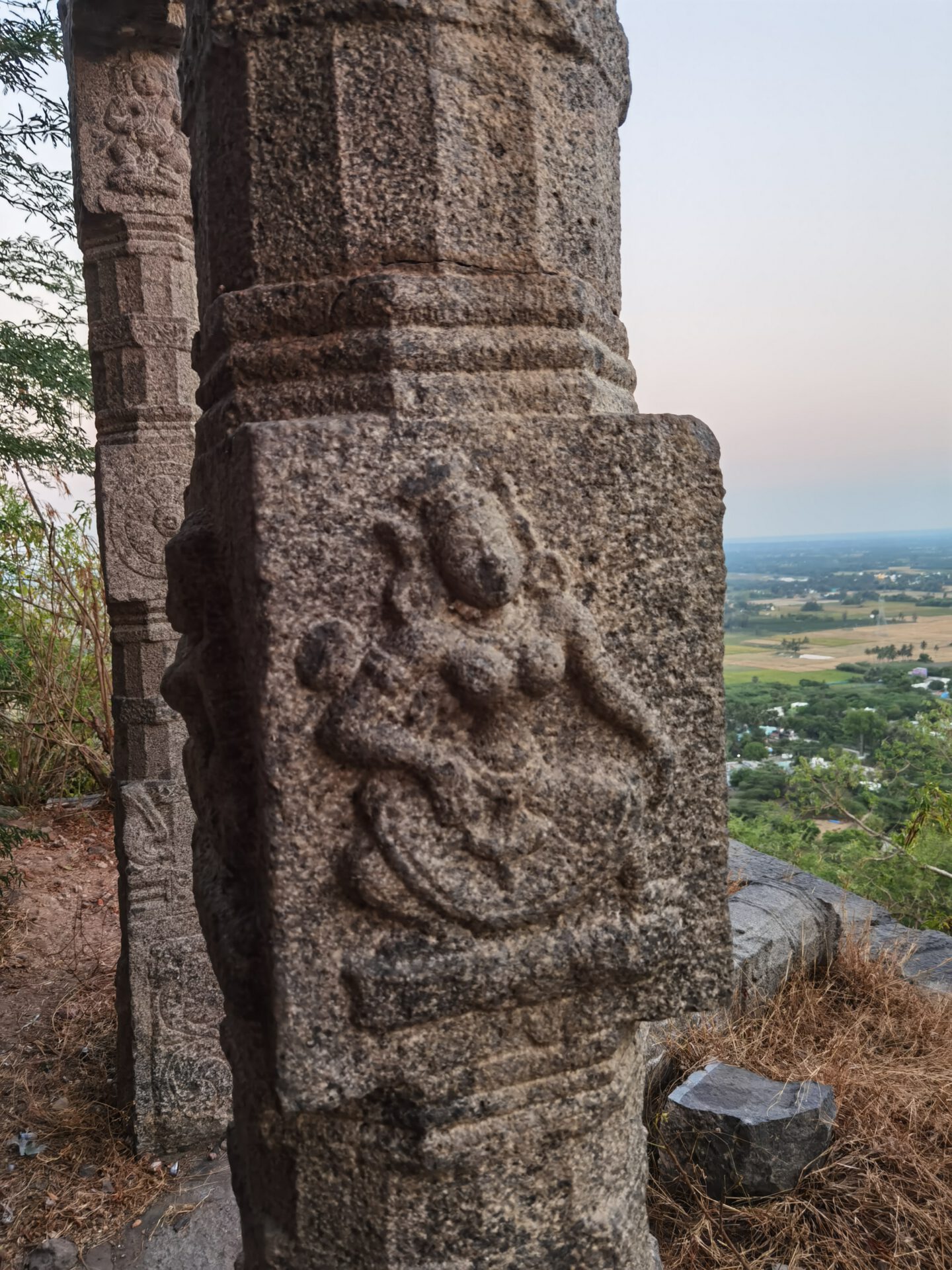
In India one speaks here of Rasa, literally taste. But it denotes precisely that experience shared between artist and audience through expression, which at its core points to universal consciousness, immanence, Brahman. Art is thus, quite essentially, rooted not merely in the material world and the world of the living, of knowledge and the intellect, but reaches into the realm of the contemplative, the meditative. It is part of Satchitananda.
I notice that I have grown tired of considering art purely formally. This misses the core of art and even the core of our existence. Art is simply a form of expression Brahman has given itself. Art is immanent; it is a node that connects different things on a material basis, the work, and creates lines. The experience of this is a little different for everyone, which is why speaking and writing about it makes sense only up to a certain point. What one cannot speak about, one should remain silent about. But that does not mean there is nothing there. On the contrary, this is where it really becomes interesting.