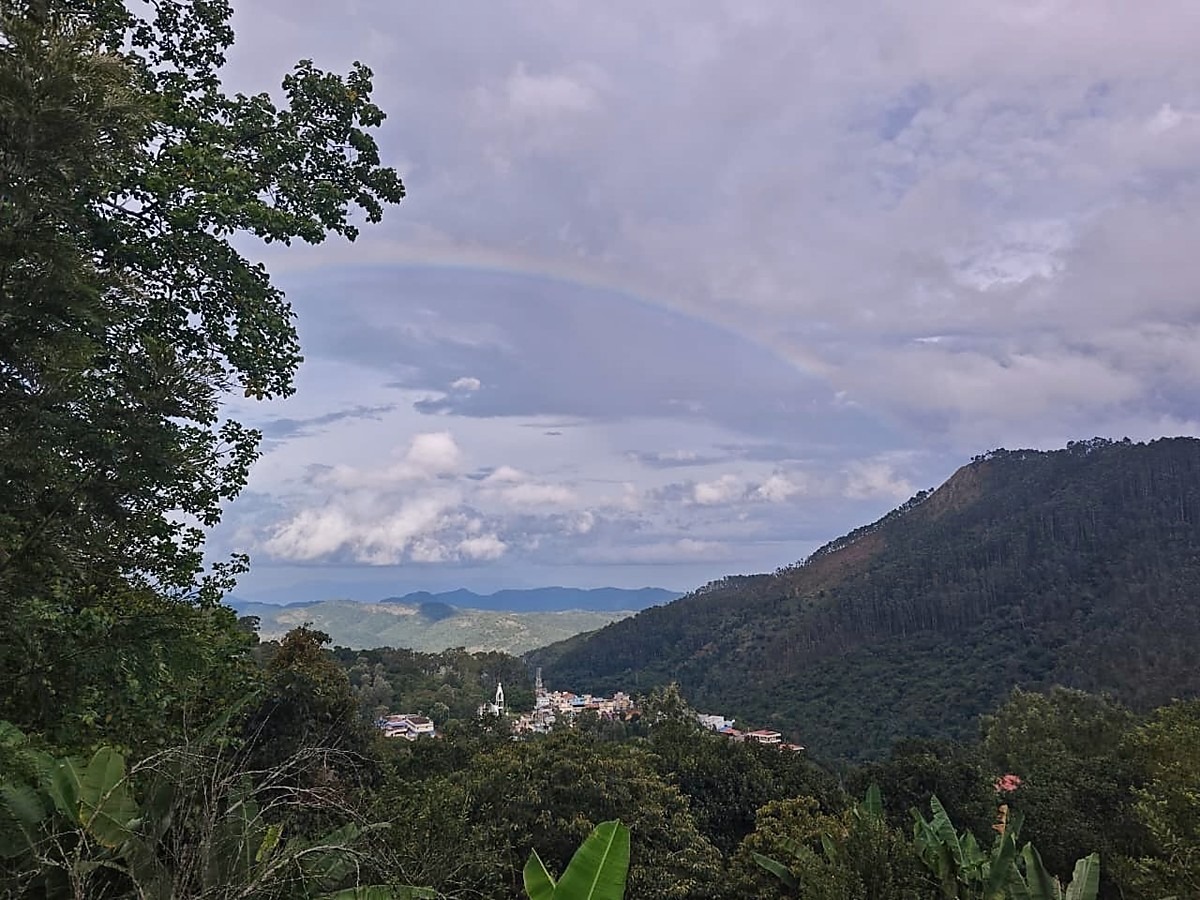
I am thinking about Deleuze, about the movement of becoming. In order to extinguish the sound of the stream, I must become the sound; in order to enter the stream, I become part of it. When I dwell in the forest, I participate in the stillness and the chirping, the rustling of the leaves. I become one with nature.
That Romantic idea — becoming one with nature, with a beloved person, with the cosmos, with God — produces blessedness, rapture, bliss, Ananda. Certainly, Deleuze does not use these terms. His philosophy of immanence, of nonduality, attempts to describe the changes of the world, its becoming and decay, its construction, its formation, its order, its laws and dynamics, and to grasp them through concepts such as becoming, deterritorialization, flight, rhizome, repetition, rhythm, and so on. Yet his philosophy remains, essentially, a movement of the concept.
He does break away from the rigidity of Anglo-American philosophy of language, which focuses on an empirical concept of truth, and instead tries to describe movements of thought that reflect a more complex reality. Yet the central question remains: how can our thinking, our perception, our experience, our being direct itself toward something outside our Self? How can our consciousness draw something into itself, process it, analyze it, contemplate it, and experience it? How can my consciousness become one with what it has as its object? This fundamental problem of almost all Western models of dualism can really only be resolved through immanence.
When, in my imagination, I enter a stream and try to extinguish the sound, I must become one with that stream. How do I become one — whether I actually step into the stream or merely imagine it? I experience it in meditation like this: my consciousness sinks down into the depths of existence, understands itself as part of the whole, becomes one with that primordial consciousness, with emptiness, Brahman, existence, and sees itself as identical with what it is in its self-experience.
When I hear a stream rushing, the rushing is nothing other than my consciousness itself: the vibration of the water and the vibration of the air, the oscillations and my ear receiving them, my consciousness as that primordial resonance, identical with it, already containing everything in the world within itself. It is a little like Leibniz’s monad; he, too, had a good thought there, even if he does not immerse himself in the actual experience but remains on the level of the text and of statements that can be true or false.
So I become one with what the koan asks me to extinguish. By becoming identical on the deepest level of emptiness and recognizing its form, I can give expression to that form. I can now imitate the sound of the stream or mimic its movement; I can bathe in it and flow with it, or I can paint it, perhaps in an ink drawing; I can describe it poetically or otherwise try to express it. Yet that expression is not identical with being identical — it points toward it.