One of the most consequential misunderstandings of recent generations is the confusion of economic and political theory. There seems almost to be a consensus that capitalism is understood as a political theory. There may be many reasons why capitalism must be understood politically. There are certainly also reasons why capitalism is often thought together with democracy. For many people, they are the same thing anyway. Democracy without capitalism or capitalism without democracy seems unimaginable to many. It sounds synonymous. This is dangerous because it suggests that one could not function without the other. Still more surprising, however, is that we hardly discuss real alternatives anymore.
I will simply assert that capitalism was not a good idea. We are seeing the consequences very clearly at the moment. All attempts to include the ‘true’ costs in cost calculations so that capitalism becomes sustainable also miss the point. The conception that the world, its workings and processes, social labor, all this could be translated into monetary values, is fundamentally wrong. Seduced by the gleam of gold, people traded more and more elements of their lives for it. The accumulation of this gold, later in the form of money, led to a transformation of wealth into economic and finally political power. And because we all somehow participate in this, we think society is simply organized this way and politics is the distribution of money. But we must think about society again in political, social, cultural and spiritual categories. Basic income begins here, and the discussion about it is good.
Alternatives
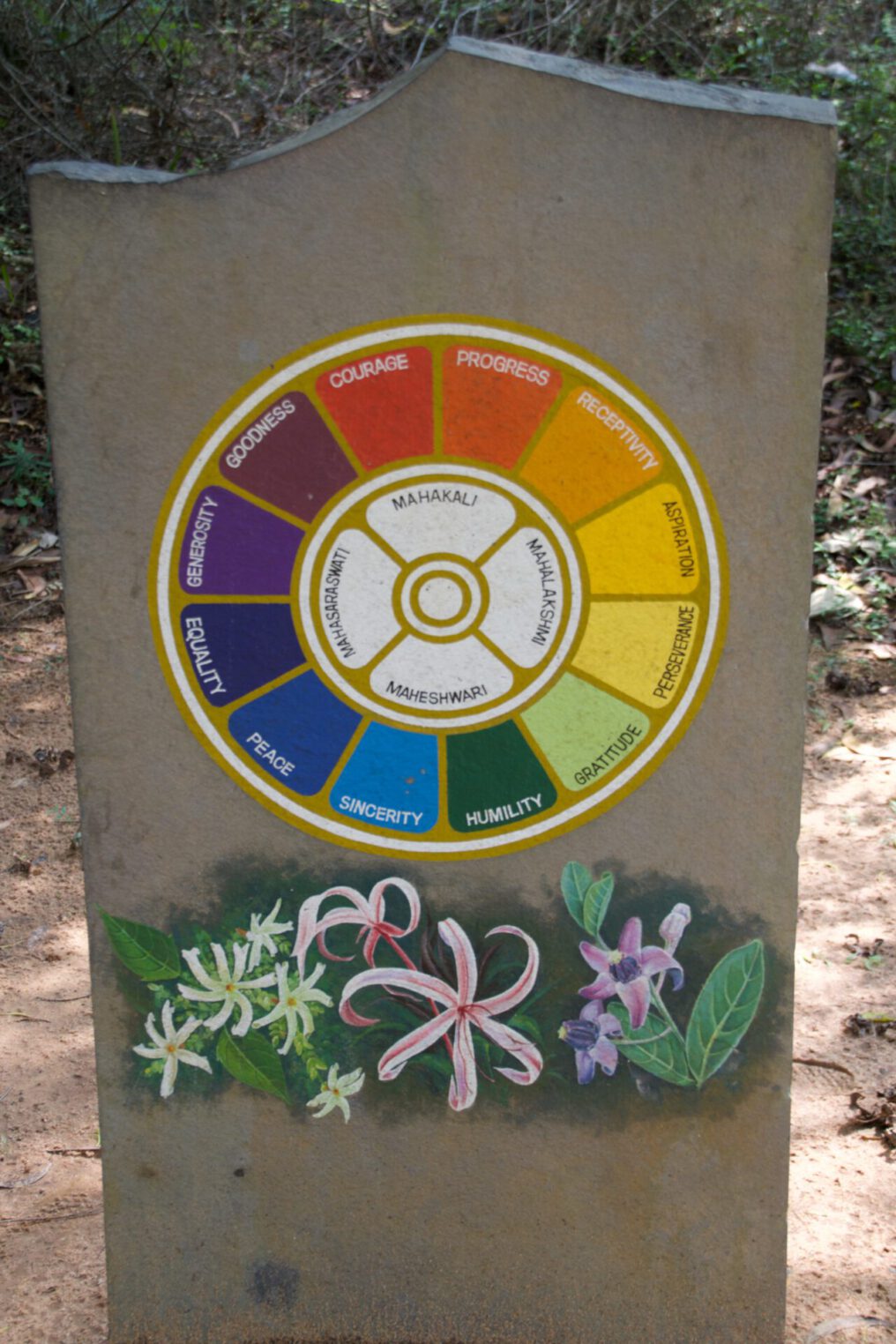
Why are there so few attempts to live differently? If we leave aside all the experiments that lasted only a few wild years, there is Longo Mai in Europe as a networked cooperative. In India, Auroville as a cashless society dedicated to work on (human and divine) consciousness.
Such ‘utopias’ have always fascinated me. Not only because they try to avoid the negative consequences of current models, but above all because they release energies and appreciate value. Instead of concentrating on the production, consumption, distribution and management of goods and trying to derive meaningfulness from this, these utopias open up freedom to surrender to the search for meaning and explore the mystery of life. For one thing is clear. An accumulation of possessions, the gathering of things in a more or less random place on Earth, cannot be the meaning. Devoting ourselves to the exploration and development of consciousness is surely the only task to which we, as beings conscious of our Self, can, want to and should surrender ourselves.
Why do we call this a utopia? Why do we think this place is unreachable? Who has told us for so long that it cannot be done? And why do so few participate in the concrete places of ‘real utopias’?


Leave a Reply