I have been thinking about Marx for so many years. Who hasn't? The idea of an equal and solidary community, free of ideological superstructures or irrational will-o'-the-wisps. A world that knows only matter and sees in it a scientific, progressive movement. Their goal? A world in which humanity is perfect, i.e. harmonious, without envy and resentment, in solidarity and with equal rights, without alienation and heteronomy, which alone enables the development of the individual within a collective.
This dream of a better future, which, following the course of history, will inevitably be achieved - albeit in the future - encourages struggle and revolution, but for others it also encourages serenity: what can stand in the way of history?
Consciousness is determined by matter, according to Marx. The world as will and representation, on the other hand, according to Schopenhauer, and ultimately even according to Kant... Why should the world either originate from my representation or have nothing to do with me at all? What's wrong with that?
The unfolding of the spirit - based on Hegel - why think so small? In the spirit of the Enlightenment, the aim was to establish a world view that is based purely on science. This protects against charlatans, ideologies, magicians, seducers, warriors and other deceivers.
We have banished the spirit and replaced it with money, success, and power. The wisdom of the Bhagavad Gita, the Sermon on the Mount, shamans and seers, for example, are no longer found in our cultural identity. They have been relegated to the superstructure. The intersubjective, the anchor of one's own consciousness in another consciousness, leads to the path of meditation. Empathy shows us not only that we are not alone, but that we are part of something that goes beyond us.
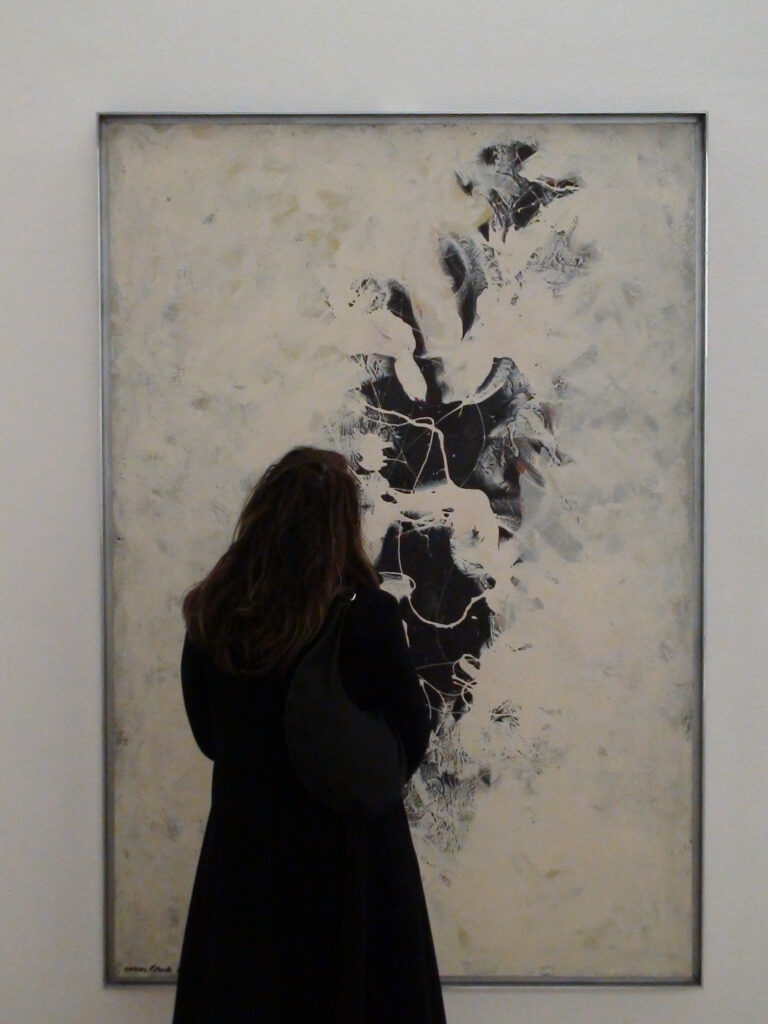
The color on a canvas means more than just that. As in Jackson Pollock's last painting, it gives us a glimpse of the beginning. Heterogeneity arises from looking at it.
 German
  English
  French
Leave a Reply