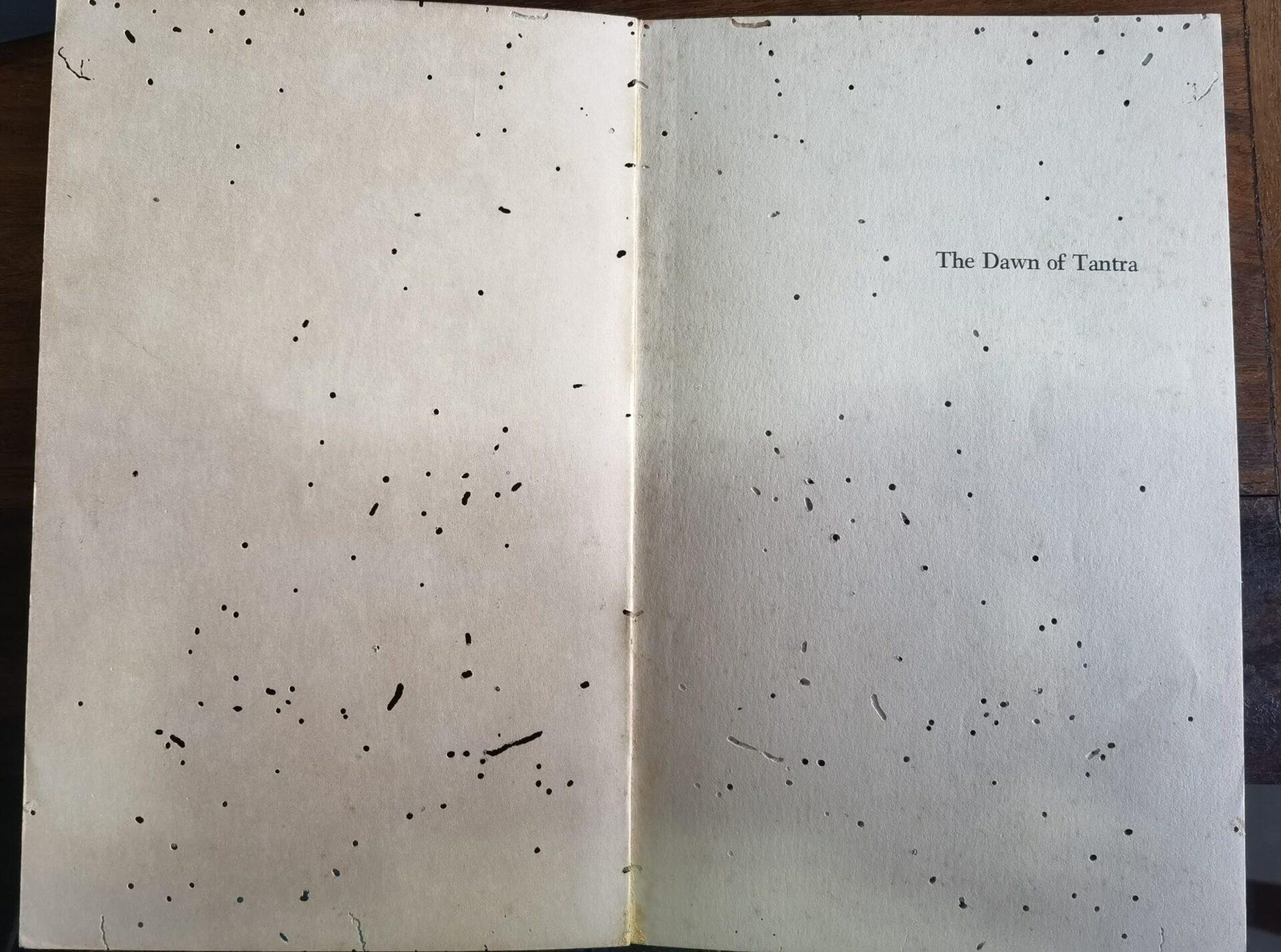
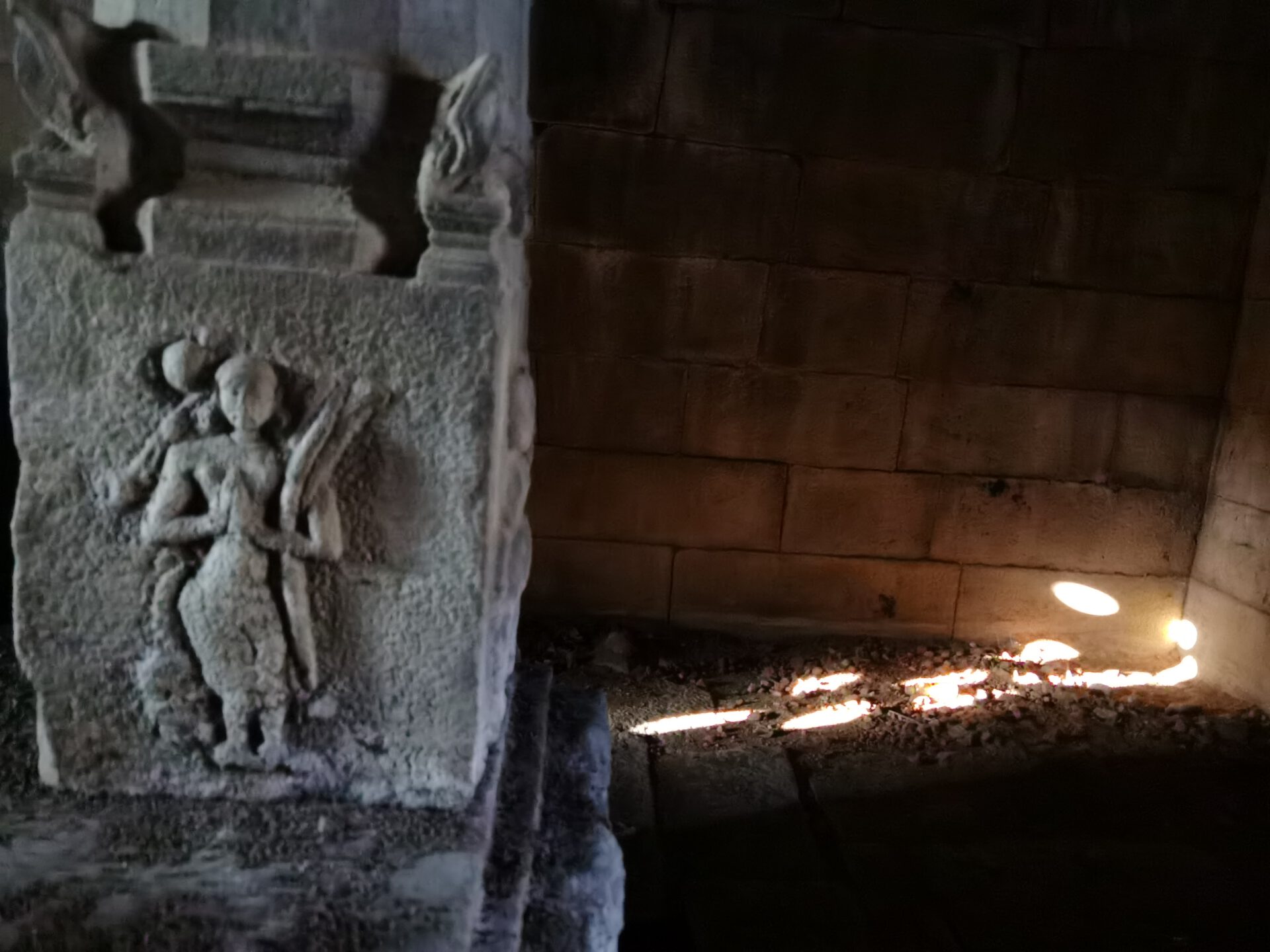
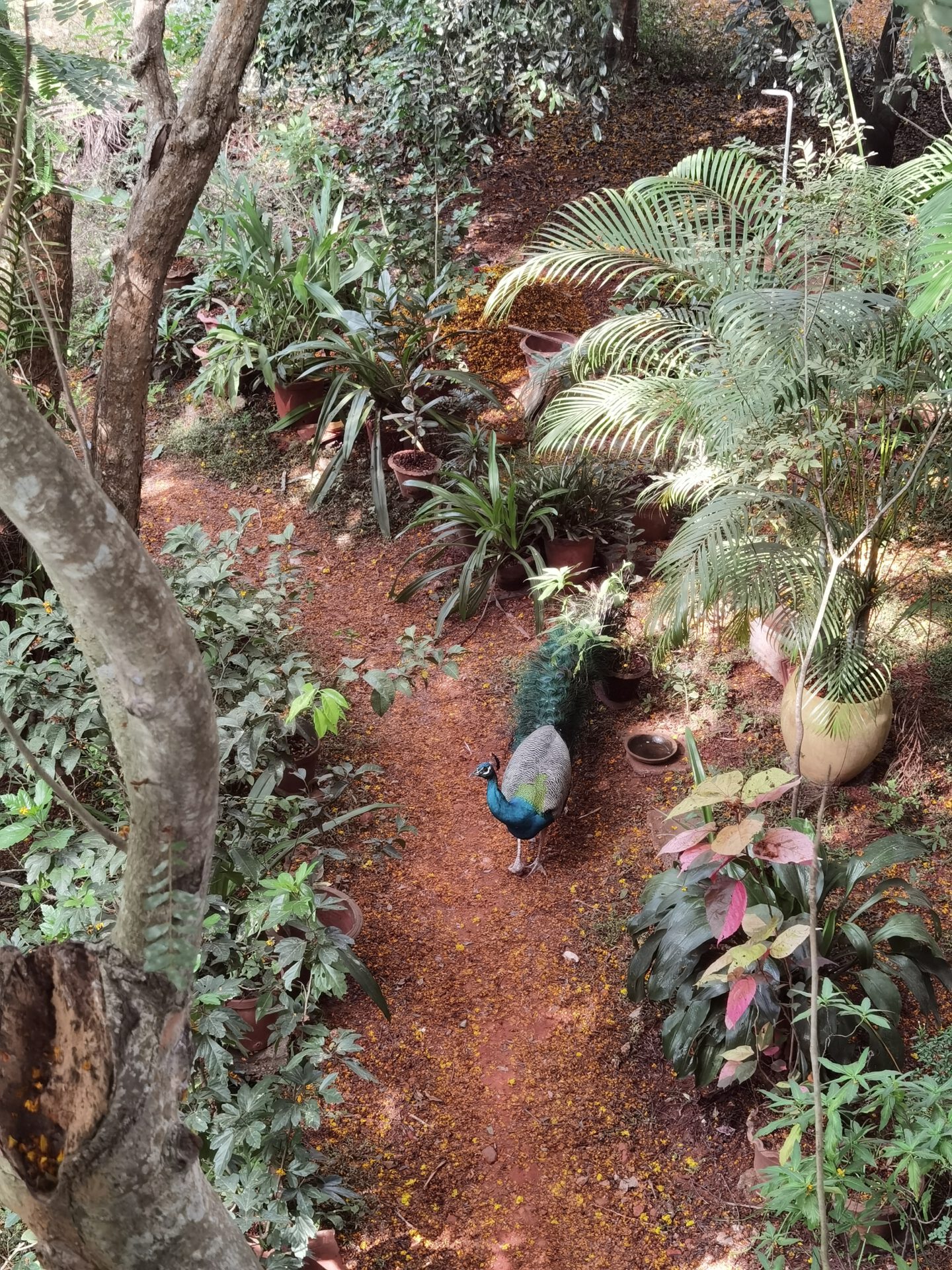
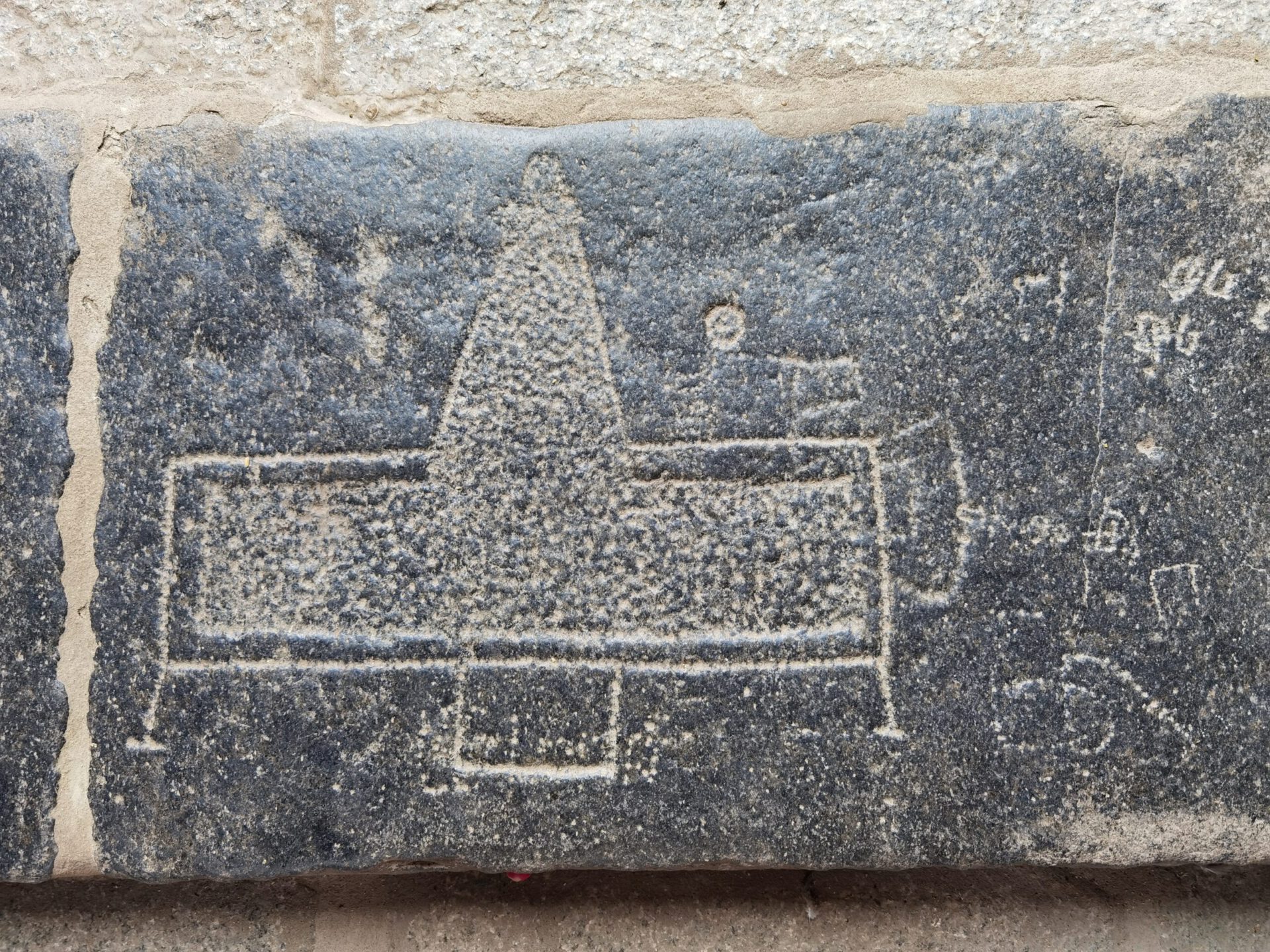
In front of my door is a soft, red sandy floor. It's swept several times a week with a bundle of palm leaves, and it looks beautiful. I'm still thinking about the same temple in Irumbai. Its history is becoming increasingly complex, and so I'm now diving into Tantric philosophy. I attended a workshop on this a few months ago. We learned a small meditation exercise that I tried again today: Choose two objects and look at them alternately, saying the name of the object...
I read Sri Aurobindo slowly and with long intervals. Why not read a lot and quickly, absorb everything, and finally bring order to my mental world, which wants to break free from the consequences of rational monotheism? Why don't I give my intellect the freedom, concentration, rest, and strength to embark on one of life's greatest adventures? As a student, I once swam very naively in the Rhine, somewhere near Basel, where the water was clear and cold, fast and broad green mountain landscapes…
Fate, karma, causality, laws of nature, determinism – these are all different expressions of the idea that the universe follows a predictable logic. They imply that what has happened has logically arisen from what preceded it, and that the present is likewise determined by the past. We consider this logic to be reasonable and rational, logically sound. Yet, when we assume that the future is equally determined by the present and the past, we dismiss it as superstition, irrationality, or unscientific. We resist it…
When the rational mind roams through the worlds of knowledge, explores the library, or searches for the causal laws of the universe, it is meticulous work of building knowledge systems. These systems initially have little in common with the world of experience, or even the inner world. Only through contemplation does the mind pause and consider the systematized, abstract representation as an image of the world, as a worldview. It is intuition that anchors this image in a deeper reality. When can we say...
Yesterday, during a panel discussion at the India Art Fair, I heard someone quote Plato. She said that Plato said art is the reflection of the reflection of the real. Whether that is accurate in this shortened form is another question. It's an interesting thought. What is the real, what is a reflection, what is art? For Plato, there is the world of Forms, the world of shadows that the ignorant perceive as real in the cave, and the philosopher who guides them out...
Yesterday I had a long conversation about the origin of thought. What comes first, words or thoughts. There are, of course, very different forms of thinking. Visual, musical, analytical, synthetic, performative thinking, etc... There is thinking on the level of intuition, there is thinking in memory, there is vision and inspiration. There are so many types of thinking. What is thinking? Who thinks when thinking? How does it differ from consciousness? Much within my...
A year in Auroville: a powerful account of transformation and the search for spirituality in India. Learn more about the adventure and the meaning of consciousness. #India #Spirituality
The German word „werden“ has a causal meaning, while „becoming“ in English represents the development of a process. Recognizing differences is important, especially in postmodern thought. Gilles Deleuze describes how sensations are united in a reflection, similar to a distant light. The world of „werdens“ is about consciousness, sensory impressions, and change.
 German
  English
  French