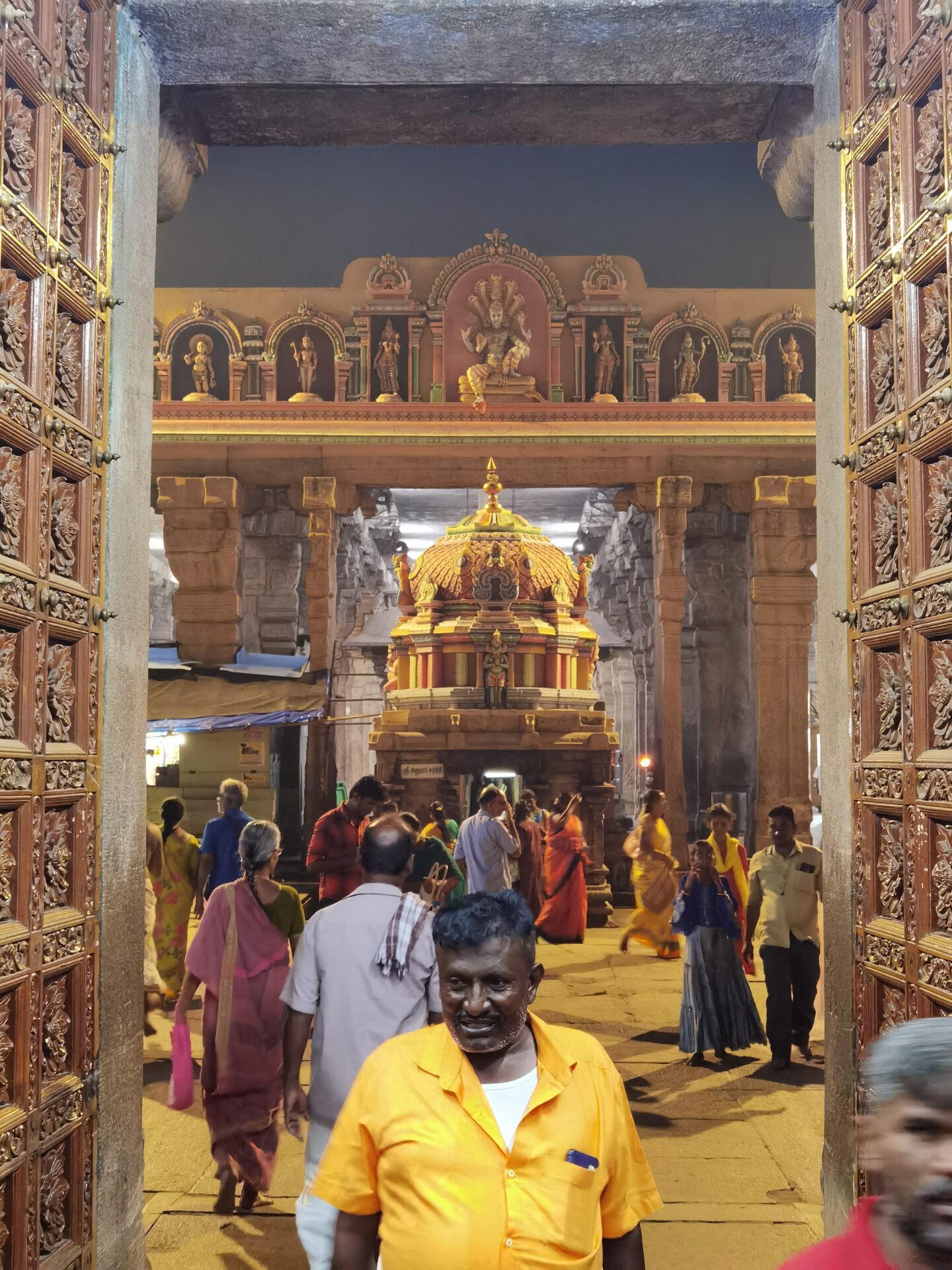
Explore the concept of sacred space and its manifestations in churches, temples, and spirituality across Europe, Egypt, and India. Discover the unique qualities and experiences each offers, from contemplation and silence in Catholic churches to the living tradition and activation of the holistic self in Indian temples. Temples, in particular, are seen as personal universities of life, reflecting a holistic knowledge that synthesizes various forms of existence and understanding.
Karl Marx and Charles Darwin shaped the worldview of the twentieth century. But in India a movement emerged that freed itself from colonial shackles and revived the wisdom of Indian philosophy.
In India, the books of the Vedas have been held in memory for 3000 years. The Rigveda (10,552 verses), Samaveda (1549 verses), Yajurveda (4001 verses) and Atharvaveda (5977 verses), as well as the Upanishads (about 1800 verses), are passed down from generation to generation. Sanskrit grammar has not changed substantially, and its pronunciation has been handed down with the greatest precision through exact phonetic description. So these texts sound the same today as they did 3000 years ago. They are…
I have just returned from a devotional meditation. It is Sri Aurobindo’s anniversary. He left his body 72 years ago, as people say here. Over the past few days I have thought and spoken a great deal about his commentaries on the Kena Upanishad. There I came across the word ‘intermiscence’. It is used almost only by Aurobindo. I asked everyone I met what the word means. A friend here found ‘flowing into one another’ as a German translation (in…
As a teenager, still at school, I began meditating; I still vaguely remember my first meditations from that time. Strength and quiet, concentration—mostly at night. They were very special moments. I did not do it often. As a student I continued meditating very irregularly. I remember some of these meditations, mostly lasting 1–2 hours, as though they had just happened. I always lacked the words (when I forced myself to name it, I reluctantly said transcendental); I also had no…
“the eye thinks even more than it listens” (Deleuze) I now remember that, before I began reading Deleuze, I had struggled with an aesthetics of process. I put together a 100-page manuscript with notes, quotations, sketches of structures. I wanted to move away from the idea that art consists of objects perceived in a particular way, because this produces two main strands of thought: 1.) What constitutes an object that we call art, and 2.) why is the perception of…
I am approaching Sanskrit very slowly. On Thursdays, Nishtha holds a seminar on the Rigveda. Reciting together in Sanskrit, the detailed analysis of the translation, Nishtha’s philological considerations and the explanations of the psychology of the gods open a way into these ‘sacred’ texts. I remember my study of Latin, the Indo-European roots, the sounds that reverberate in the ragas, phonetics as a declaration of existence, language as sound and vibration, communication as rhythm. The breath of life, yoga, vitality,…