Bodhi Zendo I had ordered a book to take with me to Bodhi Zendo: „Zen in the Art of Ink Painting“ by Katharina Shepherd-Kobel. It's a beautiful book, it speaks to me and nurtures my desire to learn ink painting and deepen my meditation. When I started Zen meditation 3.5 years ago, the urge to go to Auroville awoke. The meditation in Bremen was strict, we followed the rules, eyes half-open focused on a point, recited sutras, had walking meditations, tea ceremonies...
This is Tantra. This is divine. The crucial question is whether such a sacred encounter is only possible in romantic love, as tradition and romance suggest – or if it can arise when we fully open our being, beyond mind and reason, beyond ego, desire, or obligation. I believe it can. But it has nothing to do with climax as the goal. It's about intimacy. It can be as simple as a...
Ever since I first heard about shadow work decades ago, I've wondered exactly what it is. I always thought of deep abysses in the soul, traumas, taboos, secrets that you haven't shared with anyone because it's too shameful to talk about. I thought shadows are what we hide from ourselves and from others. And there's probably something to that idea. Now I've realized that shadows first appear somewhere else...
When I began reading the Upanishads, I realized that the inner path I had embarked upon was leading me into an extraordinarily beautiful inner landscape. Discovering that this inner landscape is connected to cosmic consciousness made me aware of the important work I must undertake—what people often call “inner work.” As I committed myself to this inner work, I focused on how I was feeling, who I am, and what I must face. What are my shadows? My insecurities? My…
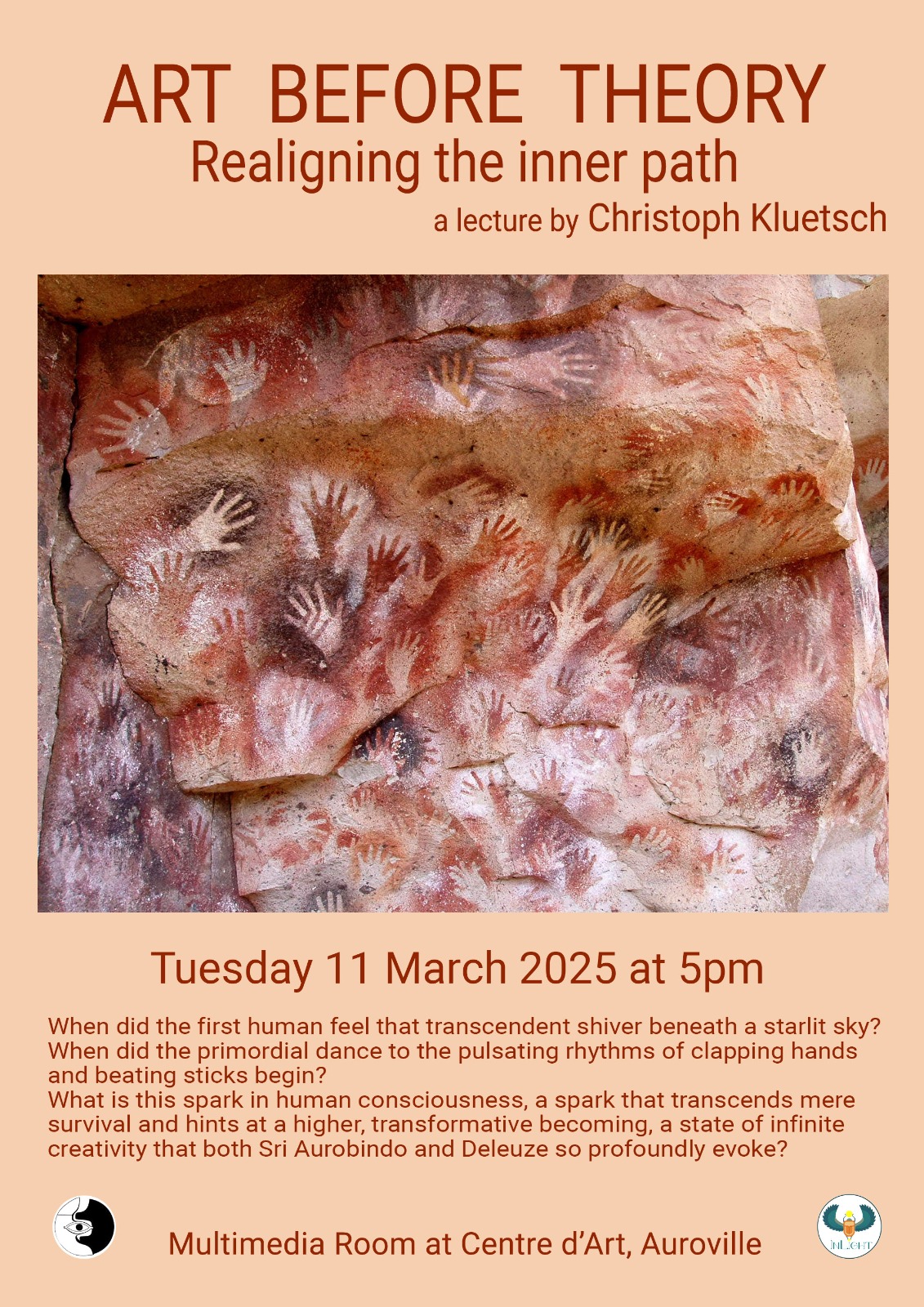
Art Before Theory (short summary) Christoph Kluetsch This lecture is the final one in my winter series. I have given six lectures so far, and I have been challenging myself throughout. Today, I am taking on my biggest challenge yet. I have been exploring topics that interest me—topics that represent a collision between Western art history, Indian spirituality, and postmodern thinking. I find this intersection to be a fascinating space to operate in. In my previous lectures, I have examined…
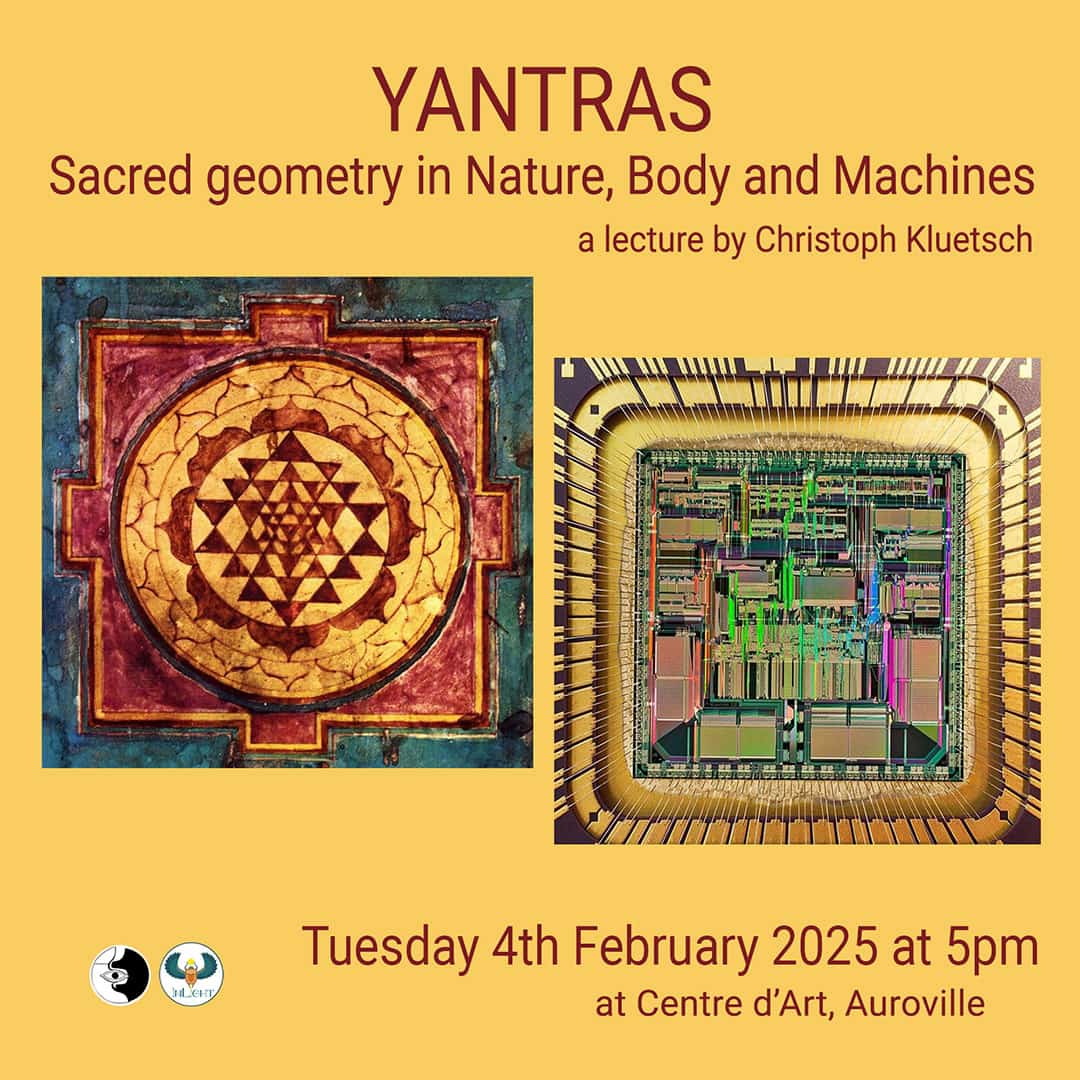
The spider brings forth its own web. This image from the Upanishads invites deep meditation on how nature brings forth a thread that it weaves into a complex symmetry. Looking at the spider, the thread, and the web—its function and the source of the complex pattern—we have an image that invites deep speculation about mantra, tantra, and yantra, about art and knowledge, about creation and information. The 5th lecture explores art and scientific visualizations of sacred symmetry in a field…
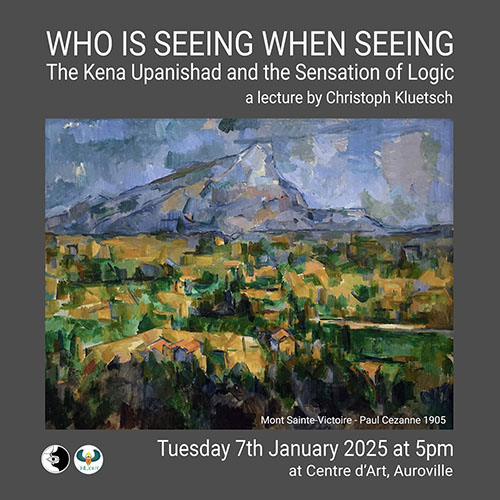
Auro Art World organized a series of 6 lectures at the Centre d’Art multimedia room in Auroville. These lectures, conducted by Dr. Christoph Kluetsch, explore connections between art, philosophy, and spirituality, bridging Eastern and Western traditions to illuminate the enduring questions of existence, consciousness, and creativity. The series is offered on the first Tuesday of every month. Fourth lecture – Tuesday, January 7, 2025, at 5 PM. Who in our consciousness experiences sensations? How are sensations synthesized? How do matter, vibration, consciousness, and self connect? And how can we share sensations…
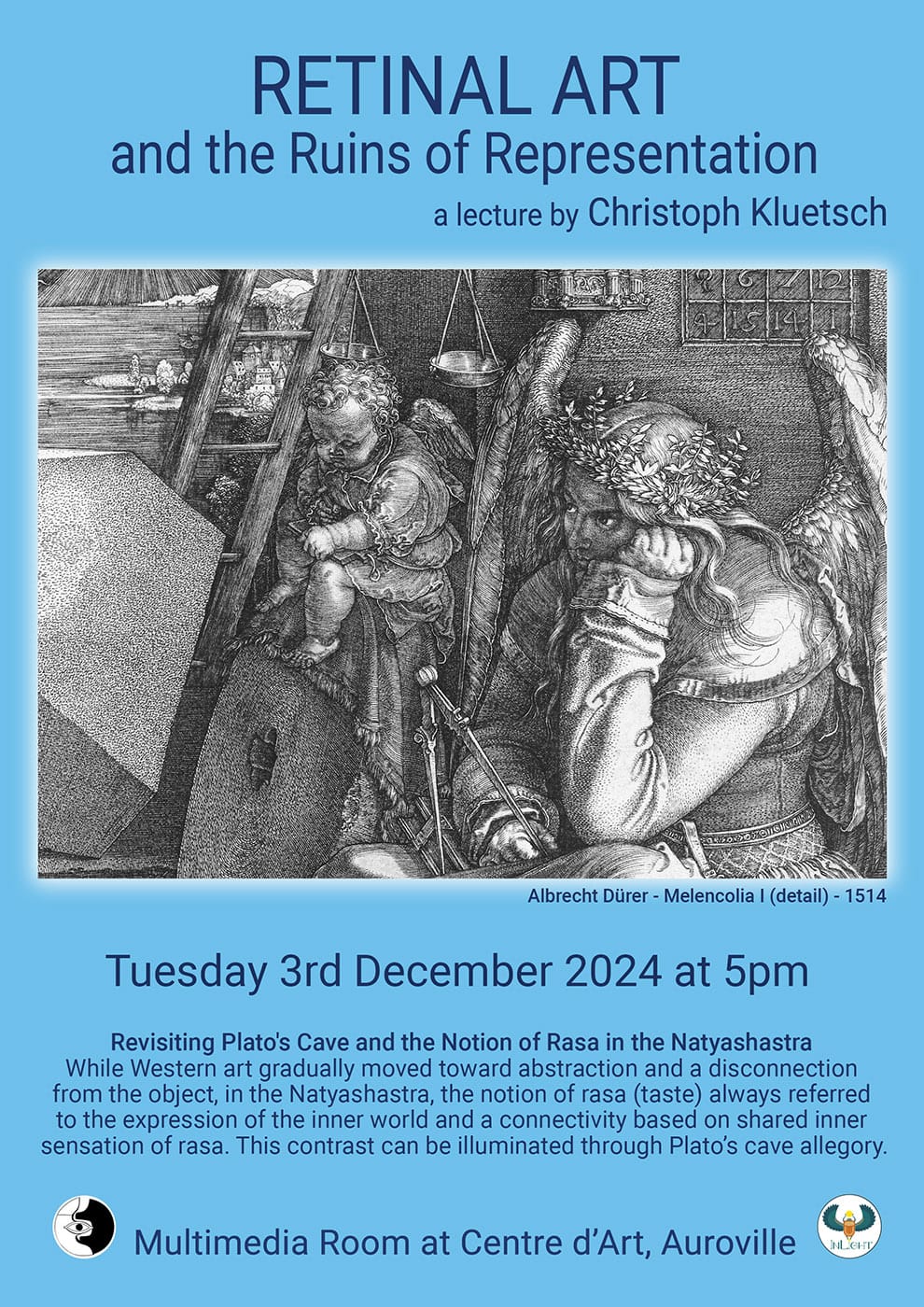
Retinal Art and the Ruins of Representation: Revisiting Plato’s Cave and the Notion of Rasa in the Natyashastra Christoph Kluetsch “Something in the world forces us to think. This something is not an object of recognition, but a fundamental encounter.” Gilles Deleuze – Difference and repetition p. 139 “Minds exist only in relation to other minds.” (Mihai Nadin) “even those elements designated as „basic“ or „proto-elements“ are not primitive but are, on the contrary, of a complex nature.” (Kandinsky, Concerning the Spiritual in Art)


 German
  English
  French