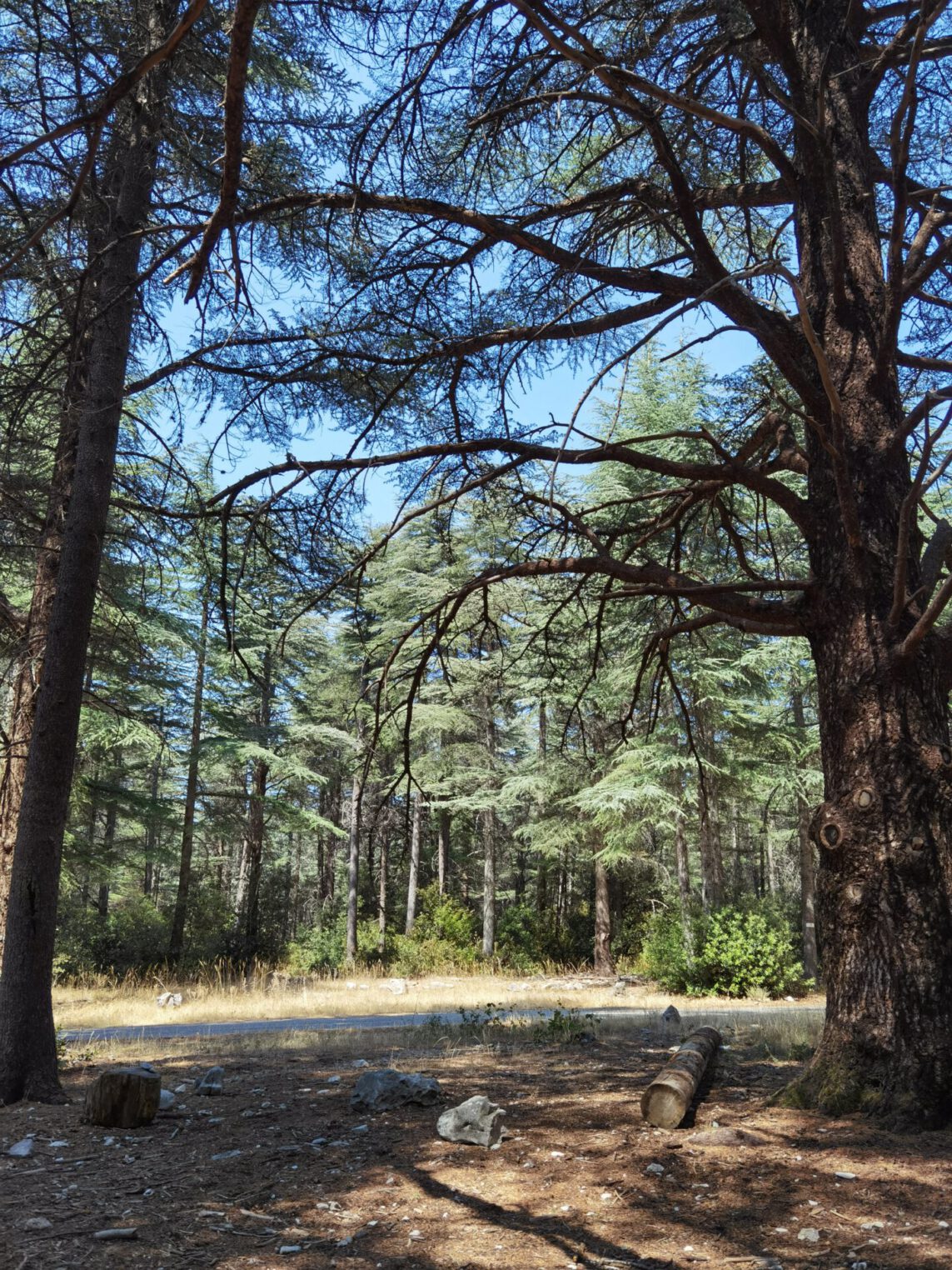
The forest is a wonderful habitat. Recently, I heard a little story about a man who whistled a melody every time he entered the forest. After a while, the animals recognized him by it and accepted his presence. They no longer ran away and sometimes even greeted him. We often don't see the forest as it truly is because we frequently disturb it. Today, I was in the forest. Instead of going for a walk as usual, I meditated a little and then took a short nap on the forest floor. It's dry here, so dry that there are hardly any ants. The ground is soft, and the air is clear after the brief rain yesterday. It's cool in the shade, and the streaks of light are pleasant. Trees don't wander; they are rooted in their being. They are not restless. In a collective, they grow differently than when they stand alone. As a collective, they are considerate of each other, giving each other space. You can see this in the canopy, in the branches and the spacing, and in the root system. There is a kind of altruism in the root system. Large trees help small ones grow, as the small ones cannot yet share the light in the canopy. A tree as part of a forest is in communication. Trees seem to communicate with each other through scent signals. In the company of trees, I become calm. Life is possible without rushing around.
There is something incredibly calming, timeless and connected about sleeping in the forest. In the forest we find rhizomes: similar plants that connect, but also different plants that connect. Gilles Deleuze did not use the rhizome merely as a metaphor for thinking, but thought as part of a rhizome. As a philosopher of immanence, trained by Spinoza, he is an elusive, materialistic, non-reductionist creative mind that I would like to read in India. My suspicion is that his philosophy resonates with the spirituality of India, the Hindu complexity and philosophizing in the forest of the Upanishads.
 German
  English
  French
Leave a Reply