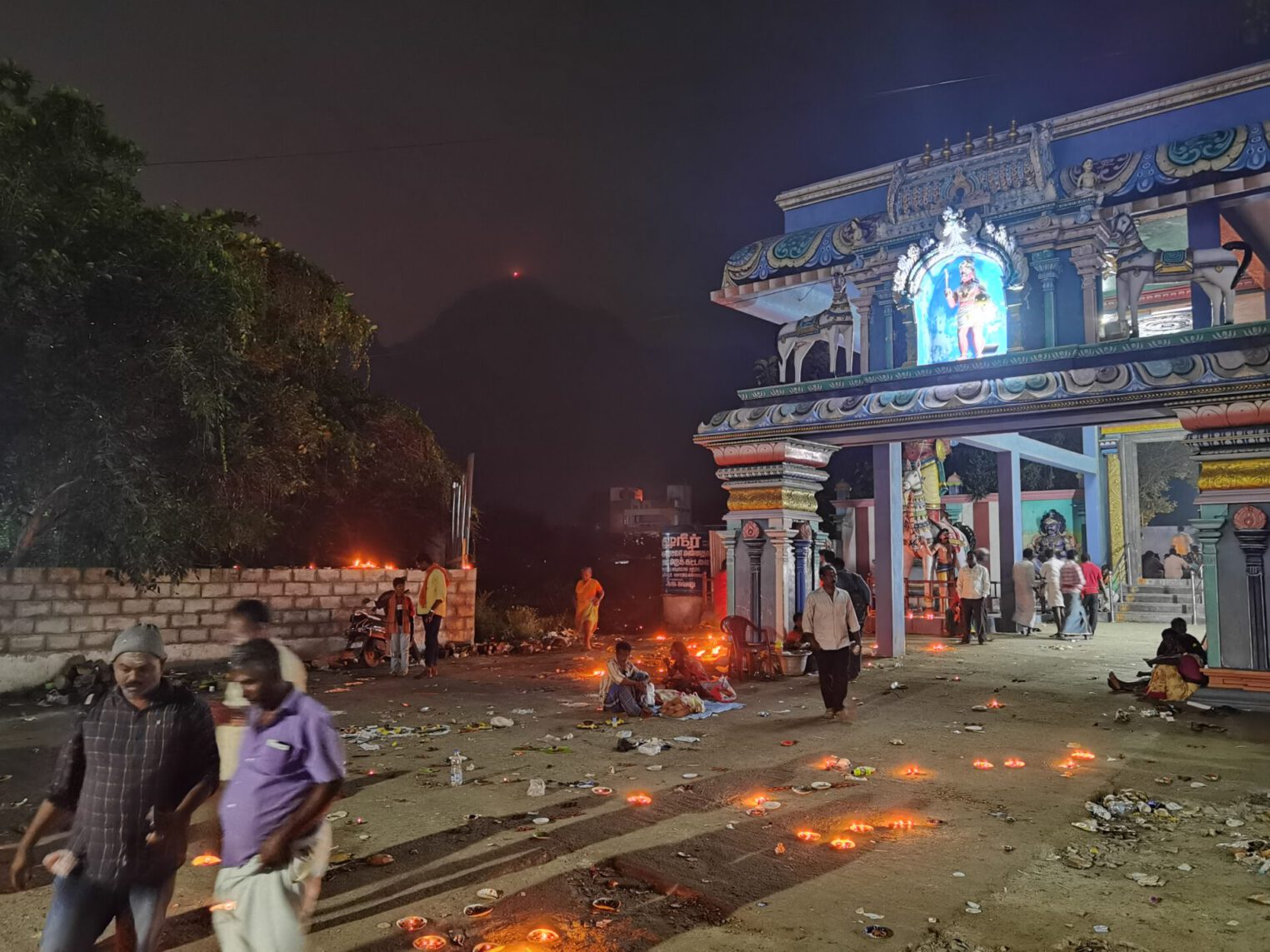
The Archaeology Department of Tamil Nadu has officially 44,121 Temples in Tamil Nadu counted. With 72,138,958 (2011) that is 1635 inhabitants per temple. Germany has 84,270,625 (2022) inhabitants and 45,600 Catholic and Protestant churches. That makes 1848 inhabitants per church.
However, many estimate that the actual number of temples in Tamil Nadu is much higher (between 200,000 and 300,000). In Germany, on the other hand, all churches have probably been recorded.
Christian churches largely focus on the message of the Bible, while other knowledge systems are quickly marginalized as conspiracy theories by secret orders like the Templars. Hindu temples, on the other hand, are based on Agama-Texts related to sciences, cosmology, arts, spiritual wisdom, architecture, music, ceremonies, urban planning, economics, yogas, yantras, tantras, mantras...
Temples in India are one of the many keys to knowledge that is thousands of years old, and it's still not really clear where it actually came from. Because the oldest texts in India, the Rigveda, are not just any written document, but a highly complex system of all kinds of knowledge.

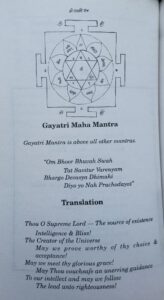
How yantra (the geometric form, which can also be found in temple ground plans), mantra (the spoken/sung text) and tantra (the 'instruction', the teaching) are interwoven can be seen beautifully in the Gayatri Mantra. You can listen to it here: Gayatri Mantra by Manish Vyas
I'd like to link Vāstusāstra here, as it's not easy to find an English translation:
Vastu shastra VL. 1: Hindu Canons of lconography &Paining (76mb, 822 pages)
Viswakarma Vastusastram: A Treatise On Town-planning Etc.
The standard work of art history on temples in India is here:
Kramrisch, Stella. 1946. The Hindu Temple Vol .I . http://archive.org/details/in.ernet.dli.2015.282158.
Kramrisch, Stella. 1946. The Hindu Temple Vol. 2. http://archive.org/details/in.ernet.dli.2015.40420.
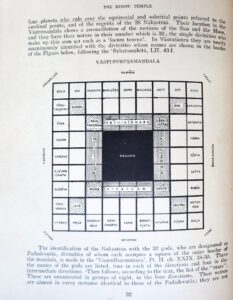
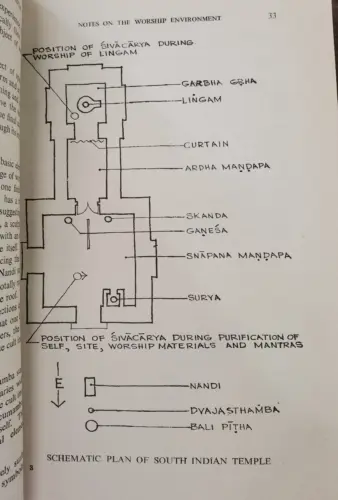
Here from page 32 of Vol. 1 is a diagram of the arrangement of the gods in the temple:
 German
  English
  French