Form is empty. It has a shape, but no substance; it is neither matter nor energy. Form is consciousness — to see something as something brings form forth. Yet form is also functional: substance, matter, and energy interact according to laws. As part of consciousness, they interact in form. Form is emptiness. Form is consciousness. Consciousness interacts with consciousness. From form arises matter — not the other way around. Matter does not bring form forth. The flow of energy and…
Bodhi Zendo I had ordered a book to take with me to Bodhi Zendo: “Zen in der Kunst der Tuschemalerei” (“Zen in the Art of Ink Painting”) by Katharina Shepherd-Kobel. It is a beautiful book; it speaks to me and nourishes my longing to learn ink painting and deepen my meditation. When I first entered into Zen meditation three and a half years ago, the impulse to go to Auroville awoke. The meditation in Bremen was strict. We followed the…
When I began reading the Upanishads, I realized that the inner path I had embarked upon was leading me into an extraordinarily beautiful inner landscape. Discovering that this inner landscape is connected to cosmic consciousness made me aware of the important work I must undertake—what people often call “inner work.” As I committed myself to this inner work, I focused on how I was feeling, who I am, and what I must face. What are my shadows? My insecurities? My…
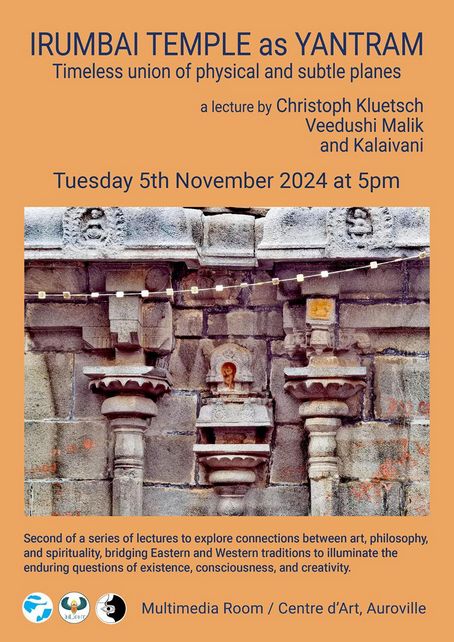
During the Chola Empire, the layout of Shiva temples was formalized to a great degree. Based on the Agamas and Shastras, the temple was fully developed into a place in space, time, and consciousness where the microcosm and macrocosm mirror each other. When a temple is built, a site will be chosen, and it has to be indicated as auspicious. Often an unusually friendly encounter with the animal realm is such a good sign. The site then has to be…
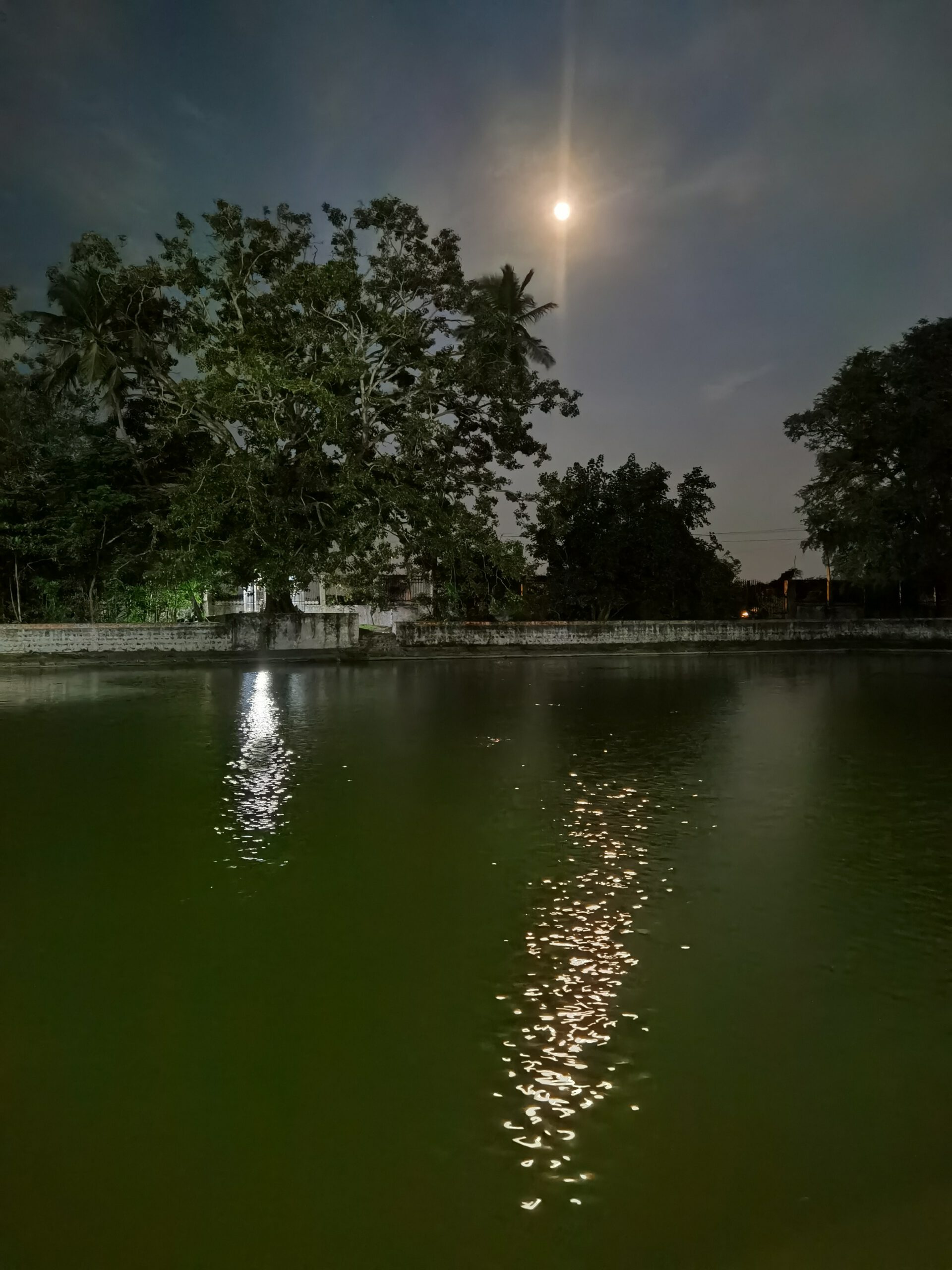
It is full moon in India. Time for self-reflection, meditation, and a turning inward. I have never really thought about death. For me, it was always a boundary, that which defines our existence negatively. Finitude throws us back upon ourselves, or so I thought. Here I agreed a little with Heidegger. To think of something beyond death always seemed arbitrary, naive, romantic, escapist, and credulous to me … Only in existential reflection did death seem meaningful to me. The dead…
The Enlightenment — Spiritual Enlightenment: the Paradox of Enlightenment Enlightenment is a tricky thing. Recently someone asked me whether I was seeking enlightenment. I faltered a little. But because I valued this person especially highly, I tried to be honest — yes, no, um, I don’t quite know, really I am, if I am completely honest … Why this hedging? Why not simply say directly: yes, I am, as she did when she replied that she thought most people were…
I ended my nighttime meditation a little early to move into writing meditation. Suddenly a few things seemed clear to me. The need to align one’s own body in meditation, to find the right position, which for me means following the movements, the tensions and relaxations of the muscles, the skeleton, the spine. Then to observe the breath, breathing in and out, the turning point of the breath, the pause in which to observe oneself, how thoughts begin to loosen,…
My morning meditation is becoming something of a routine, though after a handful of sessions one can probably hardly say that yet. It is more a stretch of road, a path, or an exploration. Like hiking in the mountains: with the summit in view, hiking along paths, on ridges, through valleys and rivers, past rock faces, through scree and stone, meadows and forests, and beyond the vegetation line onto glaciers in the snow, the mountains become a metaphor for the…