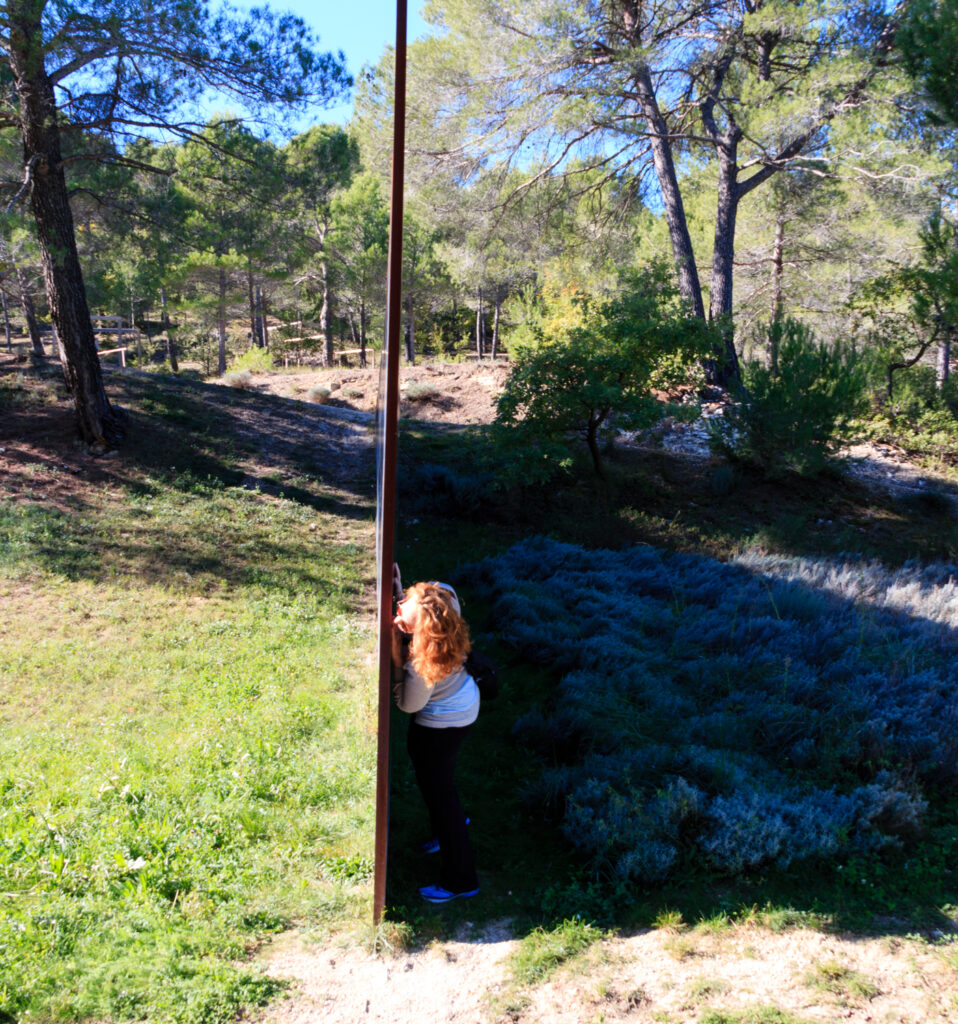
Life is so complex, and there are so many different ways of living. There is no right or wrong life. Life is a gift.
But what do you say about the negative energies, destruction and aggression, greed and resentment? All of that belongs to it. There is only acceptance. But acceptance does not mean approving of everything, nor tolerating everything. If a community decides to establish rules and sanction violations of these rules, that too is a form of acceptance. As humanity, we signed the Charter of Human Rights with the United Nations in 1945. Much follows from this, above all how we should treat each other, what is okay and what is not. Acceptance does not mean that we should not try, and cannot try, to change the world.
The Excluded
In recent generations, so many discriminated-against minorities have fought for their rights because they either violated the norms or were exploited, or both. This discrimination is, of course, the exact opposite of acceptance.
But if a person decides to change their life and leave the so-called status quo, then status quo society calls them a dropout. But is it not much more the case that the people who have decided not to change the status quo have dropped out of life? They remain in a rigidity. We probably somehow need traditions, rituals, structures, rules to function as a community. And part of these structures may be that they cannot be changed arbitrarily and individually.
There is a relation here. People who have been cast out of mainstream society and people who want to leave it. Why are some not allowed, or do not want, to participate in this discourse within a society? Is this merely a question of the normal distribution curve (Gauss), or are there structural blind spots in mainstream society?
Disintegration and Preservation
History shows that there have been many societies that perished; some were defeated by enemies or destroyed by natural disasters, but some also fell through signs of decadence, internal conflicts, or wrong decisions. Above all, however, it shows that there are infinitely many different forms of society, and that systems of values can change radically.
Most societies have roles for priests, philosophers, artists, shamans, intellectuals, etc., who occupy a special position. They are not involved in the division of everyday tasks, the processes of production and mechanisms of distribution, and have a reflective function. They keep the archives, develop new ideas, offer interpretations in conflicts. Ideally, they are the protectors of wisdom, of the treasures of knowledge. They are bound into another time, have access to another consciousness. They see the before and the after of societies. They are therefore essential, revered and feared at the same time.
Radicals
These special positions they occupy are a society’s free spaces. Here, new rules of the game are tried out. These playgrounds are under special protection. Changing their places is vehemently defended by society. Not everyone is allowed to play along there. And what if someone now ‘drops out’? Then he or she is also saying that this system of free spaces no longer works. The holiest place of a society is thereby called into question. This, too, is vehemently defended.
And the woman who drops out? Did she not try hard enough, and simply has not yet found the right place within a society? Did she just give up too soon? Perhaps she was only in the wrong place at the wrong time and would have found her place in another life. But perhaps not. Perhaps there is simply no place for her in the present society either. Perhaps these blind spots exist.
Hermits, autonomous communes, monasteries, gurus mark positions in the world that elude present societies. They cannot be assimilated. In this respect, they are radical. (I am speaking here of peaceful positions, not revolutionary ones.) These peaceful positions occupy a satellite position.
They have a radiance, show the cosmonauts the way.
Leave a Reply